• Submit Poetry
  • Support SCP
  • About Us
  • Members
  • Join
Tuesday, May 12, 2026
Society of Classical Poets
  • Poems
    • Beauty
    • Culture
    • Satire
    • Humor
    • Children’s
    • Art
    • Ekphrastic
    • Epic
    • Epigrams and Proverbs
    • Human Rights in China
    • Music
    • Performing Arts
    • Riddles
    • Science
    • Song Lyrics
    • The Environment
    • The Raven
    • Found Poems
    • High School Poets
    • Terrorism
    • Covid-19
  • Poetry Forms
    • Sonnet
    • Haiku
    • Limerick
    • Villanelle
    • Rondeau
    • Pantoum
    • Sestina
    • Triolet
    • Acrostic
    • Alexandroid
    • Alliterative
    • Blank Verse
    • Chant Royal
    • Clerihew
    • Rhupunt
    • Rondeau Redoublé
    • Rondel
    • Rubaiyat
    • Sapphic Verse
    • Shape Poems
    • Terza Rima
  • Great Poets
    • Geoffrey Chaucer
    • Emily Dickinson
    • Homer
    • Henry Wadsworth Longfellow
    • Dante Alighieri
    • John Keats
    • John Milton
    • Edgar Allan Poe
    • William Shakespeare
    • William Wordsworth
    • William Blake
    • Robert Frost
  • Love Poems
  • Contests
  • SCP Academy
    • Educational
    • Teaching Classical Poetry—A Guide for Educators
    • Poetry Forms
    • The SCP Journal
    • Books
No Result
View All Result
Society of Classical Poets
  • Poems
    • Beauty
    • Culture
    • Satire
    • Humor
    • Children’s
    • Art
    • Ekphrastic
    • Epic
    • Epigrams and Proverbs
    • Human Rights in China
    • Music
    • Performing Arts
    • Riddles
    • Science
    • Song Lyrics
    • The Environment
    • The Raven
    • Found Poems
    • High School Poets
    • Terrorism
    • Covid-19
  • Poetry Forms
    • Sonnet
    • Haiku
    • Limerick
    • Villanelle
    • Rondeau
    • Pantoum
    • Sestina
    • Triolet
    • Acrostic
    • Alexandroid
    • Alliterative
    • Blank Verse
    • Chant Royal
    • Clerihew
    • Rhupunt
    • Rondeau Redoublé
    • Rondel
    • Rubaiyat
    • Sapphic Verse
    • Shape Poems
    • Terza Rima
  • Great Poets
    • Geoffrey Chaucer
    • Emily Dickinson
    • Homer
    • Henry Wadsworth Longfellow
    • Dante Alighieri
    • John Keats
    • John Milton
    • Edgar Allan Poe
    • William Shakespeare
    • William Wordsworth
    • William Blake
    • Robert Frost
  • Love Poems
  • Contests
  • SCP Academy
    • Educational
    • Teaching Classical Poetry—A Guide for Educators
    • Poetry Forms
    • The SCP Journal
    • Books
No Result
View All Result
Society of Classical Poets
No Result
View All Result
Home Poetry

‘Different Strokes’: A Poem by C.B. Anderson

January 24, 2026
in Poetry, Culture
A A
27
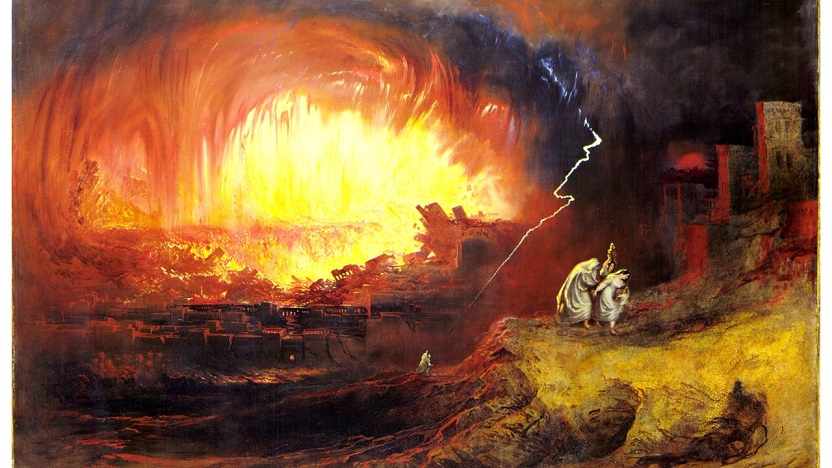
"The Destruction of Sodom and Gomorrah" by John Martin

"The Destruction of Sodom and Gomorrah" by John Martin


Different Strokes

The sin for which old Yahweh leveled Sodom,
Though scholars, on this point, may disagree,
Is penetrating someone else’s bottom,
And so today we call it sodomy.

But what, then, should we think about Gomorra,
Which perished in that same destructive wave?
Did people there, complicit with Aurora,
By early light with children misbehave?

Or did they simply fail to offer strangers
Some supper and a bed in which to sleep?
A thousand years, and maybe more, ere mangers
Became the sacred image that we keep

In mind at Christmastime, a desert culture,
Hard-pressed to guarantee their own survival
And not sustain the jackal and the vulture,
Recorded what is now the Hebrew Bible.


C.B. Anderson was the longtime gardener for the PBS television series, The Victory Garden.  Hundreds of his poems have appeared in scores of print and electronic journals out of North America, Great Britain, Ireland, Austria, Australia and India.  His collection, Mortal Soup and the Blue Yonder was published in 2013 by White Violet Press.

ShareTweetPin
The Society of Classical Poets does not endorse any views expressed in individual poems or commentary.
Read Our Comments Policy Here

RandomPoems

‘Avoidance’ and Other Poetry by Russel Winick
Culture

‘Avoidance’ and Other Poetry by Russel Winick

October 18, 2023

. Avoidance I don’t sign up for group Zoom calls __With folks I know are boorish. I don’t go visit...

‘The Reverie of Space’ By Julio Toro San Martin
Poetry

‘Perfect Synchronicity’: A Poem by Scharlie Meeuws

December 6, 2025

  Perfect Synchronicity He thought back to that hour at dusk’s still height, When bird-song sounded both, outside and in...

Next Post
‘Though My Eyes Grow Dim’: A Poem by Roy E. Peterson

'Though My Eyes Grow Dim': A Poem by Roy E. Peterson

‘Out at Third’: A Poem by James A. Tweedie

'Out at Third': A Poem by James A. Tweedie

‘The Sky’: A Poem by Jeffrey Essmann

'The Sky': A Poem by Jeffrey Essmann

Comments 27

  1. James A. Tweedie says:
    4 months ago

    C.B.

    Somewhat of a scramble
    Results in a ramble
    From Sodom/Gomorrah
    As found in the Torah
    Then looks at both tribal
    And scribal traditions
    With local conditions
    That led to the Bible.
    While hosting a stranger
    Once laid in a manger.

    To fit all this into
    Both rhythm and rhyme
    Earns kudos for you.
    Thanks, I had a good time.

    Reply
    • C.B. Anderson says:
      4 months ago

      I quite enjoyed your rejoinder, James. It was a delicious omelet.

      Reply
  2. Joseph S. Salemi says:
    4 months ago

    This is a playful riff on the Sodom and Gomorrah legend. The last six lines of this poem are one complete sentence — and that takes expert skill in enjambment.

    The rhyme of Gomorra with “complicit with Aurora” is a brilliant one. Combining the goddess of Dawn with early morning misbehavior is the kind of unexpected fusion that poets are traditionally expected to perform.

    Reply
    • C.B. Anderson says:
      4 months ago

      For me, Joseph, the main benefit of enjambment is that it allows the use of rhyme words that do not correspond with end-stopped phrases or ideas, and this means, of course, that there are more available rhyme possibilities, which makes things easier. I think it is likely that at some period of time Yahweh and Aurora were contemporaneous, though separated geographically.

      Reply
  3. Karen Rodgers says:
    4 months ago

    Dear Mr Anderson,

    lovely image BTW

    >Did people there, complicit with Aurora,
    By early light with children misbehave?

    Or did they simply fail to offer strangers
    Some supper and a bed in which to sleep?

    C.s Lewis’s comment is here relevant..
    He quotes an earlier writer Law who observed that it does not matter to the man who died in the desert why he failed to take the right road to the oasis.

    And we have further elucidation on this from St Faustina’s Diary;

    “Write; I am Thrice Holy, and I detest the smallest sin. I cannot love a soul which is stained with sin; but when it repents, there is no limit to My generosity toward it. My mercy embraces and justifies it. With My mercy, I pursue sinners along all their paths, and My Heart rejoices when they return to Me. I forget the bitterness with which they fed My Heart and rejoice at their return” (St Faustina’s Diary, 1728).

    Its not so much “different strokes..” but that He is patient.
    The Creator does not want a single one of us to perish;

    “As the Father has loved me, so have I loved you. Abide in my love. If you keep my commandments, you will abide in my love, just as I have kept my Father’s commandments and abide in his love. These things I have spoken to you, that my joy may be in you, and that your joy may be full..This is my commandment, that you love one another as I have loved you.”
    John 15:9-17
    https://christian.art/daily-gospel-reading/john-15-9-17-2026/

    but in the end, the time of Mercy is replaced by the time of Justice.
    He’s not coming after us.
    He’s coming after what seperates us from Him.
    But if we cling to it, whatever it is,
    we will be burned away along with it.
    The Lord is clear that this holds for all of us whether or not we attend Church.
    Its just that receiving the Sacraments (with a genuine love of God and neighbour of course) brings us ever closer to Him
    and away from the cliff on the edge of the pit.

    warmest regards,

    Karen

    *************************

    Reply
    • C.B. Anderson says:
      4 months ago

      C.S. Lewis might be correct in his opinion, but most of us are interested in what it was that led to the destruction of these places. even if the legend is pure myth. Dante certainly thought that there are degrees of wickedness.

      The other sources you noted are also very interesting. No sane entity would want his children to perish, and, really, God’s mercy is an offer we can’t refuse, especially if we anticipate justice.

      Reply
  4. jd says:
    4 months ago

    I enjoyed this poem and the VERY interesting responses. I guess
    envy would be in the same category.

    Reply
    • C.B. Anderson says:
      4 months ago

      I, too, jd, liked the responses a lot, but I’m not sure where you were headed with “envy.” “Thou shalt not covet,” for me, is not a threat, but a prescription for mental health.

      Reply
  5. Cynthia L Erlandson says:
    4 months ago

    I’m laughing out loud, C.B. Your rhyming is hilarious!

    Reply
    • C.B. Anderson says:
      4 months ago

      As long as you are laughing with me, Cynthia.

      Reply
  6. Cheryl Corey says:
    4 months ago

    No matter how many times I re-read it, that first stanza cracks me up.

    Reply
    • C.B. Anderson says:
      4 months ago

      If I had a stanza like that in front of me, Cheryl, I would likely keep reading it until my diaphragm gave out. This is why I try not to start eating candy — I can’t stop.

      Reply
  7. Susan Jarvis Bryant says:
    4 months ago

    C.B., I just love the way “Different Strokes” (great title!) uses humor creatively and profoundly to expose just how much our moral rhetoric lies in selective reading and speculation. I believe interpretation says as much about the reader as it does about the texts, which is why I’m so darn skeptical of religious doctrine. Thank you for a poem that entertains on many levels. You had me laughing, marvelling at your poetic skills, and thinking… a lot. Thank you!

    Reply
    • C.B. Anderson says:
      4 months ago

      Well shucks, Ma’am, I’m plumb tickled. Are you bracing for an ice storm in your neck of the woods? If “darn” weren’t so deeply embedded in the American vernacular, I might accuse you of taboo deformation (a term I learned in my linguistic classes at Harvard Extension).

      Reply
      • Joseph S. Salemi says:
        4 months ago

        Taboo deformations are a fascinating subject. Here are a few basic ones:

        “Heck!” = Hell
        “Shoot!” = Shit
        “Jiminy Cricket!” = Jesus Christ

        We even have reconstructed a few from Proto-Indo-European. Their word for the dangerous animal “wolf” was WLKWOS, and that got twisted into all sorts of weird shapes by speakers who were afraid to mention the real word.

        Reply
        • Adam Sedia says:
          4 months ago

          Similar to “wolf” in this regard is “bear” (“harktos” in PEI). The dramatic languages circumlocute it as “the brown one” and the Slavic languages as “honey eater.”

          Reply
        • C.B. Anderson says:
          4 months ago

          And don’t forget “sugar,” “dadgum” and “frigging.” I once met an old couple whose favorite expletive was “Foot!”

          Reply
      • Susan Jarvis Bryant says:
        3 months ago

        C.B., I just love your “taboo deformations” observation and Joe, I love your list. You took me straight back to my childhood with that one. I remember calling my brother a “basket” (bastard) and living to regret it. If only I’d known “basket” was a taboo deformation back then – I’d have avoided it like the plague. I also got into trouble for “blighter” (bugger). I didn’t even know what “bugger” meant at the time. I only knew the word because my father often called my brother a little bugger. Oh, the hypocrisy!

        We are just emerging from “Winter Storm Fern” and I am thankful to see sunlight. To be fair, we only got down to around 23 degrees Fahrenheit on the south coastal plains. I’ve felt far worse in the UK… but I was bothered by this. Swapping my shorts and tee shirt for a woollen jumper doesn’t feel good and that bitter chill in the air sent a frisson of fear down my spine – the proof that I am now fully assimilated.

        Reply
  8. Mike Bryant says:
    4 months ago

    Wow!!! This poem really gets back to basics, CB… I agree that the problem is simply not caring and pride… I guess success can too easily bring the excess.

    “Now this was the sin of your sister Sodom: She and her daughters were arrogant, overfed and unconcerned; they did not help the poor and needy.“ – Ezekiel to Jerusalem

    Now this is “take no prisoners” poetry! Damn!

    Reply
  9. C.B. Anderson says:
    4 months ago

    There are only a few good reasons for taking prisoners, Mike: to use as exchanges for compatriots taken by the enemy, to mete justice (as one sees it) to enemy combatants, and for bragging rights. Lack of solicitude, and pride, are surely things that will destroy a kingdom. Let us not declare victory too soon.

    Reply
    • Joseph S. Salemi says:
      4 months ago

      One more big reason, Kip — to interrogate them for information. That’s what my dad did in World War II.

      Reply
      • C.B. Anderson says:
        4 months ago

        Of course, Joseph. I didn’t think of that.

        Reply
  10. Paul A. Freeman says:
    4 months ago

    A penetrating piece of verse. Very entertaining, CD.

    Reply
    • C.B. Anderson says:
      4 months ago

      Heh-heh. We do the best we can, Paul.

      Reply
  11. Adam Sedia says:
    4 months ago

    Though couched in humor, your poem tackles a popular theological notion among liberal clergy: that it was not sexual sin, but lack of hospitality that brought destruction on the cities. You ascribe the greater sin to Gomorra. I read an interesting piece lately hypothesizing that the final straw to all the sodomy was the attempted sodomy of angels, no less.

    Reply
    • Joseph S. Salemi says:
      4 months ago

      Liberal clergy live in a dream world that allows them to construe any scriptural text in whatever manner they like. The Sodom and Gomorrah legend is clearly about specific sexual sins that the composers of the text found abhorrent.

      An important facet of left-liberal thinking is the desire to “have it all.” This means that if you are a left-liberal priest or minister you are compelled to read certain biblical stories in utterly bizarre and counterintuitive ways, and to fiercely defend your interpretations as “up-to-date” and “creative” and “unburdened by what has been.”

      At least the 19th-century Unitarians were honest. They simply went through the Bible and excised anything that they didn’t like, or were uncomfortable with.

      Reply
    • C.B. Anderson says:
      4 months ago

      There is a very interesting short story, Adam, by Samuel Delaney titled “Aye, and Gomorra”. You can read it here:

      https://future-lives.com/wp-content/uploads/2014/09/delany_aye_and_gomorrah.pdf

      How does one even attempt to sodomize an Angel? I suppose that first an angel must actually be present.

      Reply

Leave a Reply Cancel reply

Your email address will not be published. Required fields are marked *

  1. Roy Eugene Peterson on A Poem on Coach “Black Mike” Castronis from Athens Y Camp, by Alec ReamMay 12, 2026

    Alec, this is a touching tribute to a camp coach/counselor. I had my own at Camp Paisano near Alpine, Texas.…

  2. Roy Eugene Peterson on ‘Creation of Mom’: A Mother’s Day Poem by Roy E. PetersonMay 12, 2026

    Margaret, I was thinking about the vast variety of Moms when I wrote it. Thank you for pointing that out…

  3. Alec Ream on A Poem on Coach “Black Mike” Castronis from Athens Y Camp, by Alec ReamMay 12, 2026

    Margaret, thank you for the read and remarks. First Presbyterian is still there. As is Emmanuel Episcopal, which started at…

  4. Margaret Coats on ‘Creation of Mom’: A Mother’s Day Poem by Roy E. PetersonMay 12, 2026

    Roy, considering the vast variety of Moms, I'm glad you put that wondering of the angels into your creation workshop…

  5. Margaret Coats on A Poem on the Zambian National Park Mosi-oa-Tunya, by Paul A. FreemanMay 12, 2026

    Quite a memory, Paul. Having watched that cascade flow into an impressive geologic gash, and produce rain forest, must give…

Subscribe to Daily Poems

Enter your email address to subscribe to this blog and receive notifications of new posts by email.

Join 1,593 other subscribers

Recent Poems

  • A Poem on Coach “Black Mike” Castronis from Athens Y Camp, by Alec Ream
  • A Poem on the Zambian National Park Mosi-oa-Tunya, by Paul A. Freeman
  • ‘Creation of Mom’: A Mother’s Day Poem by Roy E. Peterson
  • ‘Spontaneous Conjugal Combustion’ and Other Poems by Susan Jarvis Bryant
  • ‘The Man in the Moon Was a Very Round Man’: A Poem by Lauren V. Leon
  • ‘Fibromytrauma’: A Poem by Golan Shahar
  • ‘A Lonely Sliver’: A Poem by Katie Tencza
  • ‘Higher Gas Prices Are a Small Price to Pay’: An Iran War Poem by Mark F. Stone
  • ‘Always Ahead’: A Poem by Scharlie Meeuws
  • ‘Hamlet’s Lawyer’ and Other Poetry by Brian Yapko
  • ‘On An Old Photograph’: A Poem by Joseph S. Salemi
  • ‘Faust Foresees His End’: A Poem by Martin Briggs
  • ‘À la Carte’ and Other Poetry by C.B. Anderson
  • ‘Where the Sweet Bluebonnets Bloom’: A Poem by Roy E. Peterson
  • ‘The Waters’: A Poem by Margaret Brinton
  • ‘The Pinnacle of Poetry’ and Other Poems by Russel Winick
  • The First American Sonnets: An Essay on David Humphreys, by Margaret Coats
  • ‘The Holy Rollers on Poetry’: A Poem by Joseph S. Salemi
  • Sappho’s ‘Poem 1’ Translated by Bruce Phenix
  • ‘The Cautionary Tale of Phone Addicted Mimi’: A Poem by Paul A. Freeman
  • ‘Look Away’: A Poem for America’s 250th Anniversary, by Roger Crane
  • ‘Sunday Morning in Canada’: A Poem by Jeffrey Essmann
  • ‘Bean’: A Poem by Jan Mennite
  • ‘The Swan’s Song ’: A Poem for Shakespeare’s Birthday, by Susan Jarvis Bryant
  • ‘The Gravedigger’: A Poem by Marie Burdett
  • ‘Waiting for the Perfect Man’: A Poem by Janice Canerdy
  • ‘The George-A-Saurus’ and Other Poetry by Brian Yapko
  • ‘When Asked: What’s Your Favorite Season?’: A Poem by Paul Millan  
  • ‘The Last At-Bat of Lyndon Braun’: A Poem by Michael Pietrack
  • ‘The Perpetual Battle’ and Other Poetry by Adam Sedia

Categories

  • Acrostic
  • Alexandroid
  • Alliterative
  • Art
  • Best Poems
  • Blank Verse
  • Chant Royal
  • Classical Poets Live
  • Clerihew
  • Covid-19
  • Deconstructing Communism
  • Educational
  • Epic
  • Epigrams and Proverbs
  • Essays
    • Interviews with Poets
    • Poetry Reviews
  • Featured
  • From the Society
  • Great Poets
    • Dante Alighieri
    • Edgar Allan Poe
    • Emily Dickinson
    • Geoffrey Chaucer
    • Henry Wadsworth Longfellow
    • Homer
    • John Keats
    • John Milton
    • Robert Frost
    • William Blake
    • William Shakespeare
    • William Wordsworth
  • Human Rights in China
  • Limerick
  • Love Poems
  • Music
  • Pantoum
  • Performing Arts
  • Poetry
    • Beauty
    • Children's Poems
    • Culture
    • Ekphrastic
    • Found Poems
    • High School Poets
    • Humor
    • Riddles
  • Poetry Challenge
  • Poetry Contests
  • Poetry Forms
    • Curtal Sonnet
    • Haiku
  • Poetry Readings
  • Rhupunt
  • Rondeau
  • Rondeau Redoublé
  • Rondel
  • Rubaiyat
  • Sapphic Verse
  • Satire
  • Science
  • Sestina
  • Shape Poems
  • Short Stories
  • Song Lyrics
  • Sonnet
  • Symposium
  • Terrorism
  • Terza Rima
  • The Environment
  • Translation
  • Triolet
  • Video
  • Villanelle

Quick Links

  • About Us
  • Submit Poetry
  • Become a Member
  • Members List
  • Support the Society
  • Advertisement Placement
  • Comments Policy
  • Terms of Use

Welcome Back!

Login to your account below

Forgotten Password?

Retrieve your password

Please enter your username or email address to reset your password.

Log In
No Result
View All Result
  • Poems
    • Beauty
    • Culture
    • Satire
    • Humor
    • Children’s
    • Art
    • Ekphrastic
    • Epic
    • Epigrams and Proverbs
    • Human Rights in China
    • Music
    • Performing Arts
    • Riddles
    • Science
    • Song Lyrics
    • The Environment
    • The Raven
    • Found Poems
    • High School Poets
    • Terrorism
    • Covid-19
  • Poetry Forms
    • Sonnet
    • Haiku
    • Limerick
    • Villanelle
    • Rondeau
    • Pantoum
    • Sestina
    • Triolet
    • Acrostic
    • Alexandroid
    • Alliterative
    • Blank Verse
    • Chant Royal
    • Clerihew
    • Rhupunt
    • Rondeau Redoublé
    • Rondel
    • Rubaiyat
    • Sapphic Verse
    • Shape Poems
    • Terza Rima
  • Great Poets
    • Geoffrey Chaucer
    • Emily Dickinson
    • Homer
    • Henry Wadsworth Longfellow
    • Dante Alighieri
    • John Keats
    • John Milton
    • Edgar Allan Poe
    • William Shakespeare
    • William Wordsworth
    • William Blake
    • Robert Frost
  • Love Poems
  • Contests
  • SCP Academy
    • Educational
    • Teaching Classical Poetry—A Guide for Educators
    • Poetry Forms
    • The SCP Journal
    • Books

© 2025 SCP. WebDesign by CODEC Prime.