• Submit Poetry
  • Support SCP
  • About Us
  • Members
  • Join
Saturday, July 18, 2026
Society of Classical Poets
  • Poems
    • Beauty
    • Culture
    • Satire
    • Humor
    • Children’s
    • Art
    • Ekphrastic
    • Epic
    • Epigrams and Proverbs
    • Human Rights in China
    • Music
    • Performing Arts
    • Riddles
    • Science
    • Song Lyrics
    • The Environment
    • The Raven
    • Found Poems
    • High School Poets
    • Terrorism
    • Covid-19
  • Poetry Forms
    • Sonnet
    • Haiku
    • Limerick
    • Villanelle
    • Rondeau
    • Pantoum
    • Sestina
    • Triolet
    • Acrostic
    • Alexandroid
    • Alliterative
    • Blank Verse
    • Chant Royal
    • Clerihew
    • Rhupunt
    • Rondeau Redoublé
    • Rondel
    • Rubaiyat
    • Sapphic Verse
    • Shape Poems
    • Terza Rima
  • Great Poets
    • Geoffrey Chaucer
    • Emily Dickinson
    • Homer
    • Henry Wadsworth Longfellow
    • Dante Alighieri
    • John Keats
    • John Milton
    • Edgar Allan Poe
    • William Shakespeare
    • William Wordsworth
    • William Blake
    • Robert Frost
  • Love Poems
  • Contests
  • SCP Academy
    • Educational
    • Teaching Classical Poetry—A Guide for Educators
    • Poetry Forms
    • The SCP Journal
    • Books
No Result
View All Result
Society of Classical Poets
  • Poems
    • Beauty
    • Culture
    • Satire
    • Humor
    • Children’s
    • Art
    • Ekphrastic
    • Epic
    • Epigrams and Proverbs
    • Human Rights in China
    • Music
    • Performing Arts
    • Riddles
    • Science
    • Song Lyrics
    • The Environment
    • The Raven
    • Found Poems
    • High School Poets
    • Terrorism
    • Covid-19
  • Poetry Forms
    • Sonnet
    • Haiku
    • Limerick
    • Villanelle
    • Rondeau
    • Pantoum
    • Sestina
    • Triolet
    • Acrostic
    • Alexandroid
    • Alliterative
    • Blank Verse
    • Chant Royal
    • Clerihew
    • Rhupunt
    • Rondeau Redoublé
    • Rondel
    • Rubaiyat
    • Sapphic Verse
    • Shape Poems
    • Terza Rima
  • Great Poets
    • Geoffrey Chaucer
    • Emily Dickinson
    • Homer
    • Henry Wadsworth Longfellow
    • Dante Alighieri
    • John Keats
    • John Milton
    • Edgar Allan Poe
    • William Shakespeare
    • William Wordsworth
    • William Blake
    • Robert Frost
  • Love Poems
  • Contests
  • SCP Academy
    • Educational
    • Teaching Classical Poetry—A Guide for Educators
    • Poetry Forms
    • The SCP Journal
    • Books
No Result
View All Result
Society of Classical Poets
No Result
View All Result
Home Poetry Beauty

‘Dublin Swans’: A Poem by Louis Groarke

August 13, 2024
in Beauty, Poetry
A A
14
poems 'Dublin Swans': A Poem by Louis Groarke

.

Dublin Swans

“Wholly serene and sure,
with regal composure,
[the swan] allows himself to glide.”

—Rainer Maria Rilke, “The Swan”

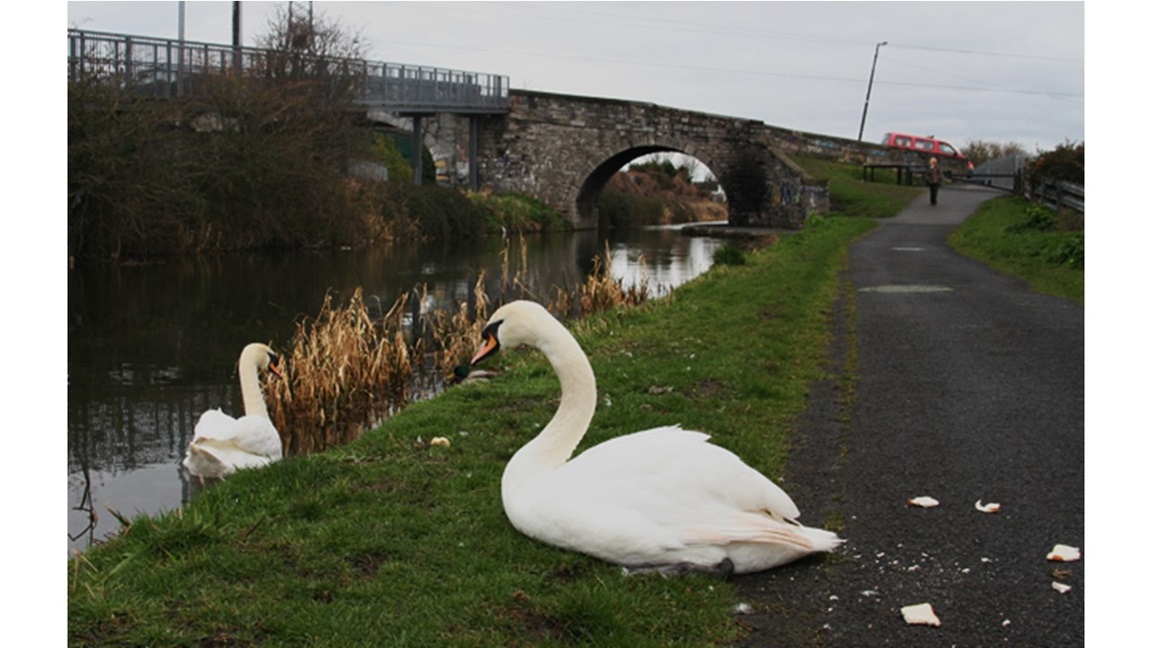
I stop to watch the swans swim by,
__Through lily pads they pass.
Mounds of rubbish clog the water
__That winds through clumps of grass.

The birds float by so leisurely,
__So big, and proud, and slow,
Heedless of the piles of litter
__That block the water’s flow.

The big white birds, they sail on by;
__They ply these Dublin seas,
Past plastic bags and floating rags
__In water stained like tea.

They cruise canals of brackish water,
__Patrolling Dublin’s shores,
Past the relics of old churches
__And rows of Georgian doors.

Upon these mirrored lengths of water,
__Beneath a silver moon,
These feathered ghosts swim to and fro;
__They haunt the evening gloom.

But bright morning spoils the picture.
__Amid the urban sprawl,
On oily foam, swans make their home
__Beside a moldy wall.

These majestic lords of nature,
__They ride the algae tides,
Through labyrinth winding waterways,
__Along their reedy sides.

These feathered boats immaculate,
__They sail these inland waves,
Amid the droning of the traffic,
__Through Dublin’s urban maze.

Far from home and friends in Dublin,
__Where I have lost my way,
I watch the swans go sailing by
__As daylight ebbs away.

.

.

Louis Groarke is a professor in the Philosphy Department of St. Francis Xavier University, in Canada. He has published short stories and poems in various literary venues but is a philosopher by trade.  He recently published a book on literary criticism Uttering the Unutterable: Aristotle, Religion, and Literature (McGill-Queen’s University Press, 2023).  In effect, it provides a traditional response to post-modernism.

ShareTweetPin
The Society of Classical Poets does not endorse any views expressed in individual poems or commentary.
Read Our Comments Policy Here

RandomPoems

A Poem on the Zambian National Park Mosi-oa-Tunya, by Paul A. Freeman
Poetry

A Poem on the Zambian National Park Mosi-oa-Tunya, by Paul A. Freeman

May 11, 2026

  Mosi-oa-Tunya Mosi-oa-Tunya is ‘The Thunderous Smoke’; twixt Zambia and Zimbabwe it sits; Doc Livingstone, that missionary bloke observed its...

‘The Navy’ and Other Love Poems by Paul Fort, Translated by Joshua C. Frank
Love Poems

‘The Navy’ and Other Love Poems by Paul Fort, Translated by Joshua C. Frank

November 12, 2023

. The Navy by Paul Fort (1872-1960) translated by Joshua C. Frank We find them all again in brief In...

Next Post
‘Winter’s Bed’: A Poem by D.C.C. Randell

'Winter’s Bed': A Poem by D.C.C. Randell

‘Paperbark Maples’: A Poem by Daniel Kemper

'Paperbark Maples': A Poem by Daniel Kemper

‘Moon Glow’: A Poem by Pamela Ruggiero

'Moon Glow': A Poem by Pamela Ruggiero

Comments 14

  1. Roy E. Peterson says:
    2 years ago

    Your poem at once is both somber and enchanting. I felt your love for the swans and Dublin along with sadness for the stark realities facing such lovely birds. There is vivid magic in your words and insertion of masterful rhyme. Thank you for sharing with us!

    Reply
    • Louis groarke says:
      2 years ago

      Thanks very much Roy; I appreciate the generous comments.

      Reply
  2. Paul A. Freeman says:
    2 years ago

    This feels like a poem examining the twilight of a species. Let’s hope the authorities in Dublin sit up and listen. Why not see if you can get the poem published by an Irish publication?

    Thanks for the read, Louis.

    Reply
    • Louis groarke says:
      2 years ago

      I started the poem about 10 years ago when I was distressed by the garbage floating in the Grand Canal, with, nonetheless, those majestic Dublin swans floating by. The last time I was over it had been cleaned up somewhat, but not completely. I am not sure what is happening now. I wanted to capture something bittersweet: an image of beauty in spite of or alongside the detritus of urban modernity. Thanks for your comment, Paul.

      Reply
      • Paul A. Freeman says:
        2 years ago

        The main problem for swans in English waterways used to be lead weights on fishing lines that got snagged on vegetation and then ingested by the birds.

        Awareness campaigns and legislation (the Control of Pollution ( Angler’s Lead weights) Regulations 1986) has largely sorted that problem out, thank goodness. Now swans are free to range the riverbanks biting the ankles of anyone they take a dislike to and pleasing the riverside artists.

        I feel my own swan poem coming on, Louis…

        Reply
  3. Shamik Banerjee says:
    2 years ago

    This is not only a poem on a gang of enchanting birds cruising through the Dublin waters, attracting attention, but also on the poor and sorry state of the water channel. Your varied description of the birds gives life to the poem: feathered ghosts, majestic lords of nature, and fathered boats immaculate. The insertion of some trochaic lines between the iambic ones refreshes the poem. It’s a wonderful piece, Louis. Thanks for sharing it.

    Reply
    • Louis groarke says:
      2 years ago

      Thank you, Shamik; yes, the swans were lovely; the water rather less so. I hope the poem captures something about the modern era… something about nature, still beautiful in the ruins; perhaps there is some hope there as well; perennial nature serving up beautiful transcendent images. Thanks, again,

      Reply
  4. Martin Rizley says:
    2 years ago

    The final stanza made me reflect on the parallel between the swan´s surviving nobly amidst squalorous conditions and your own situation as someone who is “far from home and friends in Dublin! and who has “lost his way.” Are you suggesting that the thought of the swans in Dublin managing to live their lives in less than ideal circumstances serves as an inspiration for you to persevere amidst personal difficulties? Is the poem about rising nobly above advesity to survive and thrive?

    Reply
    • Louis groarke says:
      2 years ago

      Hi Martin, Yes, absolutely; without being didactic, the swans do provide an. image of resilience in spite of the shoddiness of modern life and our throw-away culture. Earlier versions of the poem did not have the autobiographical reference at the end; but I wanted to take a turn and make it personal with a human parallel. To bring the poet into the scene. I liked the water image of daylight “ebbing” away (like the sea) with a bit of a melancholy twist at the end. Thanks for your thoughts,

      Reply
  5. Margaret Coats says:
    2 years ago

    The swimmingly smooth meter of the poem persuades, before anything else, that something is right in Dublin. The beauty and nonchalance of the swans form a lively contrast with the menacing deadness of debris that threatens them. How close they are to it, and how the reader hopes it will not sicken them! There is also concern for the speaker, lost and yet not eager, it seems, to find himself or be found while the swans are present, even though daylight is ebbing away.

    A minor theme in the poem is water, mentioned over and over, though not emphasized. This perhaps refers to a kind of cleansing quality present in the polluted urban streams. The poem is a beautiful one despite the uneasiness of trash and filth observed. The quality of language lives up to the enchantment of lovely material images in swans and moon.

    Reply
    • Louis groarke says:
      2 years ago

      Thank you very much, Margaret; I appreciate the comment about the meter; I like to use short lines because it is a challenge, but, absolutely, I wanted the poem to flow, along with all the watery imagery. The swans in moonlight really are beautiful in Dublin! I was trying to communicate beauty in urban waste; beauty that remains and indeed pervades a big modern city in spite of everything. I think the poet is a bit lonely but enchanted by the purity of the birds parading. As I said above: the bittersweet; the beautiful and not so beautiful side by side. Uplifting but not overly sentimental. It is a bit hard to describe! Thanks for your generous comments, L.

      Reply
  6. Daniel Kemper says:
    2 years ago

    Good work, indeed. The theme of beauty among the ruins as it were, is one toward which I’m deeply sympathetic. The fact that the swans are untouched by it also resonates deeply. As Margaret noted, the smoothness of the meter enhances the effect of moving through the world, or has been better said, “being in the world, not of it.”

    Looking forward to more!

    Reply
    • Louis groarke says:
      2 years ago

      Thanks Daniel; the encouragement is much appreciated, L.

      Reply
  7. Adam Sedia says:
    2 years ago

    This is a poem of contrasts: the beautiful, seemingly immortal white swans against the filth of a degenerated landscape. Despite the latter, the image of the swan gives us something to hope for. The image of the “ghosts” at night was a nice “moment of clarity” in the midst of the otherwise drab imagery. The musicality of the ballad form you use does not detract from the forlornness of the poem, but transforms it into a song of lamentation.

    From the subject and the setting I couldn’t help but think of Yeats’s “The Wild Swans at Coole.” Your poem, though a world away stylistically, still invokes the same emotions: a sense of loss and nostalgia, and at the end of arriving at inner peace — though I would add that you give a sense of hope that is lacking in Yeats’s poem.

    Reply

Leave a Reply Cancel reply

Your email address will not be published. Required fields are marked *

  1. Joseph S. Salemi on National Poetry Month Limerick ChallengeJuly 18, 2026

    Susan, that is very timely. He that hath ears to hear, let him hear.

  2. Susan Jarvis Bryant on ‘My Pyjamas!’ and Other Poems by Susan Jarvis BryantJuly 18, 2026

    Jan, thank you very much for your encouraging comment. I'm so glad you enjoyed the poems and especially glad they…

  3. James Sale on ‘The 51st State’: A Poem by James SaleJuly 18, 2026

    Not quite a win, Theresa, but thank you for the thought, and congratulations yourself on your "Finalist' status for your…

  4. Susan Jarvis Bryant on National Poetry Month Limerick ChallengeJuly 18, 2026

    A Slippery Victory There once was a prize for the best, Though merit was hardly the test. The winner was…

  5. Susan Jarvis Bryant on National Poetry Month Limerick ChallengeJuly 18, 2026

    Beautifully written and hilarious, Jan! You have inspired me to have a go. Thank you!

Subscribe to Daily Poems

Enter your email address to subscribe to this blog and receive notifications of new posts by email.

Join 1,594 other subscribers

Recent Poems

  • Winners and Rankings of The Great American Poetry Competition
  • ‘The Gold Star Mother’: A Poem by Gerard Maritato
  • ‘An American Dash’: A Poem by Linda Ellis
  • ‘The Anonymous Soldier’: A Poem by Lucy Lind
  • ‘For Those We Never Meet’: A Poem by Aneesh Agarwal
  • ‘Ben Franklin’s Copper Fugio Cent’: A Poem by Geoffrey Smagacz
  • Three Brief Poems by Luxorius, Translated by Joseph S. Salemi
  • ‘The American Spirit’: A Poem by Dusty Grein
  • ‘The Ballad of Zebulon Pike’: A Poem by M.D. Skeen
  • ‘We Are the Ones’ and Other Poetry by Cheryl Corey
  • ‘My Pyjamas!’ and Other Poems by Susan Jarvis Bryant
  • ‘A Snowy Egret’: A Poem by Bruce Dale Wise
  • ‘The Swearing-in of Calvin Coolidge’: A Sonnet by Robert W. Crawford
  • ‘Ballad of the Sequoia’: A Poem by Lauren V. Leon
  • ‘The 51st State’: A Poem by James Sale
  • ‘La Uva’ (The Grape): A Poem by Michael Pietrack
  • ‘There’s Blood that Flows Within the Stripes’: A Poem by Lauren V. Leon
  • ‘Birdsong’: A Poem by Jeffrey Essmann
  • ‘The Melody That Lingers On’ and Other Poetry by John McPherson
  • ‘American Dreams’: A Poem by Adam Sedia
  • ‘An American Fabius’: A Poem by John Hernandez
  • ‘Vernal Clinic’ and Other Poetry by C.B. Anderson
  • ‘Omaha Beach’ and Other Poetry by Bradford Skow
  • ‘Music to Part the Veil’: A Poem by T.M. Moore
  • ‘A Gentleman’s Guide to Losing a War’ and Other Poetry by Arnon Peterson
  • ‘Black Shuck’: A Poem by Martin Briggs
  • ‘When the Last World War II Veteran Passes Away’: A Poem by N.S. Boone
  • ‘A Fallow Year at Worthy Farm’: A Poem by Paul A. Freeman
  • ‘Outstanding in Afghanistan’: A Poem by Jared S. Chang
  • ‘250 More’: A Poem by Miguel Moreno

Categories

  • Acrostic
  • Alexandroid
  • Alliterative
  • Art
  • Best Poems
  • Blank Verse
  • Chant Royal
  • Classical Poets Live
  • Clerihew
  • Covid-19
  • Deconstructing Communism
  • Educational
  • Epic
  • Epigrams and Proverbs
  • Essays
    • Interviews with Poets
    • Poetry Reviews
  • Featured
  • From the Society
  • Great Poets
    • Dante Alighieri
    • Edgar Allan Poe
    • Emily Dickinson
    • Geoffrey Chaucer
    • Henry Wadsworth Longfellow
    • Homer
    • John Keats
    • John Milton
    • Robert Frost
    • William Blake
    • William Shakespeare
    • William Wordsworth
  • Human Rights in China
  • Limerick
  • Love Poems
  • Music
  • Pantoum
  • Performing Arts
  • Poetry
    • Beauty
    • Children's Poems
    • Culture
    • Ekphrastic
    • Found Poems
    • High School Poets
    • Humor
    • Riddles
  • Poetry Challenge
  • Poetry Contests
  • Poetry Forms
    • Curtal Sonnet
    • Haiku
  • Poetry Readings
  • Rhupunt
  • Rondeau
  • Rondeau Redoublé
  • Rondel
  • Rubaiyat
  • Sapphic Verse
  • Satire
  • Science
  • Sestina
  • Shape Poems
  • Short Stories
  • Song Lyrics
  • Sonnet
  • Symposium
  • Terrorism
  • Terza Rima
  • The Environment
  • Translation
  • Triolet
  • Video
  • Villanelle

Quick Links

  • About Us
  • Submit Poetry
  • Become a Member
  • Members List
  • Support the Society
  • Advertisement Placement
  • Comments Policy
  • Terms of Use

Welcome Back!

Login to your account below

Forgotten Password?

Retrieve your password

Please enter your username or email address to reset your password.

Log In
No Result
View All Result
  • Poems
    • Beauty
    • Culture
    • Satire
    • Humor
    • Children’s
    • Art
    • Ekphrastic
    • Epic
    • Epigrams and Proverbs
    • Human Rights in China
    • Music
    • Performing Arts
    • Riddles
    • Science
    • Song Lyrics
    • The Environment
    • The Raven
    • Found Poems
    • High School Poets
    • Terrorism
    • Covid-19
  • Poetry Forms
    • Sonnet
    • Haiku
    • Limerick
    • Villanelle
    • Rondeau
    • Pantoum
    • Sestina
    • Triolet
    • Acrostic
    • Alexandroid
    • Alliterative
    • Blank Verse
    • Chant Royal
    • Clerihew
    • Rhupunt
    • Rondeau Redoublé
    • Rondel
    • Rubaiyat
    • Sapphic Verse
    • Shape Poems
    • Terza Rima
  • Great Poets
    • Geoffrey Chaucer
    • Emily Dickinson
    • Homer
    • Henry Wadsworth Longfellow
    • Dante Alighieri
    • John Keats
    • John Milton
    • Edgar Allan Poe
    • William Shakespeare
    • William Wordsworth
    • William Blake
    • Robert Frost
  • Love Poems
  • Contests
  • SCP Academy
    • Educational
    • Teaching Classical Poetry—A Guide for Educators
    • Poetry Forms
    • The SCP Journal
    • Books

© 2025 SCP. WebDesign by CODEC Prime.