


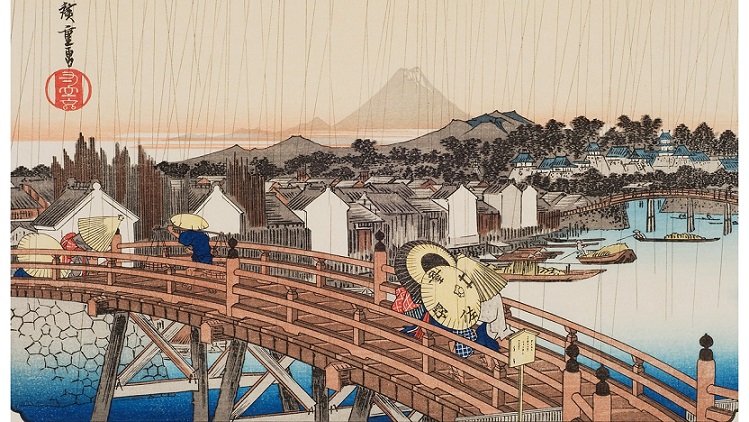
.
Winners announced here.
Write a haiku and post it in the comments section below. The haiku must adhere to the traditional parameters of a haiku to qualify and may be deleted if it does not. See traditional haiku requirements here. Note that a haiku is like a a painting of nature. If your 5-7-5 poem is focused solely on human nature and is more cynical or humorous, then it is technically a senryu, not a haiku. However, haiku do concern human activities in relation to nature. The required seasonal word can refer to seasonal sports, holidays, entertainment, gardening, housekeeping, or visits to special places. Although this contest is held in summer, haiku dealing with any season are acceptable.
.
WHEN:
Now until Saturday August 28, 2021 midnight EST. Winners Announced September 5.
.
WHO:
Anyone in the world, any age or background, may participate. From within the Society, anyone, including Advisory Board Members, not involved in judging the contest may participate. (If you are outside the United States, you will have to have a PayPal account or a bank that accepts U.S. checks to receive the prize money if you win.)
.
WHAT:
Each entrant may submit up to three haiku. Must conform to traditional haiku rules above.
.
WHERE:
Post your haiku in the comments section below.
.
PRIZE:
$100.
.
JUDGE:
.
ENTRY FEE:
None
.
EXAMPLES
See last year’s winning haiku here.
.
.















Summer monsoon rain —
water like a smither’s weight …
the village below.
The wind’s cooling blows
Caress to give reminders
To breathe life with hope
……………………………………………….
The rush of water
Which flowing sound still lingers
Births a greener earth
………………………………………………….
Bedazzling sunset
A view that’s so picturesque
Wows dreamy mindset
Walking in the woods
A cute bee sits on my arm
The stinger hits me
Cotton Candy Clouds
What I reach for but can’t touch
Like my furthest dreams
Submerged in the pond
deriving serenity–
Countless thistles drift.
———–
Colored, extensive.
Grout amidst the rows of bricks. . .
Comprising cities.
———
Vaporous evening
mislaid; severs the lumber–
Forest tunes quiver.
I’d like to edit the first two haikus since both use a past tense word.
Submerge in the pond
deriving serenity—
Countless thistles drift.
—————————
Colors, extensive.
Grout amidst the rows of bricks. . .
Comprising cities.
“Shhh,” wet leaves whisper,
gossiping with cooled baked earth
about summer rain.
Warm wind twists and twirls
Playful with the Jasmine’s blush
Gaining fagranced touch.
Crops of fire airborne
Fireflies weave and bob shaming
The moon on a stick.
********
endless paddy fields . . .
dancing in the summer wind
freshly dressed scarecrows
*******
nature’s life cycle . . .
on bombarded desert roads
scattered palm seedlings
*******
this autumn evening . . .
from a worn out bamboo brush
drying fallen leaves
********
glow in the window
of a snow-covered cottage . . .
stories with Grandma
tall cotton reeds sway
beside a red-tiled roof, stir
a sleeping phoenix
balcony shadows
cats confronting cats: jumble
of classical urns
the dreamy swaying
of Conestoga wagons:
White Cliffs of Dover
silent world of white
iceberg thunders, chunk in sea
Antarctica tears
Evanescent Owl
finally the night
succumbs to the gentle moon
flap – evanescent owl
©️ CJ Laing – 20/08/2021
Silent blooming rose
Crying in the break of dawn
Unafraid of thorns
Hesitant flowers
Burst into elegant flames
Marking rebirth
Lightening screeching above
Creatures arouse with fury
Clear sounds awaken
Killing and Cooing
High Coo, Hay Coo, Scy-
thing Rye Crew, Millet Airy
Coup — by crops doves fly.
indefinite
bees stoop hinged petals
whose names escape me, outdoors
as summer’s close calls
mid day
hot sun gold and hard
dead weight on autumn water
a mist off the lake
Thanks Mike
https://classicalpoets.org/2014/01/03/haiku-by-evan-mantyk/
Not for the competition (that’s up to Evan)
But for recognition
legs like rustling leaves
sway slow and thick as August,
poplars in the breeze
Under A Blood Moon
By Jad Youssef Doumani
With Autumn, they come—
The proud wolf howls one last time
Under a blood moon
Eid al-Adha
By Jad Youssef Doumani
The goats are brought forth
A screaming across the sky
Then nothing— silence…
Cold autumn morning
grey distances resolving
into hopes or griefs
Pine-needles shedding
slantwise through wind and rainstorm
harsh words from a friend
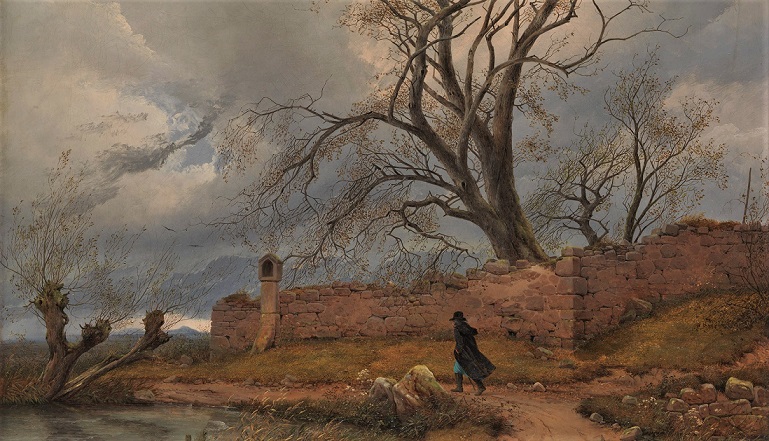
Stone wall half-fallen
greener than summers unseen
lost in creeping moss
Love this image
dyed in shades of sky
the city sweating color
falling rain is blue
walk the bridge or sail
in boats, the choice depends on
where you want to go
perched on damp branches
birds try not to fly in rain
they wait for sunshine
the smell of new rain
flowers blooming once again
clouds open up to reign
no one on this earth
no one that anyone knows
no one is worthy
just one more time
is all he needs to Prevail
football games r great
-Leaving-
an amber leaf falls,
the pale wind blows in the dusk,
his sunken, still eyes.
-She-
rose cherry blossom
dear little dew-drops here and there
my mom’s tears of joy
-Aroma-
smell of spring flowers
the wind brings the smell of corn
my dad’s sweaty shirt.
such a windy day
all my thoughts are reaching you
little bit faster
Cool touch of a mist
Silky tendril hanging soft
Olympic golden
If I should be lucky enough to win, the prize money will go to an American charity. I am not sure if my attempt adheres to Haiku rules: it relates to the latest great sporting event, with a “nod to nature”. It is in fact an Olympic gold medal !
Hello, Judith.
Unfortunately ‘the Olympic games’ as such are not counted as seasonal words in Japanese Haiku…I don’t know the correct reason for it. Probably, as the Olympic games are held in summer and winter every four years, they are not season-specific events.
As a reference, please check up the entry ‘Olympic games’ in Gabi Greve’s World Kigo Database.
https://wkdhaikutopics.blogspot.com/2008/04/olympic-games.html
“Olympic Games, just like this, is not a kigo.
But we have the kigo
Summer Olympics
Winter Olympics”
Judith, your haiku describes a seasonal event in terms taken from nature, and thus it has an acceptable seasonal reference. I say this to make it clear to everyone who sees your post that a recognizable seasonal reference is the requirement, NOT the use of any kigo list. Japanese kigo are useful shorthand for seasons, but NO LIST OF THEM IS COMPREHENSIVE OR UNIVERSAL. In fact, even in Japanese lists, new kigo are sometimes added, when one or more haiku masters or associations determine they are useful. This clearly shows that the seasonal reference depends on the artistry of each poet, just as it did for the great master poets of the past.
In this competition, we already have good entries about nature and seasonal occurrences or activities in seven continents. Of course the blog or website of any single haiku master or school is not sufficient to judge all the work we are glad to welcome at the Society of Classical Poets.
Hello, Judith and Margaret,
I did not intend to judge Judith’s haiku. I’m sorry if I offended you.
I only wanted to share my opinion about whether or not “Olympics” per se is considered as a seasonal reference. My point is that, as Olympics are held BOTH in summer and winter, if you wanted to use it, it should be better to be more season-specific: as in Greve’s examples.
Of course, even in Japanese Haiku, there exist groups practicing ‘haiku with no seasonal reference’ and ‘free-form haiku which has more than or less than 17 syllables,’ as you know. In this world-wide haiku contest, they all should be acceptable, but, if you want to follow the traditional haiku form, it seems to be better to treat a seasonal reference more carefully.
(for another example, using more than two seasonal references (especially, each of them corresponding to different seasons such as ‘sakura’ [Spring] and ‘snow’ [Winter]) in a haiku is also watchfully treated in Japanese haiku.)
Anyway, I’m also quite impressed by seeing so many fascinating haiku entries from world-wide, including Judith’s one! Thank you for everyone participating this contest.
When I compose a haiku, I (and most of Japanese) always consult several reference books of seasonal words (kigo list or saijiki in Japan), sometimes a handy one, sometimes a multi-volume set because they also contain hundreds of fine examples of haiku masters, and those books are easily accessible in Japan.
I am curious about whether or not such a kind of reference book in English is available. Mr. Greve’s blog was just found in Google search when I tried to comment to Judith’s haiku. I’m not sure whether or not it is widely used or is reliable one (it seems to be nicely done) .
I totally understand that using a reference book is not need in this contest, but, if you share your favorite kigo list or reference book with me, it would be very helpful.
Toshiji, I very much appreciate your contributions of poems and comments. It is especially kind of you to present your own haiku in both English and Japanese. I too use references to check my kigo when I am writing poems. I own many haiku books, and I recommend that everyone read more haiku, in order to understand the haiku tradition better.
At this point of time in this competition, I will not mention any specific references. That would not be fair to poets who have already submitted their entries. But please look at what I will say when announcing the winners. I agree that it is important to give more explanation of how haiku tradition developed in English. Of course this includes recommending books where English speakers can read English translations (in traditional form) of the haiku of the great Japanese poets. Basho, Buson, Issa, Shiki, and others are still the best teachers.