


.
Winners announced here.
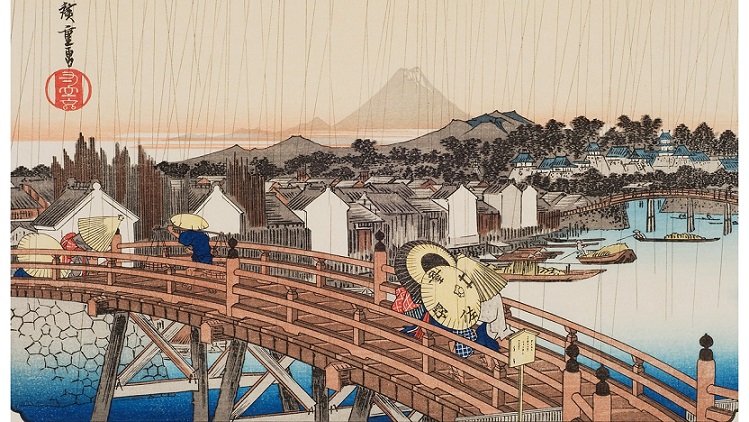
Write a haiku and post it in the comments section below. The haiku must adhere to the traditional parameters of a haiku to qualify and may be deleted if it does not. See traditional haiku requirements here. Note that a haiku is like a a painting of nature. If your 5-7-5 poem is focused solely on human nature and is more cynical or humorous, then it is technically a senryu, not a haiku. However, haiku do concern human activities in relation to nature. The required seasonal word can refer to seasonal sports, holidays, entertainment, gardening, housekeeping, or visits to special places. Although this contest is held in summer, haiku dealing with any season are acceptable.
.
WHEN:
Now until Saturday August 28, 2021 midnight EST. Winners Announced September 5.
.
WHO:
Anyone in the world, any age or background, may participate. From within the Society, anyone, including Advisory Board Members, not involved in judging the contest may participate. (If you are outside the United States, you will have to have a PayPal account or a bank that accepts U.S. checks to receive the prize money if you win.)
.
WHAT:
Each entrant may submit up to three haiku. Must conform to traditional haiku rules above.
.
WHERE:
Post your haiku in the comments section below.
.
PRIZE:
$100.
.
JUDGE:
.
ENTRY FEE:
None
.
EXAMPLES
See last year’s winning haiku here.
.
.

















Gentle friend is here
Tapping my arm now, lovely boy
Furry companion speaks
Night whispers darkness
Floating leaves drift by us here
Quietly observing all
Roses are in bloom
It’s quiet this afternoon
You were gone too soon
The hour of fright
Owl eyes gleaming in the night
Field mice are in sight
In the summer breeze
I hear your endless lament
Pollen and sinus
I lament with you Grant! haha
Glorious Beauty
Black and amber mass of grace
Breaths bound to seasons.
Rain slides off a beak
Fearless of Spring’s elements
About your business!
Beauty bathed by blue
Chrysanthemums golden kissed
Fall’s enframed glory
Deep in thought.
The fruits of summer
Visible before my eyes…
Feeling glorified
Departure of spring
Flowers ready to wither
Under barren touch
Maturing wheatstalks
Weave of hope flashes upon
The farmer’s belief
sharing the silence
with a thousand desert stars . . .
lone cactus flower
Haunting silence of the desert captured. Beautiful
wind chimes in morning
a cooling breath of sea air
begins its journey
Sky laughs, Earth is sad
Winter use to lie ahead
Probably grimmer, now and then
I love the focus on the air in the chimes and then moving on its journey!
apple of autumn
ripening innocently,
then . . . warm to my bite
Tokyo in bloom
diversity bound rainbow
all the world shimmers
Lost unspoken words
Hands clasping each other locked
Sleep safeguards your thoughts
Almost nothing here is a real Haiku. Most are Haiku wannabees.
As judge of this contest, I have been reading entries every day, and I think Mr. Anderson is too severe in saying almost none of the submissions are haiku. I have found many that qualify, and some that are very good. However, I have also found many that neglect one or more of the requirements for traditional haiku. This is a contest for poets to do something new and exciting WITHIN AN ESTABLISHED TRADITION. Before submitting your entries, please read the “How to Write Haiku” article that you will find by clicking the word “here” where the contest instructions say, “See traditional haiku requirements here.” You should be able to tell why Mr. Anderson’s poem does not qualify:
Almost nothing here
is a real Haiku. Most are
Haiku wannabees.
If you need to correct entries that are already submitted, please press REPLY under your poem and make the correction there, as several poets have already done.
Now we feel foolish,
reclassifying haiku
that were senryu.
Dear Coats, In response to your opinion above I would like to add:
There are 2 more rules of haiku 1) no capital letters
2) no anthropomorphism.
What is the source that backs up your comment?
Sathyam — I don’t understand how capitalization (or lack thereof) matters when writing Haiku. There is no such thing as capital/lowercase in Japanese, it’s true, but if you are going to write a Haiku in a language other than Japanese, I think you have to make allowances for linguistic or typographical features that don’t exist in Japanese.
I suggest Folk refer to the British poet, John Cooper-Clark, for “what makes a Haiku”… (He holds Basho would demand he commit Sepeku if he dared break the key rules of the form.)
John acknowledges the difficulty some Folk face keeping to the 5/7/5 in his brilliant observation:
“Creating One’s mood
With seventeen syllables
Is very diffic…”
Dx
Simple three-line poems.
Any fool can pen haikus.
Seventeen syllab
Regarding capitalisation and anthropomorphism, I read these rules and many more in http://www.museindia.com where several haiku exp etta post their haiku. They gave even a list of seasonal words which is called as ‘kegu’ in Japanese.
Sorry I mean experts.
https://wkdhaikutopics.blogspot.com/2007/02/anthropomorphism.html
This contest is sponsored, and the rules were set before the contest opened, by the Society of Classical Poets. The rules will not be changed. There are many haiku masters and teachers in various places throughout the world, each with his own ideas on how best to present haiku. Expectations at the Society of Classical Poets accommodate a number of schools, and I am happy to say that I recognize several schools participating here. We welcome every poet who works in the traditional form of English haiku–and NO ONE is required to adopt the customs of someone else’s teacher. Contestants, please do your own best work, and do not try to instruct others.
In particular, I will say that no one needs to use a seasonal word from a Japanese kigo list. The season of your poem can be made clear however you like, and kigo are convenient shorthand for that. But seasons where you live may not correspond to those in Japan. We leave the seasonal reference to the poet’s skill. Other items not mentioned in competition rules above are also up to each poet’s own artistic judgment.
stick nest tops tall post
hungry chicks, new from their eggs
fish: osprey plummets
mackintosh hangs, ripe
submits self for appraisal
worm has found delight
sweet rose of sharon
lavender beyond window
squirrel leaps from branch
Dogs delight my heart
Love devotion eternal
God’s earth companion
Such a sweet homage to our canine friends!
The hoot of an owl
And a chuck-chucking spurfowl.
Dawn us breaking.
Typo correction:
The hoot of an owl
And a chuck-chucking spurfowl
Dawn is breaking
It is thawing time –
The azaleea bushes
Are ready to bloom
The inverse count –
Will I have time to write
My good bye haiku?
The tomb of a hero-
his name has been delated
by winds and tempests
yes! how many tombstones are erased to time?
Waves roll in to shore
Find a message in bottle
Lesson from the sea
A tiny seed sprouts
Growing a green canopy
Fills your lungs with air
Cycle of life. Trees will save us!
Magic carpet blooms
Heavenly bliss for the bees
Honey flows in streams