• Submit Poetry
  • Support SCP
  • About Us
  • Members
  • Join
Tuesday, May 12, 2026
Society of Classical Poets
  • Poems
    • Beauty
    • Culture
    • Satire
    • Humor
    • Children’s
    • Art
    • Ekphrastic
    • Epic
    • Epigrams and Proverbs
    • Human Rights in China
    • Music
    • Performing Arts
    • Riddles
    • Science
    • Song Lyrics
    • The Environment
    • The Raven
    • Found Poems
    • High School Poets
    • Terrorism
    • Covid-19
  • Poetry Forms
    • Sonnet
    • Haiku
    • Limerick
    • Villanelle
    • Rondeau
    • Pantoum
    • Sestina
    • Triolet
    • Acrostic
    • Alexandroid
    • Alliterative
    • Blank Verse
    • Chant Royal
    • Clerihew
    • Rhupunt
    • Rondeau Redoublé
    • Rondel
    • Rubaiyat
    • Sapphic Verse
    • Shape Poems
    • Terza Rima
  • Great Poets
    • Geoffrey Chaucer
    • Emily Dickinson
    • Homer
    • Henry Wadsworth Longfellow
    • Dante Alighieri
    • John Keats
    • John Milton
    • Edgar Allan Poe
    • William Shakespeare
    • William Wordsworth
    • William Blake
    • Robert Frost
  • Love Poems
  • Contests
  • SCP Academy
    • Educational
    • Teaching Classical Poetry—A Guide for Educators
    • Poetry Forms
    • The SCP Journal
    • Books
No Result
View All Result
Society of Classical Poets
  • Poems
    • Beauty
    • Culture
    • Satire
    • Humor
    • Children’s
    • Art
    • Ekphrastic
    • Epic
    • Epigrams and Proverbs
    • Human Rights in China
    • Music
    • Performing Arts
    • Riddles
    • Science
    • Song Lyrics
    • The Environment
    • The Raven
    • Found Poems
    • High School Poets
    • Terrorism
    • Covid-19
  • Poetry Forms
    • Sonnet
    • Haiku
    • Limerick
    • Villanelle
    • Rondeau
    • Pantoum
    • Sestina
    • Triolet
    • Acrostic
    • Alexandroid
    • Alliterative
    • Blank Verse
    • Chant Royal
    • Clerihew
    • Rhupunt
    • Rondeau Redoublé
    • Rondel
    • Rubaiyat
    • Sapphic Verse
    • Shape Poems
    • Terza Rima
  • Great Poets
    • Geoffrey Chaucer
    • Emily Dickinson
    • Homer
    • Henry Wadsworth Longfellow
    • Dante Alighieri
    • John Keats
    • John Milton
    • Edgar Allan Poe
    • William Shakespeare
    • William Wordsworth
    • William Blake
    • Robert Frost
  • Love Poems
  • Contests
  • SCP Academy
    • Educational
    • Teaching Classical Poetry—A Guide for Educators
    • Poetry Forms
    • The SCP Journal
    • Books
No Result
View All Result
Society of Classical Poets
No Result
View All Result
Home Poetry Beauty

‘In Favour of Form’ by M. P. Lauretta

April 15, 2019
in Beauty, Culture, Poetry
A A
18
poems 'In Favour of Form' by M. P. Lauretta


Today poetic form is ostracised.
It’s stifled and suppressed, deemed obsolete;
classed as archaic, stuffy and effete,
a vestige of the past to be chastised.

Make no mistake, the ‘advice’ is quite prescriptive:
“be modern” and, above all, “just be free”
—though that idea of freedom seems to me
a little overbearing and restrictive.

How long is ‘modern’ modern, anyway?
I ask because they’ve been at it for ages,
yet after all these years and all their pages,
I still prefer to read Edna Millay.

I too “put chaos into fourteen lines”
—and yes, I love it—stuff the philistines!


M. P. Lauretta lives in the U.K., where she enjoys watching (and writing about) nature and current events. She is currently working on two new collections: one of sonnets and one of villanelles. Her first collection is still available from Amazon, Apple iBooks, and Barnes & Noble.

ShareTweetPin
The Society of Classical Poets does not endorse any views expressed in individual poems or commentary.
Read Our Comments Policy Here

RandomPoems

A Coronavirus Triolet and Other Poetry
Covid-19

A Coronavirus Triolet and Other Poetry

May 30, 2020

  A Grave Sin by Satyananda Sarangi How grave's this sin of man to shatter man! The human touch is...

Poetry

‘Mycenae’ and Other Poetry by Toni La Ree Bennett

December 5, 2012

Mycenae Passing through the lion-headed gate, years fall from her shoulders like heaps of old rags. Even in the innocent...

Next Post
SCP Poetry and Culture Symposium

SCP Poetry and Culture Symposium 2019

A Poem on Euthanasia, by Ron L. Hodges

A Poem on Euthanasia, by Ron L. Hodges

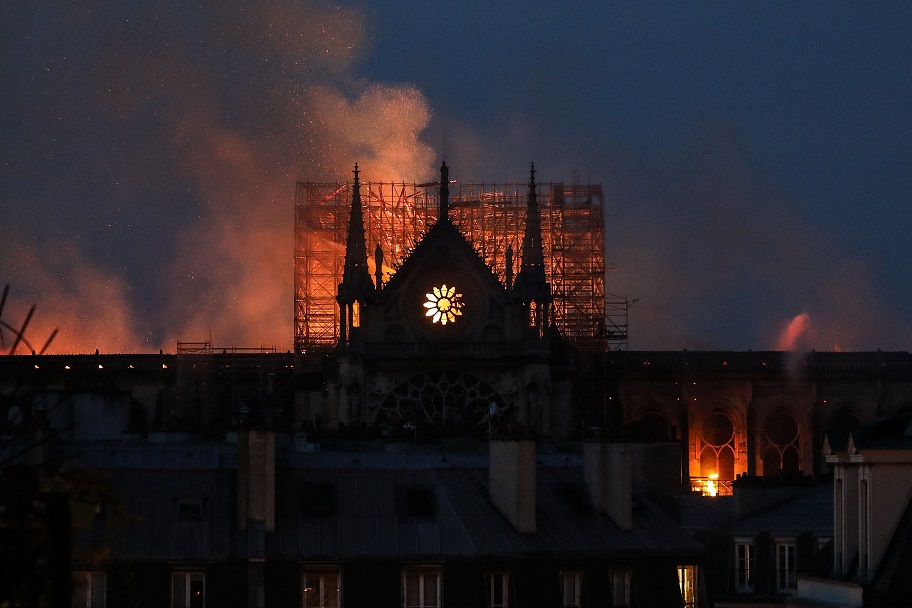
Three Poems on the Fire at Notre Dame Cathedral, Paris

Three Poems on the Fire at Notre Dame Cathedral, Paris

Comments 18

  1. James Sale says:
    7 years ago

    Wonderful sonnet – sock it to ’em, M.P. – love this poem!

    Reply
    • M. P. Lauretta says:
      7 years ago

      Thank you, James.

      Plus, of course, SCP is the right home for this poem. 🙂

      Reply
  2. Joseph S. Salemi says:
    7 years ago

    Writing quatrains in an ABBA rhyme scheme is not as easy as doing the more usual ABAB thing. The structure demands more care with both grammar and syntax. These ones work very well.

    Of course the pronunciation of “philistine” varies. In America it is usually phi-lis-TEEN, but in other places one hears “phi-lis-TINE” (the last syllable here rhyming with the tine of a fork).

    Reply
    • M. P. Lauretta says:
      7 years ago

      Thank you for the compliment!

      I must confess I was not aware ‘philistine’ was pronounced differently in the US. Now I can see how the final couplet may puzzle some people…

      Reply
  3. Dave Whippman says:
    7 years ago

    Clever work, well done. I hate dogmatism; if people want to write free verse, fine, but there are so many great poems that rhyme and scan.

    Reply
  4. Alexander Ream says:
    7 years ago

    Keep it up, and philistinism may have its Samson moment yet.

    Reply
  5. Mark Stone says:
    7 years ago

    M.P.

    1. I am uncomfortable with the word “chastised” for two reasons. First, my dictionary says that the word means “to punish, scold or condemn sharply.” When I think of the use of that word, I think of people being chastised, rather than things being chastised. Second, when I say the word, I emphasize the first syllable, and you would want the emphasis to be on the final syllable of line 4, since it is in iambic pentameter. I should mention that my dictionary says it is also correct to emphasize the first syllable of the word. Nevertheless, if you personally emphasize the first syllable, and you’re looking for another option for line 4, here is one:

    an artifact that should be fossilized.

    2. Every time I read the poem, I get stuck on line 7. Here are three alternatives that read smoothly:

    This notion, though, of freedom seems to me

    To think of freedom this way seems to me

    To think of freedom thusly seems to me

    My favorite is the last one because using “thusly” would give you vertical assonance with “just” in the previous line.

    3. Notwithstanding these comments, I very much like the poem.

    Reply
    • Joseph S. Salemi says:
      7 years ago

      You have trouble with line 7 because you don’t recognize that it begins with a choriamb. This is a normal and common substitution in the start of iambic pentameter lines. Here’s the scansion:

      THOUGH that iDEA of FREEdom SEEMS to ME

      “Thusly” is an impossible philistinism.

      Reply
  6. M. P. Lauretta says:
    7 years ago

    Yes, I appreciate that it is normally people and not things that are chastised, but when writing this sonnet I had a mental picture of the formal poem as personifying a victim being flagellated by the establishment – the latter being enraged by the fact that, despite all its efforts, formal poems still continue to be written, and read.

    How many formal poems are entered in competitions all over the world and discarded precisely because they are formal?

    I’m glad you like the poem anyway.

    Reply
    • James A. Tweedie says:
      7 years ago

      Amen, M.P. I am pondering submitting a poem to a local, annual literary anthology. The way I see it, I have two options: 1. Submit a free-verse poem with the possibility of being accepted or, 2. Submit a formal poem with the probability of being rejected. I believe I will end up submitting a sonnet, anyway. If it is turned down I will have no problem viewing it as a judgment/criticism/chastisement of the poetic form, itself. (By the way, I have also heard the word pronounced, philISTine, one of five options offered by Merrimack/Webster.)

      Reply
      • M. P. Lauretta says:
        7 years ago

        I agree with your choice. Not only is it a worthwhile test, but it preserves our integrity.

        Speaking of sonnets, do you know what really annoys me?

        According to ‘the establishment’ the sonnet is “unfashionable”. Ha!

        Yet – and this has to be the ultimate insult – if one of their protegees publishes a so-called collection of ‘sonnets’ – which in actual fact are not sonnets at all, being amorphous blobs which neither scan nor rhyme, but just happen to be 14 lines long – then, all of a sudden, it’s all the rage!

        Reply
      • M. P. Lauretta says:
        7 years ago

        There’s also the fact that if you comply, they win.

        Reply
  7. Joseph S. Salemi says:
    7 years ago

    There is absolutely no point at all in submitting formal poetry to any “mainstream” contest. It will be eliminated in the very first round of readings by stupid student interns.

    For years I submitted poems to State Poetry Competitions all over the nation. These contests were sponsored by the official State Poetry Societies of the various states of the American union. These societies are usually run (as Dana Gioia once colorfully pointed out) by “trinominate blue-haired ladies” whose only notion of poetry is gaseous, free-verse blather or Hallmark-Card sentimentalities.

    The competitions run by the late Dr. Alfred Dorn were much different. They specifically excluded free verse, and had twenty-five categories of competition calling for types of formal poetry (blank verse, sonnets, rhyme royal, villanelles, etc.), and they were very strictly judged. Nobody got away with anything freaky or “experimental.” And Dr. Dorn provided (out of his own pocket) substantial cash prizes in every category. These Dorn contests came to an end several years ago, with the man’s lapse into illness, and one of Dorn’s final requests was that I be the sole judge for the very last contest. I made sure that every prize went to the VERY BEST and strictest formal poem in each category. Over $3000 was distributed.

    Reply
    • M. P. Lauretta says:
      7 years ago

      Oh, the great Alfred Dorn!

      Of course, he’s totally unheard of here, but after reading some of his poems on The New Formalist website (which is currently offline, BTW) I was fortunate enough to source a copy of his From Cells to Mindscape, which I absolutely treasure.

      What’s more, it was after reading Alfred Dorn that I started writing villanelles. I can honestly say that if I hadn’t read some of his villanelles I would never had written any myself. His “Bikini Girl” and “From Bengal” turned my preconceptions upside down as they demonstrate how a poem in that form can still feel alive and convey real feeling despite the considerable formal constraints.

      Reply
  8. Dic Asburee Wel says:
    7 years ago

    At times, Mr. Salemi is as animated as he describes Mr. Dorn in his “In Memoriam”, from which this bauble comes.

    Alfred Dorn (1929-2014)

    He dwelled among the trodden ways
    in Flushing, Queens, New York,
    a man who liked a thoughtful phrase,
    the poet Alfred Dorn.

    A fresh carnation he would wear
    in dapper, crisp lapel;
    his walking stick would have to bear
    his six-foot-two uphill.

    He lived unknown, and few would know
    the poetry he wrote;
    but though he’s in his grave, brave soul,
    there are words one can note.

    Reply
    • Joseph S. Salemi says:
      7 years ago

      The above poem (not a particularly adept one) was NOT written by me. I have no idea who penned it.

      Reply
  9. Dic Asburee Wel says:
    7 years ago

    Obviously Joseph S. Salemi didn’t write that bauble; his baubles are elsewhere.

    Reply
  10. Joseph S. Salemi says:
    7 years ago

    And obviously, Bruce, your marbles are elsewhere, and have been for quite some time.

    If you had been able to write a semantically clear English sentence in your post of April 17, no confusion would have arisen.

    Reply

Leave a Reply Cancel reply

Your email address will not be published. Required fields are marked *

  1. Susan Jarvis Bryant on ‘Spontaneous Conjugal Combustion’ and Other Poems by Susan Jarvis BryantMay 12, 2026

    Awww, what a beautiful comment, Mark. It's lovely to hear of the joys of marital bliss after 53 years. Congratulations!…

  2. Susan Jarvis Bryant on ‘Spontaneous Conjugal Combustion’ and Other Poems by Susan Jarvis BryantMay 12, 2026

    C.B., it's always interesting to read your take on my poems, and I've got to say I agree with you…

  3. Roy Eugene Peterson on A Poem on Coach “Black Mike” Castronis from Athens Y Camp, by Alec ReamMay 12, 2026

    Alec, this is a touching tribute to a camp coach/counselor. I had my own at Camp Paisano near Alpine, Texas.…

  4. Roy Eugene Peterson on ‘Creation of Mom’: A Mother’s Day Poem by Roy E. PetersonMay 12, 2026

    Margaret, I was thinking about the vast variety of Moms when I wrote it. Thank you for pointing that out…

  5. Alec Ream on A Poem on Coach “Black Mike” Castronis from Athens Y Camp, by Alec ReamMay 12, 2026

    Margaret, thank you for the read and remarks. First Presbyterian is still there. As is Emmanuel Episcopal, which started at…

Subscribe to Daily Poems

Enter your email address to subscribe to this blog and receive notifications of new posts by email.

Join 1,593 other subscribers

Recent Poems

  • A Poem on Coach “Black Mike” Castronis from Athens Y Camp, by Alec Ream
  • A Poem on the Zambian National Park Mosi-oa-Tunya, by Paul A. Freeman
  • ‘Creation of Mom’: A Mother’s Day Poem by Roy E. Peterson
  • ‘Spontaneous Conjugal Combustion’ and Other Poems by Susan Jarvis Bryant
  • ‘The Man in the Moon Was a Very Round Man’: A Poem by Lauren V. Leon
  • ‘Fibromytrauma’: A Poem by Golan Shahar
  • ‘A Lonely Sliver’: A Poem by Katie Tencza
  • ‘Higher Gas Prices Are a Small Price to Pay’: An Iran War Poem by Mark F. Stone
  • ‘Always Ahead’: A Poem by Scharlie Meeuws
  • ‘Hamlet’s Lawyer’ and Other Poetry by Brian Yapko
  • ‘On An Old Photograph’: A Poem by Joseph S. Salemi
  • ‘Faust Foresees His End’: A Poem by Martin Briggs
  • ‘À la Carte’ and Other Poetry by C.B. Anderson
  • ‘Where the Sweet Bluebonnets Bloom’: A Poem by Roy E. Peterson
  • ‘The Waters’: A Poem by Margaret Brinton
  • ‘The Pinnacle of Poetry’ and Other Poems by Russel Winick
  • The First American Sonnets: An Essay on David Humphreys, by Margaret Coats
  • ‘The Holy Rollers on Poetry’: A Poem by Joseph S. Salemi
  • Sappho’s ‘Poem 1’ Translated by Bruce Phenix
  • ‘The Cautionary Tale of Phone Addicted Mimi’: A Poem by Paul A. Freeman
  • ‘Look Away’: A Poem for America’s 250th Anniversary, by Roger Crane
  • ‘Sunday Morning in Canada’: A Poem by Jeffrey Essmann
  • ‘Bean’: A Poem by Jan Mennite
  • ‘The Swan’s Song ’: A Poem for Shakespeare’s Birthday, by Susan Jarvis Bryant
  • ‘The Gravedigger’: A Poem by Marie Burdett
  • ‘Waiting for the Perfect Man’: A Poem by Janice Canerdy
  • ‘The George-A-Saurus’ and Other Poetry by Brian Yapko
  • ‘When Asked: What’s Your Favorite Season?’: A Poem by Paul Millan  
  • ‘The Last At-Bat of Lyndon Braun’: A Poem by Michael Pietrack
  • ‘The Perpetual Battle’ and Other Poetry by Adam Sedia

Categories

  • Acrostic
  • Alexandroid
  • Alliterative
  • Art
  • Best Poems
  • Blank Verse
  • Chant Royal
  • Classical Poets Live
  • Clerihew
  • Covid-19
  • Deconstructing Communism
  • Educational
  • Epic
  • Epigrams and Proverbs
  • Essays
    • Interviews with Poets
    • Poetry Reviews
  • Featured
  • From the Society
  • Great Poets
    • Dante Alighieri
    • Edgar Allan Poe
    • Emily Dickinson
    • Geoffrey Chaucer
    • Henry Wadsworth Longfellow
    • Homer
    • John Keats
    • John Milton
    • Robert Frost
    • William Blake
    • William Shakespeare
    • William Wordsworth
  • Human Rights in China
  • Limerick
  • Love Poems
  • Music
  • Pantoum
  • Performing Arts
  • Poetry
    • Beauty
    • Children's Poems
    • Culture
    • Ekphrastic
    • Found Poems
    • High School Poets
    • Humor
    • Riddles
  • Poetry Challenge
  • Poetry Contests
  • Poetry Forms
    • Curtal Sonnet
    • Haiku
  • Poetry Readings
  • Rhupunt
  • Rondeau
  • Rondeau Redoublé
  • Rondel
  • Rubaiyat
  • Sapphic Verse
  • Satire
  • Science
  • Sestina
  • Shape Poems
  • Short Stories
  • Song Lyrics
  • Sonnet
  • Symposium
  • Terrorism
  • Terza Rima
  • The Environment
  • Translation
  • Triolet
  • Video
  • Villanelle

Quick Links

  • About Us
  • Submit Poetry
  • Become a Member
  • Members List
  • Support the Society
  • Advertisement Placement
  • Comments Policy
  • Terms of Use

Welcome Back!

Login to your account below

Forgotten Password?

Retrieve your password

Please enter your username or email address to reset your password.

Log In
No Result
View All Result
  • Poems
    • Beauty
    • Culture
    • Satire
    • Humor
    • Children’s
    • Art
    • Ekphrastic
    • Epic
    • Epigrams and Proverbs
    • Human Rights in China
    • Music
    • Performing Arts
    • Riddles
    • Science
    • Song Lyrics
    • The Environment
    • The Raven
    • Found Poems
    • High School Poets
    • Terrorism
    • Covid-19
  • Poetry Forms
    • Sonnet
    • Haiku
    • Limerick
    • Villanelle
    • Rondeau
    • Pantoum
    • Sestina
    • Triolet
    • Acrostic
    • Alexandroid
    • Alliterative
    • Blank Verse
    • Chant Royal
    • Clerihew
    • Rhupunt
    • Rondeau Redoublé
    • Rondel
    • Rubaiyat
    • Sapphic Verse
    • Shape Poems
    • Terza Rima
  • Great Poets
    • Geoffrey Chaucer
    • Emily Dickinson
    • Homer
    • Henry Wadsworth Longfellow
    • Dante Alighieri
    • John Keats
    • John Milton
    • Edgar Allan Poe
    • William Shakespeare
    • William Wordsworth
    • William Blake
    • Robert Frost
  • Love Poems
  • Contests
  • SCP Academy
    • Educational
    • Teaching Classical Poetry—A Guide for Educators
    • Poetry Forms
    • The SCP Journal
    • Books

© 2025 SCP. WebDesign by CODEC Prime.