• Submit Poetry
  • Support SCP
  • About Us
  • Members
  • Join
Saturday, July 18, 2026
Society of Classical Poets
  • Poems
    • Beauty
    • Culture
    • Satire
    • Humor
    • Children’s
    • Art
    • Ekphrastic
    • Epic
    • Epigrams and Proverbs
    • Human Rights in China
    • Music
    • Performing Arts
    • Riddles
    • Science
    • Song Lyrics
    • The Environment
    • The Raven
    • Found Poems
    • High School Poets
    • Terrorism
    • Covid-19
  • Poetry Forms
    • Sonnet
    • Haiku
    • Limerick
    • Villanelle
    • Rondeau
    • Pantoum
    • Sestina
    • Triolet
    • Acrostic
    • Alexandroid
    • Alliterative
    • Blank Verse
    • Chant Royal
    • Clerihew
    • Rhupunt
    • Rondeau Redoublé
    • Rondel
    • Rubaiyat
    • Sapphic Verse
    • Shape Poems
    • Terza Rima
  • Great Poets
    • Geoffrey Chaucer
    • Emily Dickinson
    • Homer
    • Henry Wadsworth Longfellow
    • Dante Alighieri
    • John Keats
    • John Milton
    • Edgar Allan Poe
    • William Shakespeare
    • William Wordsworth
    • William Blake
    • Robert Frost
  • Love Poems
  • Contests
  • SCP Academy
    • Educational
    • Teaching Classical Poetry—A Guide for Educators
    • Poetry Forms
    • The SCP Journal
    • Books
No Result
View All Result
Society of Classical Poets
  • Poems
    • Beauty
    • Culture
    • Satire
    • Humor
    • Children’s
    • Art
    • Ekphrastic
    • Epic
    • Epigrams and Proverbs
    • Human Rights in China
    • Music
    • Performing Arts
    • Riddles
    • Science
    • Song Lyrics
    • The Environment
    • The Raven
    • Found Poems
    • High School Poets
    • Terrorism
    • Covid-19
  • Poetry Forms
    • Sonnet
    • Haiku
    • Limerick
    • Villanelle
    • Rondeau
    • Pantoum
    • Sestina
    • Triolet
    • Acrostic
    • Alexandroid
    • Alliterative
    • Blank Verse
    • Chant Royal
    • Clerihew
    • Rhupunt
    • Rondeau Redoublé
    • Rondel
    • Rubaiyat
    • Sapphic Verse
    • Shape Poems
    • Terza Rima
  • Great Poets
    • Geoffrey Chaucer
    • Emily Dickinson
    • Homer
    • Henry Wadsworth Longfellow
    • Dante Alighieri
    • John Keats
    • John Milton
    • Edgar Allan Poe
    • William Shakespeare
    • William Wordsworth
    • William Blake
    • Robert Frost
  • Love Poems
  • Contests
  • SCP Academy
    • Educational
    • Teaching Classical Poetry—A Guide for Educators
    • Poetry Forms
    • The SCP Journal
    • Books
No Result
View All Result
Society of Classical Poets
No Result
View All Result
Home Great Poets Henry Wadsworth Longfellow

‘Longfellow’: A Poem by Kevin Parks

November 18, 2025
in Henry Wadsworth Longfellow, Beauty, Poetry
A A
10
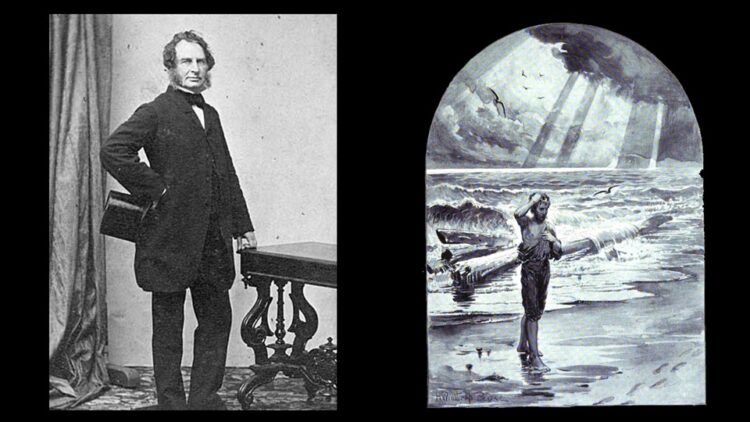
photo of Henry Wadsworth Longfellow and an illustration of his Psalm of Life (public domain)

photo of Henry Wadsworth Longfellow and an illustration of his Psalm of Life (public domain)


Longfellow

I first met you in the schoolroom,
_When I was but a child,
And read your words and heard your voice
_Sing out so sweet and mild.

But as I grew, I saw your work
_More cast off and despised,
By those critics who now believe
_History should be revised.

So they call you sentimental,
_Like innocence were a crime,
And wash with a wave of insults,
_Your name from the sands of Time.

And they say you are too simple,
_Too straightforward, lacking flair,
As if it were ever easy,
_Choosing Hope over Despair.

As if the Truth should be obscured,
_Guarded by a select few,
And is something that the common
_Man should never hope to view.

Like conviction were a weakness,
_And clarity a sin,
And instead of your bright music,
_They prefer the dark and din

Of formless Vanity, in whose
_Dim shadowed shroud they hide,
And they mock those who tell stories,
_Sitting by the fireside.

Can’t they feel the embering soul,
_At your verses rise and swell?
Can’t they see the light of Heaven,
_Runs far deeper than their Hell?

When you write old-fashioned Virtue,
_They count it as a flaw,
They realize not they fault the man,
_Who saw what Dante saw.

The tower that you built with rhyme,
_The human heart to hallow,
Blames more the reader and not you,
_If they should find it shallow.

Some dismiss you still as childish,
_And some still call you fraud,
Forgetting that only children
_Form the Kingdom of our God.

For Truth and Wisdom are profound,
_E’en more so when they’re plain,
And will brighter grow, yet brighter,
_When they are read again.

Lovers of confusion, who at
_Your life so often jeered,
Cannot see the fiery scars burned,
_Beneath your snowy beard.

But are maddened flocks of sea-birds,
_Always raging like a squall,
Up against the flaming lighthouse,
_Unperturbed and standing tall.

For your words, like church bells, teach us
_As they’re ringing out their song,
How to suffer, and to suffer,
_And to suffer and be strong.


Kevin Parks works as a data analyst in Ogden, Utah.
ShareTweetPin
The Society of Classical Poets does not endorse any views expressed in individual poems or commentary.
Read Our Comments Policy Here

RandomPoems

Essay: ‘Poetry and the Muses Part 1’ by James Sale
Beauty

Essay: ‘Poetry and the Muses Part 3’ by James Sale

July 22, 2017

It has long been observed that whilst the ego is useful in making daily and ordinary decisions in our life,...

An Advent Calendar Poem: Twenty-four Windows, by Theresa Zappe
Beauty

An Advent Calendar Poem: Twenty-four Windows, by Theresa Zappe

December 1, 2019

  My Adventskalender in Germany made Of paper and glitter has Heaven displayed Through twenty-four windows. Come open with me...

Next Post
‘Ode to Spring’ by Susan Jarvis Bryant

'Beyond Daffodils': A Poem After Wordsworth by Paul A. Freeman

‘Timeless’: A Poem by James A. Tweedie

'Timeless': A Poem by James A. Tweedie

‘Morning Rain’ and Other Poetry by Adam Sedia

'Morning Rain' and Other Poetry by Adam Sedia

Comments 10

  1. Joseph S. Salemi says:
    8 months ago

    Longfellow was certainly a top-rank poet and translator, recognized in his own country and in Europe as a master wordsmith. And as this poem says, he did suffer intensely, especially after the accidental death of his second wife.

    The reason for his decline in status (as measured by the academic establishment only; plain readers have never ceased to appreciate him) was contextual. He lived to the close of the nineteenth century, and a major rebellion against Romanticism and Victorianism was starting to heat up at that time. Whitman came along, the shocking Swinburne came along, the English Decadents and Pre-Raphaelites came along, and the first hints of Modernism were starting to be scented. It was in the cards that Longfellow should become a target, as also happened to Tennyson. By any realistic standard both of these men were great, but in a literary world where complete upheaval was being preached as the new ideal, the more staid and conventional predecessors were laughed at and ignored. Also, academia has had a longstanding hard-on for modernism and experimentalism and generalized freakiness since 1922. It has now become mummified in its obedience to the “make it new” mantra.

    There’s also the snob element. If simple people can read and recite and enjoy a poet like Longfellow, how good could he possibly be, sneers the average English professor along with his colleagues. They say the same thing about Kipling, whose talent is deliberately being badmouthed today, for political reasons.

    Reply
  2. Glynn Young says:
    8 months ago

    The poem by Kevin Parks struck a chord. I am one of those “plain readers” who still enjoy reading Longfellow. I met (and thrilled to) his poetry in school with “The Midnight Ride of Paul Revere,” one of the poems in “Tales of a Wayside Inn.” Yes, it wasn’t historically accurate, but accuracy mattered less to a nine-year-old schoolboy than the emotions of urgency and courage it aroused. Later I read “Evangeline,” which, me being from south Louisiana with a flock of Cajun relatives on my mother’s side, seemed more like personal history than poetry. I never lost my fondness and admiration for Longfellow, and I recently reread all of his major poems. I still enjoy them.

    Reply
  3. Robert Nachtegall says:
    8 months ago

    Kevin, I’m delighted you wrote this. Longfellow was my gateway into poetry. I knew nothing about the art form, but was captivated the first time I read his work. The first lesson I pulled away was that beautiful work can often and immediately be appreciated on its own merit. The second was that I need to find and read more great poetry!

    Reply
  4. Martin Briggs says:
    8 months ago

    Thanks, Kevin: it’s truly a pleasure to see Longfellow celebrated like this. As a resident European, I’m acutely aware that HWL knew and understood Europe better than many of its inhabitants. And I agree totally with Dr Salemi’s assessment of his place in literature and the damaging effects of literary fashion.

    Reply
  5. Margaret Brinton says:
    8 months ago

    Kevin, not only are you defending Longfellow, but your own composition of poetry has an engaging flow!

    Reply
  6. Mark Stellinga says:
    8 months ago

    I, too, am a major Longfellow fan, Kevin, and especially Kipling. I’m a diehard (75-year-old) Populist poet and I read (for free) at a slew of care centers every summer here in eastern Iowa, and I often hear comments like: “Now that’s what I call poetry.”, and, “Finally – pieces I can easily understand and sometimes even relate to.” My audiences are admittedly peppered with only handfuls of over-60- listeners, but, as many of us know, more than a few other HWL-advocates are among the most successful poets penning ‘Verse’ today, both old and young, as poetry-book-sales prove. Thanks for sticking up for him. 🙂 This little diddy was obviously inspired by Rudyard himself –

    When

    When, my son, you’ve learned to focus all your hate and anger
    and implement the net of all your skill
    To spare the man you disagree with, opting not to join
    the ranks of those whose preference is to kill –

    When you’ve come to realize that helping those in need,
    and – showing those who suffer that you care
    Fills your heart with joy and answers questions in your mind
    of which the ones who don’t are unaware –

    When you’ve learned the reason why some people feel obliged
    to bow their heads when dignitaries pass,
    And then reject it wholly by adopting this belief —
    that no one on this earth is second class –

    When you’ve grasped the difference twixt the way we look – outside –
    provides you no excuse of any kind
    For treating others hatefully, and see your fellow man
    through eyes that you can boast are color blind –

    Only then can you expect to win your bouts with life…
    which you’re, of course, the only one that can…
    For each of these will strengthen you, and fortify your soul,
    and which is more, my son… you’ll be a man!

    Reply
  7. Paul A. Freeman says:
    8 months ago

    I’m not that knowledgeable of Longfellow – just the usual suspect, The Song of Hiawatha – but will definitely give Paul Revere (my namesake) a try. I am a fan of narrative poems, having written so many in the past.

    It’s interesting what Joseph said about why Longfellow went out of fashion. Arthur Conan Doyle’s Sherlock Holmes was immensely popular, but was a product of the Victorian era, of horse-and-carriages and new stories, in the rising era of the motor car, just didn’t fit the bill. That said, the nostalgia of Victorian times is encapsulated in the various adventures of Sherlock Holmes to this day.

    Thanks for the read, Kevin.

    Reply
    • Joseph S. Salemi says:
      8 months ago

      Paul, I believe Conan Doyle and Kipling were popular for three reasons: 1) They had amazing talent as writers; 2) They were new on the scene, as opposed to older types like Longfellow and Tennyson; and 3) They dealt with very real and contemporary subject matter. Conan Doyle’s stories were about crime and mayhem and detective work in London, and Kipling’s poems and stories were largely about the adventures of British soldiery in the Indian Raj. They were perfectly suited to a newly literate public of common readers in Britain and in the U.S. Also, Kipling could use the rough and colloquial speech of the iconic British soldier (“Tommy Atkins” was the name for him, just as “G.I. Joe” is for the American soldier). This gave his work a wider, democratic appeal. The Sherlock Holmes stories were a hit because they were so damned interesting, and remain so right up to now.

      Reply
  8. Paul Millan says:
    8 months ago

    I am still somewhat new to poetry, but I have read a few Longfellow poems that I thoroughly enjoyed. I hope to read more of him in the future.

    Your ode to him was great, and makes me want to read his poetry; since I do enjoy clear and straightforward poetry.

    Reply
  9. Margaret Coats says:
    8 months ago

    Kevin, your poem shows you quite capable of appreciating Longfellow and of telling why critics scorn his work. You praise good storytelling and manly virtue and simple sentiment and the light of heaven. Bravo! This is what I remember from early hearing and reading and memorizing, and from reading Longfellow with my children in homeschool. By then I was better able to value the artistry of his language, and to talk about how he distinctively treated each of the particularly fascinating subjects he chose for longer poems. I like your honest advocacy.

    Reply

Leave a Reply Cancel reply

Your email address will not be published. Required fields are marked *

  1. G. Maritato on ‘The Gold Star Mother’: A Poem by Gerard MaritatoJuly 18, 2026

    Thank you Cynthia. Yes we pray for those boys and those who mourn them. Blessings, Gerry

  2. Gerard Maritato on ‘The Gold Star Mother’: A Poem by Gerard MaritatoJuly 18, 2026

    Thank you Cynthia. We have many tears for these boys and those who mourn them. Gerry

  3. Mike Bryant on ‘The 51st State’: A Poem by James SaleJuly 18, 2026

    James, I love this poem. I believe, however, that it would be far more advantageous for England, and for Texas,…

  4. Karen Rodgers on ‘The Gold Star Mother’: A Poem by Gerard MaritatoJuly 18, 2026

    Brilliant Gerard, brillant. I studied lietrature at University and made the mistake of choosing almost exclusively options from the 20th…

  5. Marguerite on ‘When the Phone Rings’ and Other Short Poems by Russel WinickJuly 18, 2026

    Amen on "Apologies!"

Subscribe to Daily Poems

Enter your email address to subscribe to this blog and receive notifications of new posts by email.

Join 1,594 other subscribers

Recent Poems

  • Winners and Rankings of The Great American Poetry Competition
  • ‘The Gold Star Mother’: A Poem by Gerard Maritato
  • ‘An American Dash’: A Poem by Linda Ellis
  • ‘The Anonymous Soldier’: A Poem by Lucy Lind
  • ‘For Those We Never Meet’: A Poem by Aneesh Agarwal
  • ‘Ben Franklin’s Copper Fugio Cent’: A Poem by Geoffrey Smagacz
  • Three Brief Poems by Luxorius, Translated by Joseph S. Salemi
  • ‘The American Spirit’: A Poem by Dusty Grein
  • ‘The Ballad of Zebulon Pike’: A Poem by M.D. Skeen
  • ‘We Are the Ones’ and Other Poetry by Cheryl Corey
  • ‘My Pyjamas!’ and Other Poems by Susan Jarvis Bryant
  • ‘A Snowy Egret’: A Poem by Bruce Dale Wise
  • ‘The Swearing-in of Calvin Coolidge’: A Sonnet by Robert W. Crawford
  • ‘Ballad of the Sequoia’: A Poem by Lauren V. Leon
  • ‘The 51st State’: A Poem by James Sale
  • ‘La Uva’ (The Grape): A Poem by Michael Pietrack
  • ‘There’s Blood that Flows Within the Stripes’: A Poem by Lauren V. Leon
  • ‘Birdsong’: A Poem by Jeffrey Essmann
  • ‘The Melody That Lingers On’ and Other Poetry by John McPherson
  • ‘American Dreams’: A Poem by Adam Sedia
  • ‘An American Fabius’: A Poem by John Hernandez
  • ‘Vernal Clinic’ and Other Poetry by C.B. Anderson
  • ‘Omaha Beach’ and Other Poetry by Bradford Skow
  • ‘Music to Part the Veil’: A Poem by T.M. Moore
  • ‘A Gentleman’s Guide to Losing a War’ and Other Poetry by Arnon Peterson
  • ‘Black Shuck’: A Poem by Martin Briggs
  • ‘When the Last World War II Veteran Passes Away’: A Poem by N.S. Boone
  • ‘A Fallow Year at Worthy Farm’: A Poem by Paul A. Freeman
  • ‘Outstanding in Afghanistan’: A Poem by Jared S. Chang
  • ‘250 More’: A Poem by Miguel Moreno

Categories

  • Acrostic
  • Alexandroid
  • Alliterative
  • Art
  • Best Poems
  • Blank Verse
  • Chant Royal
  • Classical Poets Live
  • Clerihew
  • Covid-19
  • Deconstructing Communism
  • Educational
  • Epic
  • Epigrams and Proverbs
  • Essays
    • Interviews with Poets
    • Poetry Reviews
  • Featured
  • From the Society
  • Great Poets
    • Dante Alighieri
    • Edgar Allan Poe
    • Emily Dickinson
    • Geoffrey Chaucer
    • Henry Wadsworth Longfellow
    • Homer
    • John Keats
    • John Milton
    • Robert Frost
    • William Blake
    • William Shakespeare
    • William Wordsworth
  • Human Rights in China
  • Limerick
  • Love Poems
  • Music
  • Pantoum
  • Performing Arts
  • Poetry
    • Beauty
    • Children's Poems
    • Culture
    • Ekphrastic
    • Found Poems
    • High School Poets
    • Humor
    • Riddles
  • Poetry Challenge
  • Poetry Contests
  • Poetry Forms
    • Curtal Sonnet
    • Haiku
  • Poetry Readings
  • Rhupunt
  • Rondeau
  • Rondeau Redoublé
  • Rondel
  • Rubaiyat
  • Sapphic Verse
  • Satire
  • Science
  • Sestina
  • Shape Poems
  • Short Stories
  • Song Lyrics
  • Sonnet
  • Symposium
  • Terrorism
  • Terza Rima
  • The Environment
  • Translation
  • Triolet
  • Video
  • Villanelle

Quick Links

  • About Us
  • Submit Poetry
  • Become a Member
  • Members List
  • Support the Society
  • Advertisement Placement
  • Comments Policy
  • Terms of Use

Welcome Back!

Login to your account below

Forgotten Password?

Retrieve your password

Please enter your username or email address to reset your password.

Log In
No Result
View All Result
  • Poems
    • Beauty
    • Culture
    • Satire
    • Humor
    • Children’s
    • Art
    • Ekphrastic
    • Epic
    • Epigrams and Proverbs
    • Human Rights in China
    • Music
    • Performing Arts
    • Riddles
    • Science
    • Song Lyrics
    • The Environment
    • The Raven
    • Found Poems
    • High School Poets
    • Terrorism
    • Covid-19
  • Poetry Forms
    • Sonnet
    • Haiku
    • Limerick
    • Villanelle
    • Rondeau
    • Pantoum
    • Sestina
    • Triolet
    • Acrostic
    • Alexandroid
    • Alliterative
    • Blank Verse
    • Chant Royal
    • Clerihew
    • Rhupunt
    • Rondeau Redoublé
    • Rondel
    • Rubaiyat
    • Sapphic Verse
    • Shape Poems
    • Terza Rima
  • Great Poets
    • Geoffrey Chaucer
    • Emily Dickinson
    • Homer
    • Henry Wadsworth Longfellow
    • Dante Alighieri
    • John Keats
    • John Milton
    • Edgar Allan Poe
    • William Shakespeare
    • William Wordsworth
    • William Blake
    • Robert Frost
  • Love Poems
  • Contests
  • SCP Academy
    • Educational
    • Teaching Classical Poetry—A Guide for Educators
    • Poetry Forms
    • The SCP Journal
    • Books

© 2025 SCP. WebDesign by CODEC Prime.