• Submit Poetry
  • Support SCP
  • About Us
  • Members
  • Join
Wednesday, July 29, 2026
Society of Classical Poets
  • Poems
    • Beauty
    • Culture
    • Satire
    • Humor
    • Children’s
    • Art
    • Ekphrastic
    • Epic
    • Epigrams and Proverbs
    • Human Rights in China
    • Music
    • Performing Arts
    • Riddles
    • Science
    • Song Lyrics
    • The Environment
    • The Raven
    • Found Poems
    • High School Poets
    • Terrorism
    • Covid-19
  • Poetry Forms
    • Sonnet
    • Haiku
    • Limerick
    • Villanelle
    • Rondeau
    • Pantoum
    • Sestina
    • Triolet
    • Acrostic
    • Alexandroid
    • Alliterative
    • Blank Verse
    • Chant Royal
    • Clerihew
    • Rhupunt
    • Rondeau Redoublé
    • Rondel
    • Rubaiyat
    • Sapphic Verse
    • Shape Poems
    • Terza Rima
  • Great Poets
    • Geoffrey Chaucer
    • Emily Dickinson
    • Homer
    • Henry Wadsworth Longfellow
    • Dante Alighieri
    • John Keats
    • John Milton
    • Edgar Allan Poe
    • William Shakespeare
    • William Wordsworth
    • William Blake
    • Robert Frost
  • Love Poems
  • Contests
  • SCP Academy
    • Educational
    • Teaching Classical Poetry—A Guide for Educators
    • Poetry Forms
    • The SCP Journal
    • Books
No Result
View All Result
Society of Classical Poets
  • Poems
    • Beauty
    • Culture
    • Satire
    • Humor
    • Children’s
    • Art
    • Ekphrastic
    • Epic
    • Epigrams and Proverbs
    • Human Rights in China
    • Music
    • Performing Arts
    • Riddles
    • Science
    • Song Lyrics
    • The Environment
    • The Raven
    • Found Poems
    • High School Poets
    • Terrorism
    • Covid-19
  • Poetry Forms
    • Sonnet
    • Haiku
    • Limerick
    • Villanelle
    • Rondeau
    • Pantoum
    • Sestina
    • Triolet
    • Acrostic
    • Alexandroid
    • Alliterative
    • Blank Verse
    • Chant Royal
    • Clerihew
    • Rhupunt
    • Rondeau Redoublé
    • Rondel
    • Rubaiyat
    • Sapphic Verse
    • Shape Poems
    • Terza Rima
  • Great Poets
    • Geoffrey Chaucer
    • Emily Dickinson
    • Homer
    • Henry Wadsworth Longfellow
    • Dante Alighieri
    • John Keats
    • John Milton
    • Edgar Allan Poe
    • William Shakespeare
    • William Wordsworth
    • William Blake
    • Robert Frost
  • Love Poems
  • Contests
  • SCP Academy
    • Educational
    • Teaching Classical Poetry—A Guide for Educators
    • Poetry Forms
    • The SCP Journal
    • Books
No Result
View All Result
Society of Classical Poets
No Result
View All Result
Home Poetry Beauty

Poems on the Three Fates: Clotho, Lachesis, and Atropos, by Cheryl Corey

December 18, 2021
in Beauty, Culture, Poetry
A A
9
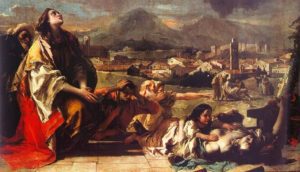
illustration of the three Fates (public domain)

illustration of the three Fates (public domain)

.

Three Sisters

Clotho

When mother sat me down, I feared the worst.
Her words, however, offered praise instead.
“Your gentle hands are motherly,” she said.
“That’s why I’ve chosen you to be the first
of three, the Fates, henceforth to spin the thread
of life.” I sit before the spinning wheel,
and every thread I spin, I spin with zeal,
to make my mother proud. The sheep are led
to shearing, wool is carded, washed. I feel
the texture, baby-soft; and then there’s silk
from spun cocoons (to me that’s mother’s milk).
I hold a world within my hands, reveal
the birthing child as either girl or boy,
and every thread’s a life that brings me joy.

.

Lachesis

We sisters three, the Fates, as progeny
of Themis, she who counsels Jove, are bound
by laws of gods, not men. “Your mind is sound,
your instinct good. Responsibility
is yours to render judgment as to death;
and notwithstanding every life’s a treasure,
as Clotho spins, so you will take the measure,
the moment they will draw their final breath.”
My mother’s words were like a smithy’s weight,
but inner strength was always my cuirass.
My oath: to meet and hopefully surpass
all expectation, prove there’s more to Fate
than happenstance; and so, as law demands,
I hold a thread of life between my hands.

.

Atropos

I cut the thread of life as Lachesis
commands, yet I’m the sister hated most;
while Clotho, always pale, is like a ghost,
but plays a sweetheart role, our darling sis.
I often feel that mine’s a thankless job.
It calls for perfect vision, nerves of steel,
and steady hands. No matter what I feel,
I mustn’t let them see or hear me sob.
Instead, I focus on the tools of trade:
my newest toy, a laser, cleanly cuts,
but if I’m off a hair, I get tut-tuts.
I also have a special scalpel, made
of black obsidian found on isles of Greece.
To all the lives I end—rest in peace.

.

.

Cheryl Corey’s recent credits include the current issue of Iconoclast and www.grand-little-things.com. Other publications include Iambs & Trochees, Deronda, The NeoVictorian/Cochlea, The Comstock Review, Mobius, and Time of Singing. In 2007 she received 1st Place for the Dylan Thomas Award and Honorable Mention for the June Kraeft Memorial Award in The World Order of Narrative and Formalist Poets contest.

Continue Reading
ShareTweetPin
The Society of Classical Poets does not endorse any views expressed in individual poems or commentary.
Read Our Comments Policy Here

RandomPoems

‘Dog Tired, Cat on Top’ by Damian Robin
Children's Poems

‘Dog Tired, Cat on Top’ by Damian Robin

July 30, 2022

. Dog Tired, Cat on Top The cat sat on the mat, Been there, seen that. The cat sat on...

‘The Lady and the Unicorn’ by Dylan Schrader
Beauty

‘The Lady and the Unicorn’ by Dylan Schrader

June 5, 2016

Gaunt fades the twilight, nearly gone, a weary world wearing thin Since last the unremembered sun smiled upon the land...

Next Post
Two Poems by Bécquer, Translated by Cheryl Corey 

Two Poems by Bécquer, Translated by Cheryl Corey 

‘Journey’s End’ and Other Poetry by Talbot Hook

'Journey's End' and Other Poetry by Talbot Hook

‘Habeas Corpus’ and Other Poetry by C.B. Anderson

'Habeas Corpus' and Other Poetry by C.B. Anderson

Comments 9

  1. Peter Hartley says:
    5 years ago

    I always forget the names of the Fates, apart from Clotho and I read that in Lycidas even Milton manages to confuse them with the Furies, so I find these poems very instructive. The laser must have made life easier for Atropos, or at least easier to finish it.

    Reply
    • Cheryl Corey says:
      5 years ago

      Yeah, I had a little fun with that one.

      Reply
  2. Paul Freeman says:
    5 years ago

    I used the Fates in one of my ‘Lost’ Canterbury Tales, and as Peter says, they can get confused. I wish your poems had been on hand to keep me straight.

    Educative, skillful and evocative – who needs more from this trio of sonnets?

    Thanks for the reads, Cheryl.

    Reply
    • Cheryl Corey says:
      5 years ago

      This was my first attempt at a sonnet sequence, and the Fates came to mind. I wanted to give a voice to each sister, so I imagined Clotho as happy in her work, Lachesis as the one who’s serious, and Atropos as feeling somewhat neglected and underappreciated.

      Reply
  3. James A. Tweedie says:
    5 years ago

    Cheryl, a fine, imaginative psychological dissection of the three sisters. I loved the contemporaneous use of the word “sis” which made the subsequent appearance of the word “laser” less of a surprise! And the silent iamb in the final couplet works wonderfully, ending the set with a most satisfying RIP.

    Reply
  4. Joseph S. Salemi says:
    5 years ago

    Atropos (“the unturning one”) is a dark figure, because she cannot be turned away from her decision as to when to cut short the thread of a human life. That’s why the Romans called her “Morta” — the Dead One.

    Reply
  5. Margaret Coats says:
    5 years ago

    Good sonnets, and a well-constructed trio, with the usually unremembered mother as the unifier (even though the ungrateful Atropos doesn’t mention her while complaining of assigned duty). The three definitely show differing psychology. As I know the myth, Lachesis is the assigner of destiny (one’ role in life), rather than of length of life. I had always presumed Atropos decided the time of death, as well as carried out the clipping. Did you knowingly tweak the story, so that Atropos can feel “unreasonably” despised, because Lachesis is really the one responsible for that final decision?

    I do like the pleasantly woven rhyme scheme for Clotho’s sonnet (contrasting to the plain closed quatrain Shakespearean sonnets for the other two sisters). All three have effective couplets, and in Atropos’ final line, you use the m-dash in place of an unaccented syllable, as a singer would take a breath rather than sing a sound. It’s an eerie way to complete the set of three!

    Reply
    • Cheryl Corey says:
      5 years ago

      As I lack your in-depth knowledge of myth, my simplistic understanding is that Clotho spins, Lachesis measures, and Atropos cuts; but of course, they’re meant to be a team. I pictured Atropos, being the cutter, as getting a raw deal. I’m glad you liked the trio overall.

      Reply
  6. Pingback: The Best Poems of 2021 | Society of Classical Poets

Leave a Reply Cancel reply

Your email address will not be published. Required fields are marked *


  1. James A. Tweedie on ‘What Folly Dares’ and Other Love Poems by James A. TweedieJuly 29, 2026

    Thank you, Gerard. A poet can only hope that loving sentiments thoughtfully expressed in a well-written poem will be well…

  2. James A. Tweedie on ‘What Folly Dares’ and Other Love Poems by James A. TweedieJuly 29, 2026

    Little things such as allusions can have a multiplying effect as the allusion extends the meaning beyond the bounds of…

  3. Paul Freeman on ‘The Passing’: A Poem by Margaret BrintonJuly 29, 2026

    Being presently ensconced in the British countryside, I appreciate this poem all the more, though the desert in its vastness…

  4. Cynthia L Erlandson on ‘Of Webs and Whispers’: A Poem by Susan Jarvis BryantJuly 29, 2026

    Abuses of language like "A spider spinning scripture" in order to kill; loose, gossiping "grapevine" lips; and eavesdroppers making truth…

  5. Cynthia L Erlandson on ‘The Passing’: A Poem by Margaret BrintonJuly 29, 2026

    What a great idea, Margaret. Something like this would be much less dehumanizing than the way many deaths are handled…

Subscribe to Daily Poems

Enter your email address to subscribe to this blog and receive notifications of new posts by email.

Join 1,592 other subscribers

Recent Poems

  • ‘The Passing’: A Poem by Margaret Brinton
  • ‘Of Webs and Whispers’: A Poem by Susan Jarvis Bryant
  • Poetry Book Review: Petrarch’s Canzoniere, Translated by A.M. Juster
  • ‘What Folly Dares’ and Other Love Poems by James A. Tweedie
  • ‘Allegrezza’ and Other Poetry by Rob Griffith
  • ‘The Lessons of Lot’: A Poem by Adam Wasem
  • ‘Prophecy and Divine Intervention in Virgil’s Aeneid’: An Essay by Kaitlyn Brown
  • ‘The Last Voyage of Barnaby Bear’: A Poem by Tashvi Reddy
  • ‘Impressions’ and Other Poems by Russel Winick
  • ‘The Reveal of the Rocks’: A Poem by Kyle Fiske
  • ‘Art Work’: A Poem by T.M. Moore
  • ‘A Strange Sun’: A Poem by Patricia Rogers Crozier
  • ‘Shave Off Those Whiskers’: A Poem by Roy E. Peterson
  • ‘The Man from China’: A Poem by Evan Mantyk
  • ‘The Ballad of the Ghost Mountain Boys’: A Poem by Rachel Lott
  • ‘The Threat of Virtue’: A Poem by Zumwalt
  • ‘A Poet at the Tower’ and Other Poetry by Michael C. Paul
  • ‘Florence Foster Jenkins’ and Other Poetry by Brian Yapko
  • Winners and Rankings of The Great American Poetry Competition
  • ‘The Gold Star Mother’: A Poem by Gerard Maritato
  • ‘An American Dash’: A Poem by Linda Ellis
  • ‘The Anonymous Soldier’: A Poem by Lucy Lind
  • ‘For Those We Never Meet’: A Poem by Aneesh Agarwal
  • ‘Ben Franklin’s Copper Fugio Cent’: A Poem by Geoffrey Smagacz
  • Three Brief Poems by Luxorius, Translated by Joseph S. Salemi
  • ‘The American Spirit’: A Poem by Dusty Grein
  • ‘The Ballad of Zebulon Pike’: A Poem by M.D. Skeen
  • ‘We Are the Ones’ and Other Poetry by Cheryl Corey
  • ‘My Pyjamas!’ and Other Poems by Susan Jarvis Bryant
  • ‘A Snowy Egret’: A Poem by Bruce Dale Wise

Categories

  • Acrostic
  • Alexandroid
  • Alliterative
  • Art
  • Best Poems
  • Blank Verse
  • Chant Royal
  • Classical Poets Live
  • Clerihew
  • Covid-19
  • Deconstructing Communism
  • Educational
  • Epic
  • Epigrams and Proverbs
  • Essays
    • Interviews with Poets
    • Poetry Reviews
  • Featured
  • From the Society
  • Great Poets
    • Dante Alighieri
    • Edgar Allan Poe
    • Emily Dickinson
    • Geoffrey Chaucer
    • Henry Wadsworth Longfellow
    • Homer
    • John Keats
    • John Milton
    • Robert Frost
    • William Blake
    • William Shakespeare
    • William Wordsworth
  • Human Rights in China
  • Limerick
  • Love Poems
  • Music
  • Pantoum
  • Performing Arts
  • Poetry
    • Beauty
    • Children's Poems
    • Culture
    • Ekphrastic
    • Found Poems
    • High School Poets
    • Humor
    • Riddles
  • Poetry Challenge
  • Poetry Contests
  • Poetry Forms
    • Curtal Sonnet
    • Haiku
  • Poetry Readings
  • Rhupunt
  • Rondeau
  • Rondeau Redoublé
  • Rondel
  • Rubaiyat
  • Sapphic Verse
  • Satire
  • Science
  • Sestina
  • Shape Poems
  • Short Stories
  • Song Lyrics
  • Sonnet
  • Symposium
  • Terrorism
  • Terza Rima
  • The Environment
  • Translation
  • Triolet
  • Video
  • Villanelle

Quick Links

  • About Us
  • Submit Poetry
  • Become a Member
  • Members List
  • Support the Society
  • Advertisement Placement
  • Comments Policy
  • Terms of Use

Welcome Back!

Login to your account below

Forgotten Password?

Retrieve your password

Please enter your username or email address to reset your password.

Log In
No Result
View All Result
  • Poems
    • Beauty
    • Culture
    • Satire
    • Humor
    • Children’s
    • Art
    • Ekphrastic
    • Epic
    • Epigrams and Proverbs
    • Human Rights in China
    • Music
    • Performing Arts
    • Riddles
    • Science
    • Song Lyrics
    • The Environment
    • The Raven
    • Found Poems
    • High School Poets
    • Terrorism
    • Covid-19
  • Poetry Forms
    • Sonnet
    • Haiku
    • Limerick
    • Villanelle
    • Rondeau
    • Pantoum
    • Sestina
    • Triolet
    • Acrostic
    • Alexandroid
    • Alliterative
    • Blank Verse
    • Chant Royal
    • Clerihew
    • Rhupunt
    • Rondeau Redoublé
    • Rondel
    • Rubaiyat
    • Sapphic Verse
    • Shape Poems
    • Terza Rima
  • Great Poets
    • Geoffrey Chaucer
    • Emily Dickinson
    • Homer
    • Henry Wadsworth Longfellow
    • Dante Alighieri
    • John Keats
    • John Milton
    • Edgar Allan Poe
    • William Shakespeare
    • William Wordsworth
    • William Blake
    • Robert Frost
  • Love Poems
  • Contests
  • SCP Academy
    • Educational
    • Teaching Classical Poetry—A Guide for Educators
    • Poetry Forms
    • The SCP Journal
    • Books

© 2025 SCP. WebDesign by CODEC Prime.