• Submit Poetry
  • Support SCP
  • About Us
  • Members
  • Join
Friday, August 28, 2026
Society of Classical Poets
  • Poems
    • Beauty
    • Culture
    • Satire
    • Humor
    • Children’s
    • Art
    • Ekphrastic
    • Epic
    • Epigrams and Proverbs
    • Human Rights in China
    • Music
    • Performing Arts
    • Riddles
    • Science
    • Song Lyrics
    • The Environment
    • The Raven
    • Found Poems
    • High School Poets
    • Terrorism
    • Covid-19
  • Poetry Forms
    • Sonnet
    • Haiku
    • Limerick
    • Villanelle
    • Rondeau
    • Pantoum
    • Sestina
    • Triolet
    • Acrostic
    • Alexandroid
    • Alliterative
    • Blank Verse
    • Chant Royal
    • Clerihew
    • Rhupunt
    • Rondeau Redoublé
    • Rondel
    • Rubaiyat
    • Sapphic Verse
    • Shape Poems
    • Terza Rima
  • Great Poets
    • Geoffrey Chaucer
    • Emily Dickinson
    • Homer
    • Henry Wadsworth Longfellow
    • Dante Alighieri
    • John Keats
    • John Milton
    • Edgar Allan Poe
    • William Shakespeare
    • William Wordsworth
    • William Blake
    • Robert Frost
  • Love Poems
  • Contests
  • SCP Academy
    • Educational
    • Teaching Classical Poetry—A Guide for Educators
    • Poetry Forms
    • The SCP Journal
    • Books
No Result
View All Result
Society of Classical Poets
  • Poems
    • Beauty
    • Culture
    • Satire
    • Humor
    • Children’s
    • Art
    • Ekphrastic
    • Epic
    • Epigrams and Proverbs
    • Human Rights in China
    • Music
    • Performing Arts
    • Riddles
    • Science
    • Song Lyrics
    • The Environment
    • The Raven
    • Found Poems
    • High School Poets
    • Terrorism
    • Covid-19
  • Poetry Forms
    • Sonnet
    • Haiku
    • Limerick
    • Villanelle
    • Rondeau
    • Pantoum
    • Sestina
    • Triolet
    • Acrostic
    • Alexandroid
    • Alliterative
    • Blank Verse
    • Chant Royal
    • Clerihew
    • Rhupunt
    • Rondeau Redoublé
    • Rondel
    • Rubaiyat
    • Sapphic Verse
    • Shape Poems
    • Terza Rima
  • Great Poets
    • Geoffrey Chaucer
    • Emily Dickinson
    • Homer
    • Henry Wadsworth Longfellow
    • Dante Alighieri
    • John Keats
    • John Milton
    • Edgar Allan Poe
    • William Shakespeare
    • William Wordsworth
    • William Blake
    • Robert Frost
  • Love Poems
  • Contests
  • SCP Academy
    • Educational
    • Teaching Classical Poetry—A Guide for Educators
    • Poetry Forms
    • The SCP Journal
    • Books
No Result
View All Result
Society of Classical Poets
No Result
View All Result
Home Limerick

National Poetry Month Limerick Challenge

March 12, 2026
in Limerick, Poetry, Poetry Challenge
A A
127
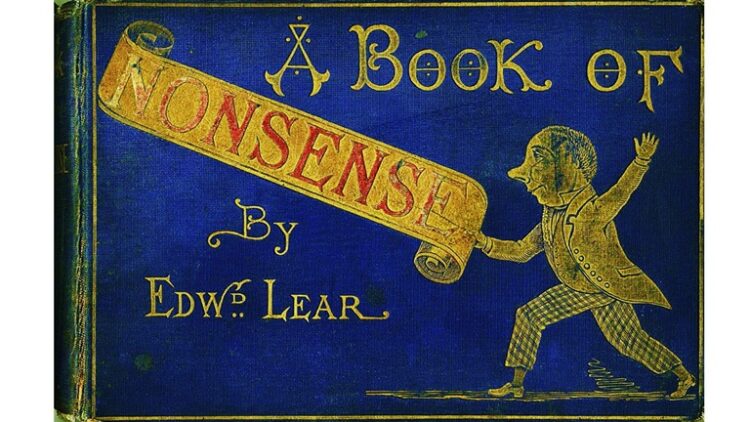
cover for A Book of Nonsense by limerick writer Edward Lear (public domain)

cover for A Book of Nonsense by limerick writer Edward Lear (public domain)


Limerick Poetry Challenge

Write a limerick (learn how to write one here) about a famous poet or about writing poetry and post it in the comments section below. This challenge is brought to you by poet Roy E. Peterson, who wrote the three below sample limericks.


Wordsworth Love Daffodils

William Wordsworth well loved daffodils,
And once saw a bunch dancing up hills.
_Perhaps he was glad,
_Or else he was mad.
I wonder what kind were his pills.


Making Ink

When the poet’s pen lost all its ink,
He went to make more in his sink.
_He got some charcoal
_He smashed in the bowl
With vinegar, quick as a wink.


Poet Agents

The poet deemed his poems were best,
And decided to give them a test.
_He hired an agent
_And made his prepayment.
But they languished along with the rest.




Post your National Poetry Month Limerick in the comments below.

ShareTweetPin
The Society of Classical Poets does not endorse any views expressed in individual poems or commentary.
Read Our Comments Policy Here

RandomPoems

Review: Two Poetry Books by James B. Nicola
Beauty

Review: Two Poetry Books by James B. Nicola

September 24, 2018

by James Sale Wind in the Cave, Finishing Line Press, 2017 Out of Nothing, Shanti Arts Publishing, 2018 Recently in...

‘Confucius Institutes’ by Damian Robin
Human Rights in China

‘China Song’ by Ron L. Hodges

December 9, 2015

A news report here provides some background on China Radio Like Radio Free Europe, Which popped the wax Plugs from...

Next Post
‘At the Wine Bar’: A Poem by Paul Buchheit

'At the Wine Bar': A Poem by Paul Buchheit

The Society of Classical Poets Is Now a Freedom250 Partner

The Society of Classical Poets Is Now a Freedom250 Partner

Three Poems on Spring, by Martin Rizley

'It Must Be Spring Again' and Other Poetry by Roy E. Peterson

Comments 127

  1. Paul Freeman says:
    5 months ago

    A Limerick about Limericks

    A Limerick’s five lines of fun,
    and often it’s written to stun.
    But if it’s not clever,
    then strew your endeavour
    with words such as ‘titty’ and ‘bum’.

    Reply
    • Roy Eugene Peterson says:
      5 months ago

      Ha, Ha! Good contribution.

      Reply
  2. Paul Freeman says:
    5 months ago

    (Hot off the press)

    If Shakespeare Hadst Considered the Limerick, Limerick

    When iambs and couplets abounded,
    a limerick’s use was unfounded.
    Yet this poet sees,
    the rhyme schemes two Bs
    to Shakespeare’s ear would have resounded.

    Reply
  3. Roy Eugene Peterson says:
    5 months ago

    Shakespeare would have loved this one! A fun read.

    Reply
  4. THOMAS A HEMMINGER says:
    5 months ago

    “Frost-y Mugs”

    Robert Frost was a metricist’s dream,
    Unmatched in his rhythm and scheme.
    Whether fired or iced, his cider was nice.
    He and Elinor made quite a team!

    Reply
    • Roy Eugene Peterson says:
      5 months ago

      Good one, Thomas! Loved the “fired or ice.”

      Reply
      • THOMAS A HEMMINGER says:
        5 months ago

        Thanks, friend! I also thought of “apple picking” with the cider reference. Lol!

        Reply
  5. Rupali Mistry says:
    5 months ago

    Alas!

    There once was a witch on a broom.
    Who took off in search of a groom.
    She got lost in a blizzard.
    And was caught by a wizard,
    Who turned her into a mushroom!

    –©️ Rupali Mistry, India

    Reply
    • Roy Eugene Peterson says:
      5 months ago

      Rupali, that is very funny! A witch turned into a mushroom!

      Reply
      • Rupali Mistry says:
        5 months ago

        Thank you so much.

        Reply
    • Rohini Sunderam says:
      5 months ago

      I enjoyed that!

      Reply
      • Rupali Mistry says:
        5 months ago

        Thank you so much.

        Reply
  6. Roger Crane says:
    5 months ago

    Okay, so I decided to try my hand at a couple of limericks, below. Fun stuff, thanks.

    He Told All
    Have you read Dante’s poem about Hell?
    He told all, and he told it so well,
    You might think he led tours
    To the place one abjures,
    Did he end there himself? I can’t tell.

    A Cold Head
    My dear Washington Irving, so bold,
    Of a headless horseman he told,
    In the war, had he fought,
    And had known what he taught.
    His own head would be awfully cold!

    Reply
    • Roy Eugene Peterson says:
      5 months ago

      Two excellent ones, Roger! Now I too wonder where Dante wound up.

      Reply
      • Roger Crane says:
        5 months ago

        Thank you, Roy.

        Reply
  7. Joseph S. Salemi says:
    5 months ago

    A dynamo named Ezra Pound
    Thought metrical verse was unsound.
    With modernist fury
    He fought it, quite sure he
    Would smash it right into the ground.

    Reply
    • Roy Eugene Peterson says:
      5 months ago

      Joseph, I was aware and now others of Ezra Pounds being unsound.

      Reply
    • Cynthia L Erlandson says:
      5 months ago

      I love fury/sure he.

      Reply
    • Jan Mennite says:
      1 month ago

      I love this. I wonder why Pound hated metrical verse…perhaps he struggled with it, gave up in despair, then decided if he couldn’t, no one else should either. Just a wild, undisciplined guess.

      Reply
      • Mary Gardner says:
        1 month ago

        Apparently Pound didn’t hate metrical verse. His “Winter Is Icummen In” has both meter and rhyme.

        Reply
  8. Joseph S. Salemi says:
    5 months ago

    Bob Browning hooked up with Liz Barrett
    And both of them lived in a garret.
    They had just one kid
    But besides that, they did
    Keep an mangy and flea-bitten parrot.

    Reply
    • Roy Eugene Peterson says:
      5 months ago

      Joseph, what a surprise. I wonder if the parrot recited their lines when Bob was drunk on his wines!

      Reply
  9. James A. Tweedie says:
    5 months ago

    A poetic rat named Old Wheezy,
    Wrote sonnets both formal and breezy
    The critics abhorred them
    But mice all adored them
    Because they all sounded so cheesy.

    When Shakespeare wrote, “Lend me your ears,”
    The Romans responded with cheers.
    But the interest charged
    On the loans grew enlarged
    To the point where he fell in arrears.

    Though as poet, Burns sang like a bird,
    “Tam o’ Shanter” near failed, so I’ve heard.
    When his publisher blanched
    When the Scottish bard chanced
    To demand he be paid by the word.

    Reply
  10. Roy Eugene Peterson says:
    5 months ago

    James, I am amazed at the concepts of all three poems! They are great from the wheezy and cheesy,, to the ears in arrears, and on to being paid by the word that Tam must have thought was absurd!

    Reply
  11. Mike Bryant says:
    5 months ago

    Ivan Pavlov was high on his grog
    And he couldn’t come out of his fog.
    As he suffered this hell
    He awoke to the bell
    And he yelled, “I must go feed the dog!”

    Reply
    • Roy Eugene Peterson says:
      5 months ago

      What a great thought about the Pavlovian principle of how dogs and other animals are trained to respond!

      Reply
  12. Mike Bryant says:
    5 months ago

    A sickly, reflecting old Nietzsche
    Had called in his tech-savvy Preacher.
    Freddy said, “God is dead.”
    Then the Preacher, he said,
    “You know, Death’s not a bug, it’s a feature!”

    Reply
    • Roy Eugene Peterson says:
      5 months ago

      Mike, that is really funny with a great ending!

      Reply
      • Mike Bryant says:
        5 months ago

        Roy, maybe it should be, “Death IS a bug, not a feature!” !

        Reply
  13. Joseph S. Salemi says:
    5 months ago

    E.A. Poe was obsessed with the tomb —
    He worried about its dark gloom.
    He pondered quite often
    About a tight coffin
    And how he’d be cramped in its room.

    Reply
    • Roy Eugene Peterson says:
      5 months ago

      What a great limerick about Edgar and so consonant with his dark writings!

      Reply
  14. Joseph Moorman says:
    5 months ago

    After Prufrock

    No argument, I will grow old,
    Perhaps even wear trousers rolled
    But hair parted behind?
    I think you will find
    I’d rather eat a peach, truth be told.

    Reply
    • Roy Eugene Peterson says:
      5 months ago

      Ah, great reference to Prufrock and funny encapsulation.

      Reply
  15. Rohini Sunderam says:
    5 months ago

    These are all brilliant… here’s one from me:

    I don’t care if you ‘just want to say’
    That you’ve eaten those plums up today
    They may have been sweet
    But they were my treat
    And is that a poem? Oh nay!

    Reply
  16. Roy Eugene Peterson says:
    5 months ago

    Ah, Rohini, you have my empathy and sympathy! Thank you for tasteful limerick.

    Reply
    • Rohini says:
      5 months ago

      Thank you, Roy!

      Reply
  17. Joseph S. Salemi says:
    5 months ago

    I just can’t help it! They are simply too easy to write! Here’s one on Percy:

    Shelley was young and inspired —
    He wrote florid verse, heaven-fired
    With wild heartfelt sighs
    And birds in the skies,
    But his readers at length became tired.

    Reply
    • Roy Eugene Peterson says:
      5 months ago

      Joseph, you certainly are in the groove! Wonderful stuff!

      Reply
  18. Roy Eugene Peterson says:
    5 months ago

    MUSES GOT INTO A FIGHT
    By Roy E. Peterson

    It was not long after midnight
    Two muses got into a fight.
    The poet said, quoth,
    “I still love you both
    But give me a rest for tonight.”

    ON EDGAR ALLAN POE
    By Roy E. Peterson

    Ed Poe was a poet unshaven.
    His poetry often was craven.
    Like his poetry;
    His death, mystery.
    “Nevermore,” quoted the Raven.

    TENNYSON AND “THE CHARGE OF THE LIGHT BRIGADE
    By Roy E. Peterson

    In “The Charge of the Light Brigade,”
    600 men charged unafraid.
    Those they left behind
    Said they did not mind.
    There was no victory parade.

    THE MOBY DICK LIMERICK
    By Roy E. Peterson

    They said that the whale was a Dick.
    He had green moss that hung on his prick.
    The Captain Ahab
    Had a gift of gab.
    Herm’s poetry also was slick.

    Poet Note
    Herman Melville, the author of “Moby Dick,” was also famous for his poetry and in the 1800’s was considered one of the best American poets along with Williams Wordsworth and Emily Dickinson.

    Reply
    • Roger Crane says:
      5 months ago

      Very funny, Roy, especially the one about Moby’s Dick. I wonder where old Ahab was stuck, hung on his own petard, so to speak. Melville didn’t tell, but in any case, the whale got the last laugh.

      Reply
      • Roy Eugene Peterson says:
        5 months ago

        Thank you, Roger. I usually do not write about such vulgarity but this thought was too good to pass up.

        Reply
  19. Paul Freeman says:
    5 months ago

    ChatGPT Limerick

    When homework’s assigned to me,
    I just go to ChatGPT.
    My GPA score,
    is sitting at 4,
    but my brain’s now the size of a pea.

    (The presenter at the AI workshop I was on last week, wasn’t impressed by the above)

    Reply
    • Roy Eugene Peterson says:
      5 months ago

      Paul, I am impressed, because that is my greatest fear about the intellectual establishment. I am thankful I stopped teaching for the University of Phoenix a few years ago, because I can foresee exactly what you foresaw! Are grades relevant anymore?

      Reply
  20. Roy Eugene Peterson says:
    5 months ago

    SHAKESPEARE’S DARK LADY
    By Roy E. Peterson

    Shakespeare wrote of his dark lady.
    A woman who must have been shady.
    As a paramour,
    She had lovers galore.
    Perhaps she was fashioned in Hades.

    It seems she had wires for hair.
    Her complexion was dark and not fair.
    With no rose on her cheeks,
    He said her breath reeks.
    No wonder he found his love rare.

    Reply
  21. Michael Pietrack says:
    5 months ago

    The Luckiest Man in Kentucky

    There once was a man from Kentucky,
    who counted himself as unlucky:
    his girlfriend, a cheater,
    his truck was a beater—
    his life had become downright sucky.

    He drove himself down to the Buckey’s
    to fuel up and jaw with the truckies.
    Though life was a villain,
    the lotto, a billion,
    don’t play and you’ll never get lucky.

    His trailer in Western Kentucky
    held laughs like a squeezed rubber ducky—
    despite all his blunders,
    he matched all the numbers,
    the luckiest man in Kentucky.

    Reply
    • Roy Eugene Peterson says:
      5 months ago

      Even though this is not a poet or poetry related parody as in the challenge, these are excellent limericks for us to enjoy.

      Reply
      • Michael Pietrack says:
        5 months ago

        Whooooops missed that completely. I’ll try again.

        Reply
      • Michael Pietrack says:
        5 months ago

        Better?

        Poetisserie Raven

        I reckon ole Edgar was toking
        to think that a bird he was quoting.
        Then he got a cravin’—
        rotisserie raven,
        and changed what it was he was smoking.

        Reply
        • Roy Eugene Peterson says:
          5 months ago

          Excellent and funny, Michael!

          Reply
  22. C.B Anderson says:
    5 months ago

    North Coast Suite

    Minnesota

    There’s a doctor who works in St. Paul
    Who can fix fractured necks with an awl
    Minneapolis folks
    Who’ve grown tired of their yokes
    Ought to give this great surgeon a call.

    Wisconsin

    A policeman patrolling Milwaukee
    Thought his uniform made him look gawky,
    So to keep himself svelte
    He just tightened his belt
    And got rid of that damned walkie-talkie.

    Illinois

    An importer of cheese in Chicago
    With an underdeveloped imago,
    Even though he knew better
    Blew a sneeze on some cheddar
    And re-labeled it fresh Asiago.

    Indiana

    A reporter assigned Terre Haute
    Came awake with a pen in her throat.
    Since her lover had fled
    And had left her for dead,
    On her pillowcase “Murder” she wrote.

    Michigan

    A procurer who lived in Detroit
    Had a bevy of babes to exploit.
    As a matter of fact
    It was clients he lacked,
    For his hookers were less than adroit.

    Reply
    • Joseph S. Salemi says:
      5 months ago

      These limericks by Kip Anderson are great, and they exemplify something that everyone attempting to write a limerick should know.

      Very frequently, the basic source of a limerick is NOT an idea, NOT a narrative, NOT an opinion, and NOT a statement that you want to make. The basic source is the rhymes themselves! If you decide from the start which three A rhymes you are going to use, and you pick them to be perfect, unexpected, and facetious, you can compose the entire limerick around them, twisting any narrative or idea into whatever shape or weird concatenation allows you to use those three rhymes.

      Look at Anderson’s “Wisconsin” — its force lies in the three words “Milwaukee,” “gawky,” and “walkie-talkie.” They rhyme perfectly, and yet are completely unrelated, and nevertheless it is around those perfect rhymes and their total disconnection that Kip builds an outstanding limerick.

      He does the same thing with “Chicago, imago, Asiago;” and with “Detroit, exploit, adroit.” The actual words come first, and whatever little story or whimsical jeu d’esprit emerges from those three words is just a wonderful and surprising development. And this is what makes a great limerick great — a strange, silly, comic, and humorous flippancy is born that delights the reader, with no logical consistency or plan other that the desire to be amusing! If on the other hand, you were to start with an “idea” for the limerick, you’d immediately be trapped into choosing proper rhymes that support your idea, and this would be limiting and constrictive. Or even worse, you’d be forced to use near or slant rhymes, which are utterly fatal in limericks.

      As for the two medial B rhymes, they simply provide a bit of connective stitching to give plausibility, and to prepare the reader for the final punchline.

      I’m bringing this up to show that limericks are almost always PURE fictive mimesis, with no didactic purpose or syllogistic coherence or “higher goal.” They are just pure wordplay. And this why people love them.

      Reply
    • Roy Eugene Peterson says:
      5 months ago

      C.B. even though these are not written about poetry or poets as presented in the challenge, I enjoyed these immensely. Dr. Salemi made some great points about writing limericks, and your out-of-nowhere ideas and great rhyme choices resound in his and my analysis. Thank you for sharing the fun.

      Reply
    • Cynthia L Erlandson says:
      5 months ago

      I love these, especially your rhymes for Chicago.

      Reply
  23. Roy Eugene Peterson says:
    5 months ago

    MUSES GOT INTO A FIGHT
    By Roy E. Peterson

    It was not long after midnight
    Two muses got into a fight.
    The poet said, quoth,
    “I still love you both
    But give me a rest for tonight.”

    PURPLE COW SHAKE
    By Roy E. Peterson

    Wit, Ogden Nash, reported how
    He never saw a purple cow.
    But grape milk shakes mixed
    In my town were fixed.
    So, I drank some I thus avow.

    ROBERT FROST STOPPED BY SNOWY WOODS
    By Roy E. Peterson

    Robert Frost stopped by snowy woods.
    His horse didn’t think it was good.
    The horse hated snow;
    They had miles to go.
    Let us not stay in this “neigh”-borhood.

    WHAT LURKS IN A POET’S HEART
    By Roy E. Peterson

    Some poets have a funny quirk
    That deep within their heart doth lurk.
    He wrote Jezebel
    Was a hound from hell.
    Bad words were not used in his work.

    WILLIAM BLAKE MET A TIGER
    By Roy E. Peterson

    Into jungle walked Sir William Blake.
    The bushes soon there started to shake.
    Much to his surprise
    He saw tiger eyes.
    The kind that was real and not fake.

    Reply
  24. Norma Pain says:
    5 months ago

    A limerick needs to be rude.
    At the very least it should be crude.
    If you can’t make it flirty,
    or nasty or dirty,
    At least make it loathsome or lewd.

    My apologies for this one. 🙂

    Reply
    • Roy Eugene Peterson says:
      5 months ago

      Apologies accepted but not needed. You were exactly correct about limericks, at least in the past being bawdy and suggestive. This is the perfect presentation of their original and primary purpose. Please do not apologize too much, for I have one about Moby Dick above that is about my only suggestive poem and/or limerick.

      Reply
  25. Joseph S. Salemi says:
    5 months ago

    The very best and funniest limericks are sexual, because they have a sauciness and spice to them that pops the balloon of high-toned pretentiousness and propriety. They say what we dare not say in public, lest repressed people get upset.

    Here are two of the best – not dirty or obscene, but highly sexed and provocative. One is about music, and the other is about painting.

    A young violinist in Rio
    Was seduced by a lady named Cleo.
    As she pulled down her panties
    She said “No andantes…
    I want this allegro con brio.”

    While Titian was mixing rose madder,
    His model reclined on a ladder.
    Her position to Titian
    Suggested coition,
    So he leapt up the ladder and had her.

    The first is a brilliant conception using musical phraseology to create two metaphors of sexual speed (a slow-moving andante or a quick and lively allegro con brio). The second makes masterly use of internal rhyme (position/Titian and ladder/had her).

    The crucial requirement in a limerick is that it be sharp, witty, insouciant, and as unexpected as a sudden firecracker. It can’t be soft and sweet and icky-poo.

    Reply
    • Roy Eugene Peterson says:
      5 months ago

      Understood and those are two amazingly titilating lyrics.

      Reply
Previous

Leave a Reply Cancel reply

Your email address will not be published. Required fields are marked *


  1. Priscilla King on ‘Religious Poetry, and Religionist Poetry’: An Essay by Joseph S. SalemiAugust 28, 2026

    Thank you for the prompt and courteous reply! What I meant by "evangelical"...A preacher who knew us well might have…

  2. Joseph S. Salemi on ‘Religious Poetry, and Religionist Poetry’: An Essay by Joseph S. SalemiAugust 28, 2026

    Priscilla, the questions you ask are highly pertinent in any discussion of what makes literature important and meaningful.. I freely…

  3. Priscilla King on ‘Religious Poetry, and Religionist Poetry’: An Essay by Joseph S. SalemiAugust 28, 2026

    Hymns are songs--a separate genre. I agree that web sites or anthologies that welcome religious verse can become sectarian and,…

  4. Thomas Overton on The Society of Classical Poets 2026 Haiku CompetitionAugust 28, 2026

    1 Cascading waters Pour from my pores, no relief. Steamed like a blue crab. 2 Far beyond cirrus A bloody…

  5. Lynne Knuth on The Society of Classical Poets 2026 Haiku CompetitionAugust 28, 2026

    The flower trumpets Beckoning the hummingbird A new life begins

Subscribe to Daily Poems

Enter your email address to subscribe to this blog and receive notifications of new posts by email.

Join 1,627 other subscribers

Recent Poems

  • ‘Legend of the Griffin’: A Poem by Iryna Hall
  • ‘Government Issue’ and Other Poems by Joseph S. Salemi
  • ‘Chaucer Announces His Desire to Retire’: A Poem by Paul A. Freeman
  • ‘Advantages of Restaurants’ and Other Poems by Russel Winick
  • ‘Bone China’: A Poem by Mary Gardner
  • ‘On the Death of One Too Young to Die’: A Poem by Jeffrey Essmann
  • ‘This Too Shall Pass’ and Other Poetry by Justin Dasher
  • ‘Humdrum and Harum-Scarum’: A Lecture on Free Verse, by Robert Bridges (1922)
  • ‘Unrest On the Floodplain’: A Poem by Bhikkhu Nyanasobhano
  • ‘Latitude and Loss’: A Poem by Martin Briggs
  • ‘Act III’ and Other Poetry by C.B. Anderson
  • ‘God’s Funeral’: A Poem by James Sale
  • ‘Star Festival’: A Poem by Margaret Coats
  • ‘Song of the Frog Princess’: A Poem by Scharlie Meeuws
  • ‘The Odyssey: Nolan and Solot Compared’: An Essay by Michael Curtis
  • ‘Solitude’ and Other Poems by Mary Jane Myers
  • ‘The River Not Taken’ and Other Poetry by Brian Yapko
  • ‘Totentanz’: A Poem by James A. Tweedie
  • ‘In God Is Our Trust’: A Poem by Roy E. Peterson
  • ‘Confession’: A Poem by Jeffrey Essmann
  • ‘Religious Poetry, and Religionist Poetry’: An Essay by Joseph S. Salemi
  • The Zingers of Adam Sedia: A Review by Theresa Werba
  • ‘A Paradox’: A Poem by Shamik Banerjee
  • ‘A Prayer of Aristotle’: A Poem by Margaret Coats
  • ‘The Sparrow’: A Poem by Michael Pietrack
  • ‘Chemo Refusal’ and Other Poetry by Golan Shahar
  • ‘Deliverance’ and Other Poetry by Peter Venable
  • ‘Rain’ and Other Poems by Russel Winick
  • ‘The Story of a Plague’ and Other Poetry by Michael Robinson
  • ‘Javert Derailed’: A Poem by Zanna Barton

Categories

  • Acrostic
  • Alexandroid
  • Alliterative
  • Art
  • Best Poems
  • Blank Verse
  • Chant Royal
  • Classical Poets Live
  • Clerihew
  • Covid-19
  • Deconstructing Communism
  • Educational
  • Epic
  • Epigrams and Proverbs
  • Essays
    • Interviews with Poets
    • Poetry Reviews
  • Featured
  • From the Society
  • Great Poets
    • Dante Alighieri
    • Edgar Allan Poe
    • Emily Dickinson
    • Geoffrey Chaucer
    • Henry Wadsworth Longfellow
    • Homer
    • John Keats
    • John Milton
    • Robert Frost
    • William Blake
    • William Shakespeare
    • William Wordsworth
  • Human Rights in China
  • Limerick
  • Love Poems
  • Music
  • Pantoum
  • Performing Arts
  • Poetry
    • Beauty
    • Children's Poems
    • Culture
    • Ekphrastic
    • Found Poems
    • High School Poets
    • Humor
    • Riddles
  • Poetry Challenge
  • Poetry Contests
  • Poetry Forms
    • Curtal Sonnet
    • Haiku
  • Poetry Readings
  • Rhupunt
  • Rondeau
  • Rondeau Redoublé
  • Rondel
  • Rubaiyat
  • Sapphic Verse
  • Satire
  • Science
  • Sestina
  • Shape Poems
  • Short Stories
  • Song Lyrics
  • Sonnet
  • Symposium
  • Terrorism
  • Terza Rima
  • The Environment
  • Translation
  • Triolet
  • Video
  • Villanelle

Quick Links

  • About Us
  • Submit Poetry
  • Become a Member
  • Members List
  • Support the Society
  • Advertisement Placement
  • Comments Policy
  • Terms of Use

Welcome Back!

Login to your account below

Forgotten Password?

Retrieve your password

Please enter your username or email address to reset your password.

Log In
No Result
View All Result
  • Poems
    • Beauty
    • Culture
    • Satire
    • Humor
    • Children’s
    • Art
    • Ekphrastic
    • Epic
    • Epigrams and Proverbs
    • Human Rights in China
    • Music
    • Performing Arts
    • Riddles
    • Science
    • Song Lyrics
    • The Environment
    • The Raven
    • Found Poems
    • High School Poets
    • Terrorism
    • Covid-19
  • Poetry Forms
    • Sonnet
    • Haiku
    • Limerick
    • Villanelle
    • Rondeau
    • Pantoum
    • Sestina
    • Triolet
    • Acrostic
    • Alexandroid
    • Alliterative
    • Blank Verse
    • Chant Royal
    • Clerihew
    • Rhupunt
    • Rondeau Redoublé
    • Rondel
    • Rubaiyat
    • Sapphic Verse
    • Shape Poems
    • Terza Rima
  • Great Poets
    • Geoffrey Chaucer
    • Emily Dickinson
    • Homer
    • Henry Wadsworth Longfellow
    • Dante Alighieri
    • John Keats
    • John Milton
    • Edgar Allan Poe
    • William Shakespeare
    • William Wordsworth
    • William Blake
    • Robert Frost
  • Love Poems
  • Contests
  • SCP Academy
    • Educational
    • Teaching Classical Poetry—A Guide for Educators
    • Poetry Forms
    • The SCP Journal
    • Books

© 2025 SCP. WebDesign by CODEC Prime.