• Submit Poetry
  • Support SCP
  • About Us
  • Members
  • Join
Friday, September 4, 2026
Society of Classical Poets
  • Poems
    • Beauty
    • Culture
    • Satire
    • Humor
    • Children’s
    • Art
    • Ekphrastic
    • Epic
    • Epigrams and Proverbs
    • Human Rights in China
    • Music
    • Performing Arts
    • Riddles
    • Science
    • Song Lyrics
    • The Environment
    • The Raven
    • Found Poems
    • High School Poets
    • Terrorism
    • Covid-19
  • Poetry Forms
    • Sonnet
    • Haiku
    • Limerick
    • Villanelle
    • Rondeau
    • Pantoum
    • Sestina
    • Triolet
    • Acrostic
    • Alexandroid
    • Alliterative
    • Blank Verse
    • Chant Royal
    • Clerihew
    • Rhupunt
    • Rondeau Redoublé
    • Rondel
    • Rubaiyat
    • Sapphic Verse
    • Shape Poems
    • Terza Rima
  • Great Poets
    • Geoffrey Chaucer
    • Emily Dickinson
    • Homer
    • Henry Wadsworth Longfellow
    • Dante Alighieri
    • John Keats
    • John Milton
    • Edgar Allan Poe
    • William Shakespeare
    • William Wordsworth
    • William Blake
    • Robert Frost
  • Love Poems
  • Contests
  • SCP Academy
    • Educational
    • Teaching Classical Poetry—A Guide for Educators
    • Poetry Forms
    • The SCP Journal
    • Books
No Result
View All Result
Society of Classical Poets
  • Poems
    • Beauty
    • Culture
    • Satire
    • Humor
    • Children’s
    • Art
    • Ekphrastic
    • Epic
    • Epigrams and Proverbs
    • Human Rights in China
    • Music
    • Performing Arts
    • Riddles
    • Science
    • Song Lyrics
    • The Environment
    • The Raven
    • Found Poems
    • High School Poets
    • Terrorism
    • Covid-19
  • Poetry Forms
    • Sonnet
    • Haiku
    • Limerick
    • Villanelle
    • Rondeau
    • Pantoum
    • Sestina
    • Triolet
    • Acrostic
    • Alexandroid
    • Alliterative
    • Blank Verse
    • Chant Royal
    • Clerihew
    • Rhupunt
    • Rondeau Redoublé
    • Rondel
    • Rubaiyat
    • Sapphic Verse
    • Shape Poems
    • Terza Rima
  • Great Poets
    • Geoffrey Chaucer
    • Emily Dickinson
    • Homer
    • Henry Wadsworth Longfellow
    • Dante Alighieri
    • John Keats
    • John Milton
    • Edgar Allan Poe
    • William Shakespeare
    • William Wordsworth
    • William Blake
    • Robert Frost
  • Love Poems
  • Contests
  • SCP Academy
    • Educational
    • Teaching Classical Poetry—A Guide for Educators
    • Poetry Forms
    • The SCP Journal
    • Books
No Result
View All Result
Society of Classical Poets
No Result
View All Result
Home Poetry Beauty

‘Poetry in the Image of God’ by James A. Tweedie

April 5, 2024
in Beauty, Educational, Poetry
A A
12
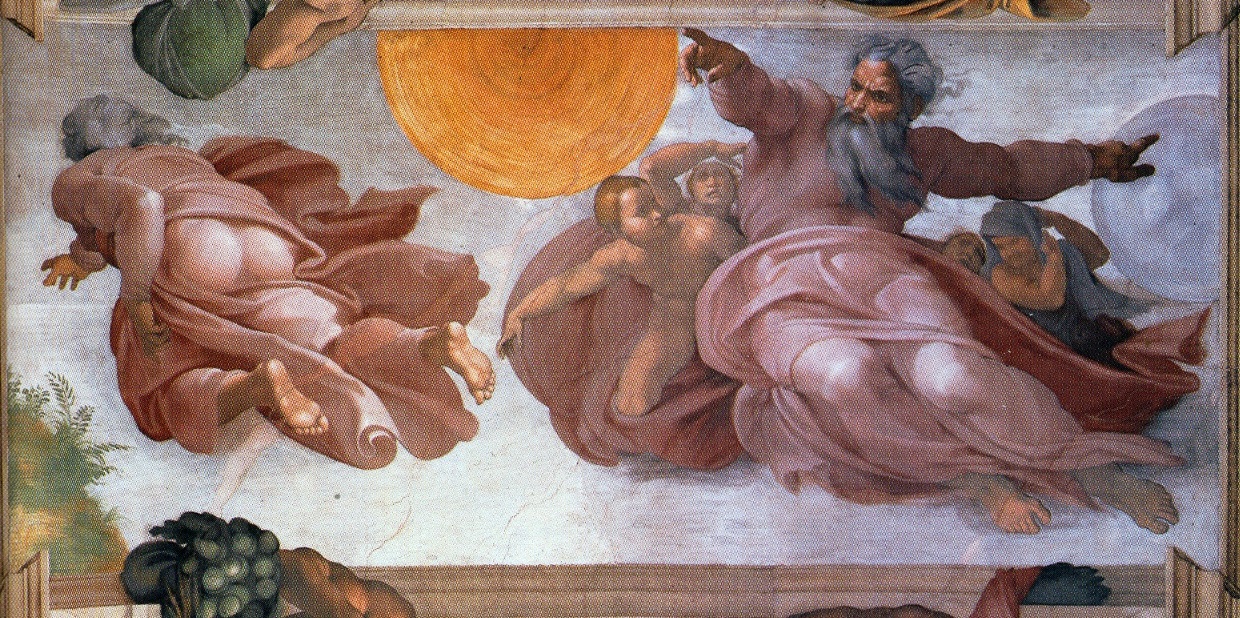
"The Creation of the Sun and Moon" from Michelangelo's Sistine Chapel fresco

"The Creation of the Sun and Moon" from Michelangelo's Sistine Chapel fresco

.

Poetry in the Image of God

Conjure and weave a calligraphic spell
Within the wells of mystic words and themes,
And bring to life a voice with tales to tell
Of life and death, of laughter, love, and dreams.

Conceive, command, contrive, connive, cajole
From sweet romance or willful, righteous rage,
A scattered babel, tamed, re-formed, made whole
To fit and fill a-virgin-pure, unblemished page.

Uplift, inspire, create, control, conspire
To wrest it from its tangled, mangled must
And with an ink-tipped plume, consume with fire
Till phoenix-like it rises from the dust

Alive, to speak and to be understood.
Incarnate words. And God said, “It is good.”

.

.

James A. Tweedie is a retired pastor living in Long Beach, Washington. He has written and published six novels, one collection of short stories, and three collections of poetry including Mostly Sonnets, all with Dunecrest Press. His poems have been published nationally and internationally in The Lyric, Poetry Salzburg (Austria) Review, California Quarterly, Asses of Parnassus, Lighten Up Online, Better than Starbucks, Dwell Time, Light, Deronda Review, The Road Not Taken, Fevers of the Mind, Sparks of Calliope, Dancing Poetry, WestWard Quarterly, Society of Classical Poets, and The Chained Muse. He was honored with being chosen as the winner of the 2021 SCP International Poetry Competition.
ShareTweetPin
The Society of Classical Poets does not endorse any views expressed in individual poems or commentary.
Read Our Comments Policy Here

RandomPoems

poem/pain/love poems
Beauty

‘Regret Hangs on Where Opportunity Once Existed’ by Richard Buchanan

October 4, 2021

. Regret Hangs on Where Opportunity Once Existed There are lots of sad words we lament with such ease,But there’s...

poems 'The Park' and Other Poetry by Amy Struthers
Beauty

‘The Park’ and Other Poetry by Amy Struthers

February 9, 2020

  The Park Northern pintails brushing blue, the crescendo of their wings, weaving windsong into words some say that, “Up...

Next Post
‘State of the Apple Pie’: A Poem by Russel Winick

'State of the Apple Pie': A Poem by Russel Winick

‘Ovid in Tomis’ and Other Poetry by Mary Jane Myers

'Ovid in Tomis' and Other Poetry by Mary Jane Myers

A Valentine: ‘To a Girl Named Olivia’ by Joseph S. Salemi

Classical Poets Live: Readings of Poetry by Salemi, Yapko, Sedia, and Benson Brown

Comments 12

  1. Roy Eugene Peterson says:
    2 years ago

    Amazing alliteration contained in an inspired context with beautiful rhyme.

    Reply
  2. Warren Bonham says:
    2 years ago

    It doesn’t count quite as much when I say it, but I do think “it is good”. Great message and I really enjoyed the alliteration.

    Reply
  3. Margaret Coats says:
    2 years ago

    James, your many verbs suggest that the image of God may appear in most genres of poetry. I say “most” because, although I can’t think of one, there could be some obscure one in some tradition not suited to this purpose. But going beyond genre to the final purpose of literature–using words to transcend what words can express–your poem implies the function of the poet to create in imitation of God’s multifarious creation. For that reason, it is good to end with God’s statement on each day of the Creation Week. When I think of the thousands of love lyrics (secular and religious) that I studied in preparation for my dissertation, very few were impressive poetry. But I found something good (the vestige of the creative God) in almost all. You’re right; keep up the good work!

    Reply
  4. James A. Tweedie says:
    2 years ago

    Margaret,

    You are not wrong to expand the intent of my poem to embrace poetry as a whole.

    The intent of the poem, however, was a personal one–an attempt to describe the process I go through when I create a poem. Finding a voice through which to speak. Choosing a vocabulary. Embracing a subject and/or emotion to speak through/from. Scattering, juggling words to capture the meaning or effect as part of a creative search for form. Putting the words on the page and then shuffling them, rearranging, reshaping, and even replacing them until the parts rise from the ashes as a whole, having been shaped int a form and breathed into life so that the words and the poem as a whole have the power to speak and be heard by ears other than that of the poet. All of this in imitation of the Creator of all who said, “It is good.”

    Not all poetry is God-good, of course, including much of my own. But when the breath of life comes through me from a Source greater than myself, I can usually tell. And it is then that–satis est–I can believe that my poem (by grace) has risen to the level of being what I might hope to be God-good.

    Reply
  5. Cynthia Erlandson says:
    2 years ago

    Beautiful, James. And the final couplet is truly marvelous.

    Reply
  6. Paul A. Freeman says:
    2 years ago

    Most limericks aren’t about love,
    or being a peace-loving dove.
    Yet wholesome or rude,
    one’s words are imbued
    with talent from Him up above.

    Thanks for the read, James. I was inspired – as you can tell.

    Reply
  7. C.B. Anderson says:
    2 years ago

    A perfect account of creation (or Creation), this poem is a smack in the face of any would-be poet who fails to aim high. I’m thankful for the reminder.

    Reply
  8. Jeff Eardley says:
    2 years ago

    Jim, a wonderful insight into the creative process. Long may your flaming, ink-tipped plume continue to inspire. Thank you.

    Reply
  9. Alan Orsborn says:
    2 years ago

    You describe writing a poem as wrestling with the words on the page until they fall into their proper place.

    I was thinking about the creative process the other day, and at that time it seemed to me to be identical to carving something from a block of wood, releasing the form that was there all along.

    I think we both are describing the same process. Starting with nothing and arriving at something.

    This is neither here nor there, but I’ve gone back to typing my poems. It slows down the process and puts me in better control. Using the laptop, edits are way too easy and I lose control of the whole project, it gets away from me. It’s like carving a block of wood down to a nub.

    Reply
    • James A. Tweedie says:
      2 years ago

      Me? Mostly on my PC. Sometimes, when I away or on a trip, on my iPhone. In a pinch, paper and pen/pencil. I literally think through my fingers and can type almost as fast as I can think. And I like my edits to be as easy as possible!

      Thanks for t he comment, Alan.

      Reply
  10. James Sale says:
    2 years ago

    The strength of a language – and so of poetry – is always in its verbs. Weak poets are masters of adjectives, and are constantly fiddling with them; but here we see clearly the power of Tweedie’s writing in the use of the imperative verbal form. Masterly. One interesting side note on this, is that who uses the imperative form in the Bible, that is, uses it much? Well, the Lord God in the Old Testament and … Jesus Christ in the New. Indeed, the incredible usage of the imperative tense in the New Testament by Christ is the linguistic, stylistic ‘proof’ that He is the identical person to the One called Yahweh in the Old. Since Tweedies’ poem is in the ‘image’ of God, it is wonderfully appropriate that it should adopt this grammatical feature. Finally, we can conclude that the characteristic of God (that is, Being) that we can derive from his linguistic patterning, is that God (Being) is a God of action and command!

    Reply
  11. James A. Tweedie says:
    2 years ago

    God’s one great imperative is for us to love one another as Christ loved us.

    All else is annotation.

    Reply

Leave a Reply Cancel reply

Your email address will not be published. Required fields are marked *


  1. Jeff Eardley on ‘The Estuary’: A Poem by Jeff EardleySeptember 4, 2026

    Margaret, thank you for taking the time to comment. Your work and your analytic contributions are a huge part of…

  2. Jeff Eardley on ‘The Estuary’: A Poem by Jeff EardleySeptember 4, 2026

    Norma, so did I. I recall heading for the sea in an amphibious vehicle called a DUKW. Happy .days indeed.

  3. Margaret Coats on ‘A Prayer of Aristotle’: A Poem by Margaret CoatsSeptember 4, 2026

    Thanks, Bruce, you offer luxurious appreciation of valuable prose which is mostly Greek to us, even when we've learned to…

  4. Margaret Coats on ‘Humdrum and Harum-Scarum’: A Lecture on Free Verse, by Robert Bridges (1922)September 4, 2026

    Thank you, Phillip Whidden, for recommending this essay. It's worthwhile comprehending the issues as an intelligent poet and critic understood…

  5. BDW on ‘A Prayer of Aristotle’: A Poem by Margaret CoatsSeptember 3, 2026

    The Prose Apartments by Esiad L Werecub Along the highway of communication, one can find the prose apartment paragraphs conveniently…

Subscribe to Daily Poems

Enter your email address to subscribe to this blog and receive notifications of new posts by email.

Join 1,634 other subscribers

Recent Poems

  • ‘The Cristero Centennial’: A Poem by Margaret Coats
  • ‘A Potpourri of Aphoristic Verses’ by C.B. Anderson
  • ‘The Estuary’: A Poem by Jeff Eardley
  • ‘A World Without the Wednesday Child’: A Poem by Kimberly Fore
  • The 2026 Society of Classical Poets International Poetry Competition
  • The 2026 SCP International High School Poetry Competition
  • ‘Realistic Reflections’ and Other Poetry by Anna J. Arredondo
  • ‘China Made’: A Poem by Theresa Werba
  • ‘The Savage Moon’ and Other Poetry by Brian Yapko
  • Poetry Book Review: Love Found, Yearned For, and Lost by James A. Tweedie
  • ‘When Opportunity Knocks’: A Poem by Roy E. Peterson
  • ‘Legend of the Griffin’: A Poem by Iryna Hall
  • ‘Government Issue’ and Other Poems by Joseph S. Salemi
  • ‘Chaucer Announces His Desire to Retire’: A Poem by Paul A. Freeman
  • ‘Advantages of Restaurants’ and Other Poems by Russel Winick
  • ‘Bone China’: A Poem by Mary Gardner
  • ‘On the Death of One Too Young to Die’: A Poem by Jeffrey Essmann
  • ‘This Too Shall Pass’ and Other Poetry by Justin Dasher
  • ‘Humdrum and Harum-Scarum’: A Lecture on Free Verse, by Robert Bridges (1922)
  • ‘Unrest On the Floodplain’: A Poem by Bhikkhu Nyanasobhano
  • ‘Latitude and Loss’: A Poem by Martin Briggs
  • ‘Act III’ and Other Poetry by C.B. Anderson
  • ‘God’s Funeral’: A Poem by James Sale
  • ‘Star Festival’: A Poem by Margaret Coats
  • ‘Song of the Frog Princess’: A Poem by Scharlie Meeuws
  • ‘The Odyssey: Nolan and Solot Compared’: An Essay by Michael Curtis
  • ‘Solitude’ and Other Poems by Mary Jane Myers
  • ‘The River Not Taken’ and Other Poetry by Brian Yapko
  • ‘Totentanz’: A Poem by James A. Tweedie
  • ‘In God Is Our Trust’: A Poem by Roy E. Peterson

Categories

  • Acrostic
  • Alexandroid
  • Alliterative
  • Art
  • Best Poems
  • Blank Verse
  • Chant Royal
  • Classical Poets Live
  • Clerihew
  • Covid-19
  • Deconstructing Communism
  • Educational
  • Epic
  • Epigrams and Proverbs
  • Essays
    • Interviews with Poets
    • Poetry Reviews
  • Featured
  • From the Society
  • Great Poets
    • Dante Alighieri
    • Edgar Allan Poe
    • Emily Dickinson
    • Geoffrey Chaucer
    • Henry Wadsworth Longfellow
    • Homer
    • John Keats
    • John Milton
    • Robert Frost
    • William Blake
    • William Shakespeare
    • William Wordsworth
  • Human Rights in China
  • Limerick
  • Love Poems
  • Music
  • Pantoum
  • Performing Arts
  • Poetry
    • Beauty
    • Children's Poems
    • Culture
    • Ekphrastic
    • Found Poems
    • High School Poets
    • Humor
    • Riddles
  • Poetry Challenge
  • Poetry Contests
  • Poetry Forms
    • Curtal Sonnet
    • Haiku
  • Poetry Readings
  • Rhupunt
  • Rondeau
  • Rondeau Redoublé
  • Rondel
  • Rubaiyat
  • Sapphic Verse
  • Satire
  • Science
  • Sestina
  • Shape Poems
  • Short Stories
  • Song Lyrics
  • Sonnet
  • Symposium
  • Terrorism
  • Terza Rima
  • The Environment
  • Translation
  • Triolet
  • Video
  • Villanelle

Quick Links

  • About Us
  • Submit Poetry
  • Become a Member
  • Members List
  • Support the Society
  • Advertisement Placement
  • Comments Policy
  • Terms of Use

Welcome Back!

Login to your account below

Forgotten Password?

Retrieve your password

Please enter your username or email address to reset your password.

Log In
No Result
View All Result
  • Poems
    • Beauty
    • Culture
    • Satire
    • Humor
    • Children’s
    • Art
    • Ekphrastic
    • Epic
    • Epigrams and Proverbs
    • Human Rights in China
    • Music
    • Performing Arts
    • Riddles
    • Science
    • Song Lyrics
    • The Environment
    • The Raven
    • Found Poems
    • High School Poets
    • Terrorism
    • Covid-19
  • Poetry Forms
    • Sonnet
    • Haiku
    • Limerick
    • Villanelle
    • Rondeau
    • Pantoum
    • Sestina
    • Triolet
    • Acrostic
    • Alexandroid
    • Alliterative
    • Blank Verse
    • Chant Royal
    • Clerihew
    • Rhupunt
    • Rondeau Redoublé
    • Rondel
    • Rubaiyat
    • Sapphic Verse
    • Shape Poems
    • Terza Rima
  • Great Poets
    • Geoffrey Chaucer
    • Emily Dickinson
    • Homer
    • Henry Wadsworth Longfellow
    • Dante Alighieri
    • John Keats
    • John Milton
    • Edgar Allan Poe
    • William Shakespeare
    • William Wordsworth
    • William Blake
    • Robert Frost
  • Love Poems
  • Contests
  • SCP Academy
    • Educational
    • Teaching Classical Poetry—A Guide for Educators
    • Poetry Forms
    • The SCP Journal
    • Books

© 2025 SCP. WebDesign by CODEC Prime.