• Submit Poetry
  • Support SCP
  • About Us
  • Members
  • Join
Saturday, July 18, 2026
Society of Classical Poets
  • Poems
    • Beauty
    • Culture
    • Satire
    • Humor
    • Children’s
    • Art
    • Ekphrastic
    • Epic
    • Epigrams and Proverbs
    • Human Rights in China
    • Music
    • Performing Arts
    • Riddles
    • Science
    • Song Lyrics
    • The Environment
    • The Raven
    • Found Poems
    • High School Poets
    • Terrorism
    • Covid-19
  • Poetry Forms
    • Sonnet
    • Haiku
    • Limerick
    • Villanelle
    • Rondeau
    • Pantoum
    • Sestina
    • Triolet
    • Acrostic
    • Alexandroid
    • Alliterative
    • Blank Verse
    • Chant Royal
    • Clerihew
    • Rhupunt
    • Rondeau Redoublé
    • Rondel
    • Rubaiyat
    • Sapphic Verse
    • Shape Poems
    • Terza Rima
  • Great Poets
    • Geoffrey Chaucer
    • Emily Dickinson
    • Homer
    • Henry Wadsworth Longfellow
    • Dante Alighieri
    • John Keats
    • John Milton
    • Edgar Allan Poe
    • William Shakespeare
    • William Wordsworth
    • William Blake
    • Robert Frost
  • Love Poems
  • Contests
  • SCP Academy
    • Educational
    • Teaching Classical Poetry—A Guide for Educators
    • Poetry Forms
    • The SCP Journal
    • Books
No Result
View All Result
Society of Classical Poets
  • Poems
    • Beauty
    • Culture
    • Satire
    • Humor
    • Children’s
    • Art
    • Ekphrastic
    • Epic
    • Epigrams and Proverbs
    • Human Rights in China
    • Music
    • Performing Arts
    • Riddles
    • Science
    • Song Lyrics
    • The Environment
    • The Raven
    • Found Poems
    • High School Poets
    • Terrorism
    • Covid-19
  • Poetry Forms
    • Sonnet
    • Haiku
    • Limerick
    • Villanelle
    • Rondeau
    • Pantoum
    • Sestina
    • Triolet
    • Acrostic
    • Alexandroid
    • Alliterative
    • Blank Verse
    • Chant Royal
    • Clerihew
    • Rhupunt
    • Rondeau Redoublé
    • Rondel
    • Rubaiyat
    • Sapphic Verse
    • Shape Poems
    • Terza Rima
  • Great Poets
    • Geoffrey Chaucer
    • Emily Dickinson
    • Homer
    • Henry Wadsworth Longfellow
    • Dante Alighieri
    • John Keats
    • John Milton
    • Edgar Allan Poe
    • William Shakespeare
    • William Wordsworth
    • William Blake
    • Robert Frost
  • Love Poems
  • Contests
  • SCP Academy
    • Educational
    • Teaching Classical Poetry—A Guide for Educators
    • Poetry Forms
    • The SCP Journal
    • Books
No Result
View All Result
Society of Classical Poets
No Result
View All Result
Home Poetry Culture

‘Ovid in Tomis’ and Other Poetry by Mary Jane Myers

April 6, 2024
in Culture, Love Poems, Poetry
A A
17
poems 'Ovid in Tomis' and Other Poetry by Mary Jane Myers

.

Ovid in Tomis

Relegated, scorned, I languish here
in this drab town. Unwitting, I caught sight
of what must not be seen; my wretched plight,
harsh exile from my laureate lettered sphere.

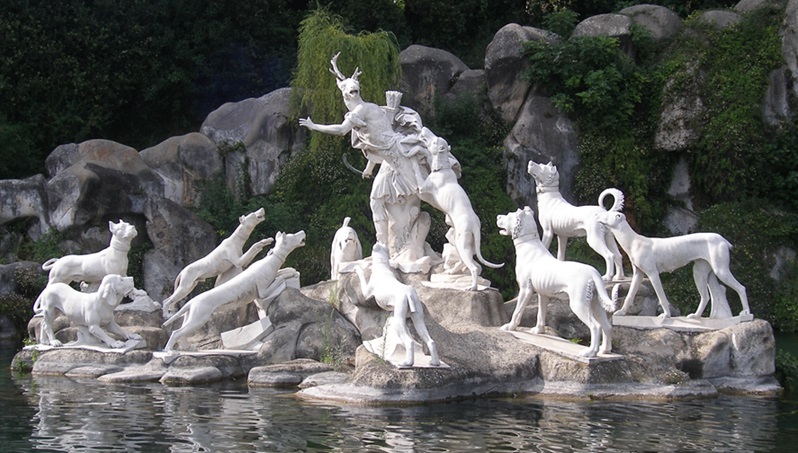
The ancients tell of Actaeon, a brash voyeur,
ravishing virgins his sanguine princely right.
I think my doom may echo his. I’ll write
of a huntress goddess, venting fierce hauteur.

This prince excels in every noble art:
the royal hunt; refined rhetorical skill.
He leaves his minions, wanders off alone,
through woodlands, twisty pathways overgrown.
He stumbles on Diana’s sacred zone,
perceives her face, contritely stands stock-still.
She knows he’s schooled in speech, is primed to sneer.
Her taunt: I’m nude, this secret you’ll not spill.
No more his voice, but the groan of a princely hart,
now his shape seems prey, ideal as kill.
His prized dogs tear their master’s limbs apart.
Vindictive powers rule our world, I fear.

.

.

Sonnet

after Shakespeare’s Sonnet 147

My love is as a Santa Ana wind
that sweeps across my psyche, hurling dust;
my peaceful breath’s constricted, comfort skinned,
unsullied thoughts engulfed by swirling lust.
Sound judgment: rainfall that would quench this craze,
exasperated by my fretful mood,
withholds its moisture. Soon the frenzied blaze
exploits my longing as its tinder wood.
Past rescue now, my heart-asylum burns.
There’s no escape, unflagging flames vault higher.
My red-hot marrow for your body yearns,
that we might die entwined on passion’s pyre.
__I overlook clear signs your vows ring foul,
__deny that you’re a demon on the prowl.

.

.

Mary Jane Myers resides in Springfield, Illinois. She is a retired JD/CPA tax specialist. Her debut short story collection Curious Affairs was published by Paul Dry Books in 2018.


ShareTweetPin
The Society of Classical Poets does not endorse any views expressed in individual poems or commentary.
Read Our Comments Policy Here

RandomPoems

‘A Fitful Veil’: A Poem by Daniel Moreschi
Sonnet

‘Magic Show, North Country’: A Poem by Nancy Brewka-Clark

December 12, 2025

  Magic Show, North Country The puddling snowbank spills a silver trace, its melt a mirror shattered on the earth....

‘The Wayfarer’ by Edward Ahern
Beauty

‘The Wayfarer’ by Edward Ahern

July 17, 2016

The waking’s spun with webs of urgent lure And sleep is shriveled dreaming marred by fear. The life allows the...

Next Post
A Valentine: ‘To a Girl Named Olivia’ by Joseph S. Salemi

Classical Poets Live: Readings of Poetry by Salemi, Yapko, Sedia, and Benson Brown

A Song on Biden after Boogie Woogie Bugle Boy of Company B, by Julian Woodruff

A Song on Biden after Boogie Woogie Bugle Boy of Company B, by Julian Woodruff

‘Old New England Logging Camps’: A Poem by Phil S. Rogers

'Old New England Logging Camps': A Poem by Phil S. Rogers

Comments 17

  1. Julian D. Woodruff says:
    2 years ago

    I’ll leave the doings and musings of Ovid to others, but the sonnet after Shakespeare has immediacy and power. Casting the throes of lust in terms of the overheating, desiccating effects of a desert wind was a true inspiration. Compelling.

    Reply
    • Mary Jane Myers says:
      2 years ago

      Thank you Julian. Imitating Shakespeare is a great deal of fun.
      Most sincerely Mary Jane

      Reply
  2. Cynthia Erlandson says:
    2 years ago

    Mary Jane, I just re-read Shakespeare’s Sonnet 147, and you have written a marvelous echo of it here, using your own imagery. Your metaphor of the Santa Ana wind hurling dust and “swirling lust” — which could be quenched by the rain of reason, but is blown into a blaze — seems so apt a description of what’s going on in the psyche of the speaker.

    Reply
    • Mary Jane Myers says:
      2 years ago

      Thank you Cynthia. It’s quite instructive to imitate Shakespeare’s sonnets. My experience of those Santa Ana winds was harrowing–they often stoke terrible fires. I fled from burning hillsides twice when I lived in Los Angeles. I’ll pass over any comments about my experiences with “bad boyfriends”!
      Most sincerely Mary Jane

      Reply
  3. Shamik Banerjee says:
    2 years ago

    I wholeheartedly enjoyed both poems, especially the Sonnet. I agree with Cynthia: your version echoes the original in tone and delivery. There are strong notions that enrich the piece, such as sound judgement being rainfall, your longing being the wood preyed on by the frenzied blaze. The concluding couplet tactfully sums up the whole agenda. Thanks for the treat, Mary Jane.

    Reply
    • Mary Jane Myers says:
      2 years ago

      Thanks Shamik. It’s great fun, isn’t it–studying Shakespeare!
      Most sincerely
      Mary Jane

      Reply
  4. Joseph S. Salemi says:
    2 years ago

    A very fine poem on the Actaeon myth, with an unusual rhyme scheme after the two quatrains. There are many versions of the myth, with various reasons given for Actaeon’s punishment. The poet is drawing an unspoken parallel with the reasons for Ovid’s exile to Tomis — we are not sure of exactly why the Emperor banished him to die in such a horrid place, but the suspicion is that it might have been some sort of sexual transgression, or because he had seen something that he was not supposed to see. That ties in perfectly with Actaeon’s glimpse of the naked Diana.

    The sonnet is an excellent echo of Shakespeare’s # 147, one of the most emotionally savage intertwinings of lust and hatred in the entire sequence. You might even take Ms. Myers’ sonnet as the Dark Lady’s answer to the narrative voice in #147.

    Reply
    • Mary Jane Myers says:
      2 years ago

      Thank you Joseph.
      The impetus for the Ovid poem is a scholarly article I read about Ovid’s re-casting of the ancient Actaeon myth to reflect his own bitter experiences: https://classicsvic.wordpress.com/wp-content/uploads/2014/01/hawesvol21.pdf
      Ovid wrote in his Tristia (his Letters from Exile–he was very morose!) about Actaeon: Section 2 Lines 103-120:
      https://www.poetryintranslation.com/PITBR/Latin/OvidTristiaBkTwo.php

      I love your image of myself as “Dark Lady”! Thank you!
      Most sincerely
      Mary Jane

      Reply
  5. Paul A. Freeman says:
    2 years ago

    I really enjoyed the Actaeon myth. I knew the bare bones of the story (all this mythical stuff seemed so dry when I was at school), so I feel both educated and entertained.

    Strangely, I wrote a short story today (a quietly humorous story) where a character got torn limb from limb.

    The sonnet? Loved the Americanisation with the ‘Santa Anna wind’, and what a killer couplet at the end.

    Thanks for the reads, Mary.

    Reply
    • Mary Jane Myers says:
      2 years ago

      Dear Paul
      Thank you for your complimentary comments. Isn’t it strange how identical ideas simultaneously inspire writers — some vibration in the literary ether, some strange zeitgeist transmission. I’m so glad your story was humorous! The Diana variant is rather horrific.

      Lots of enjoyment in penning imitations of Shakespeare!
      Most sincerely, Mary Jane

      Reply
  6. Yael says:
    2 years ago

    The Sonnet is awesome, I really like it’s construction, the smooth flow of thought and the message, too. Great job!

    Reply
    • Mary Jane Myers says:
      2 years ago

      Thank you Yael. It was great fun to write!
      Most sincerely
      Mary Jane

      Reply
  7. Roy Eugene Peterson says:
    2 years ago

    The ending lines on both your poems are startling conclusions that stick in my mind. In your Ovid poem, indictive powers ruling our world is what we used to call “heavy” It transcends time and calls into question modern rulers in one fell swoop. Your salacious sonnet ends with a torrid thought, “deny that you’re a demon on the prowl.” In other words, even though a lover is bad, the sensuous proclivities outweigh the potential troubles foreshadowed by knowledge We find it difficult to resist such temptations.

    Reply
    • Mary Jane Myers says:
      2 years ago

      Dear Roy
      Thank you for your kind comments. I am gratified to find a reader who likes my “conclusions!” I love to write concluding “epigrams” in my poems, a tendency that my tutor warns me against overusing. In the Ovid poem, I had set the ending line apart — a double space before that single line. She encouraged me to write it as part of the stanza, with no set-off. I rather like my original idea, and I think I may change it back!

      Most sincerely,
      Mary Jane

      Reply
  8. Margaret Coats says:
    2 years ago

    The poem on the Actaeon myth can be read on several levels. First, the retelling of the story itself, but with the exiled Ovid as speaker there is a claim to his known literary persona. And like his own references, yours are obscure hints about the reason for exile, and more than his (I would say) venture into allegory. In particular, when your speaker says he writes of a “huntress goddess, venting fierce hauteur,” this describes the person responsible and characterizes that person’s emotions behind the enmity that sent the poet harshly away from his “laureate lettered sphere.” We could even supply “Latin sphere,” as Ovid complains of unfamiliarity with the language in his new residence. You introduce a concern with language as well as emotion in Diana’s hostile comment, leading up to Ovid/Actaeon’s metamorphosis into a “hart” killed by his dogs. You have Ovid express contrition for his fault (whatever it was), that does him absolutely no good–reflecting rather the cruelty of his goddess enemy (male or female, we don’t know, because it is allegory). The “prized dogs” may be friends who turned against the poet. This detail, along with the final line about “vindictive powers,” suggests moving from the level of Ovid and his classical sphere to contemporary cancel culture, where self-interested individuals may attack associates or benefactors.

    In the sonnet, I know exactly what you speak of in “Santa Ana” winds that inflict damage on land with unexpectedly sudden force, heat, and drought. You substitute these for Shakespeare’s disease, medicine, and madness. Your use of your chosen images is massive, thorough, and consistent, which is a measure of success in such an adaptation.

    Very much enjoyed your somber and masterful poems–with two great masters to imitate!

    Reply
    • Mary Jane Myers says:
      2 years ago

      Margaret
      I am humbled by your praise–thank you for your careful and thoughtful reading. See the two links in my response to Joseph Salemi above. It fascinates me how Ovid may have subconsciously (or perhaps even full-on consciously?) manipulated the old myth to reflect his own bitter experiences. This particular example leads to a general interesting question: in what ways did the Romans appropriate the Greek mythopoeic tradition for their own purposes? I am participating right now in a group who is “close reading” Vergil’s Aeneid. We are amateurs, rather than classical scholars. It’s obvious to us (in a general, not in a systematic scholarly way) that Vergil is using the Iliad as a template. He is trying to prove the point that the Latin language is just as good as the Greek! But he modifies the themes to please Augustus who was subsidizing a grand project to construct a glorious foundation story. But of course Vergil’s own authorial voice takes over in many places. He’s not “all-in” with Augustus’s ideas.

      Those Santa Ana winds are “forces of nature.” I lived in Los Angeles in the Sepulveda Pass for many years–and personally experienced two scary fire evacuations. When I was writing this Shakespeare pastiche, I had in mind the over-the-top romantic scene in The English Patient “Tell Me About the Winds” https://www.youtube.com/watch?v=Ph_vHgeSl7I Talk about sexual chemistry!

      Most sincerely
      Mary Jane

      Reply
      • Mary says:
        2 years ago

        That movie excerpt should be titled: “Let me tell you about winds” …. the ghibli, which rolls and rolls and rolls and produces a rather strange and nervous condition.

        Reply

Leave a Reply Cancel reply

Your email address will not be published. Required fields are marked *

  1. Joseph S. Salemi on Three Brief Poems by Luxorius, Translated by Joseph S. SalemiJuly 18, 2026

    Kip, don't leave them there! Get them out to an audience. Too many "conservative" and "Christian" websites are clogged with…

  2. C.B. Anderson on Three Brief Poems by Luxorius, Translated by Joseph S. SalemiJuly 18, 2026

    I don't know whether or not I should I should be pissed-off at you for showing that my own attempts…

  3. Russel Winick on ‘When the Phone Rings’ and Other Short Poems by Russel WinickJuly 18, 2026

    Margaret — I see that I somehow missed this comment earlier, and for that I must —- apologize! I always…

  4. Russel Winick on ‘When the Phone Rings’ and Other Short Poems by Russel WinickJuly 18, 2026

    Thank you Marguerite. The quest continues.

  5. Karen Rodgers on ‘The Gold Star Mother’: A Poem by Gerard MaritatoJuly 18, 2026

    Thanks Gerry, Nick Dixon says it in one line; Publishing Censorship Has Gone Insane https://www.nickreads.com/p/publishing-censorship-has-gone-insane >they can cancel culture all…

Subscribe to Daily Poems

Enter your email address to subscribe to this blog and receive notifications of new posts by email.

Join 1,594 other subscribers

Recent Poems

  • Winners and Rankings of The Great American Poetry Competition
  • ‘The Gold Star Mother’: A Poem by Gerard Maritato
  • ‘An American Dash’: A Poem by Linda Ellis
  • ‘The Anonymous Soldier’: A Poem by Lucy Lind
  • ‘For Those We Never Meet’: A Poem by Aneesh Agarwal
  • ‘Ben Franklin’s Copper Fugio Cent’: A Poem by Geoffrey Smagacz
  • Three Brief Poems by Luxorius, Translated by Joseph S. Salemi
  • ‘The American Spirit’: A Poem by Dusty Grein
  • ‘The Ballad of Zebulon Pike’: A Poem by M.D. Skeen
  • ‘We Are the Ones’ and Other Poetry by Cheryl Corey
  • ‘My Pyjamas!’ and Other Poems by Susan Jarvis Bryant
  • ‘A Snowy Egret’: A Poem by Bruce Dale Wise
  • ‘The Swearing-in of Calvin Coolidge’: A Sonnet by Robert W. Crawford
  • ‘Ballad of the Sequoia’: A Poem by Lauren V. Leon
  • ‘The 51st State’: A Poem by James Sale
  • ‘La Uva’ (The Grape): A Poem by Michael Pietrack
  • ‘There’s Blood that Flows Within the Stripes’: A Poem by Lauren V. Leon
  • ‘Birdsong’: A Poem by Jeffrey Essmann
  • ‘The Melody That Lingers On’ and Other Poetry by John McPherson
  • ‘American Dreams’: A Poem by Adam Sedia
  • ‘An American Fabius’: A Poem by John Hernandez
  • ‘Vernal Clinic’ and Other Poetry by C.B. Anderson
  • ‘Omaha Beach’ and Other Poetry by Bradford Skow
  • ‘Music to Part the Veil’: A Poem by T.M. Moore
  • ‘A Gentleman’s Guide to Losing a War’ and Other Poetry by Arnon Peterson
  • ‘Black Shuck’: A Poem by Martin Briggs
  • ‘When the Last World War II Veteran Passes Away’: A Poem by N.S. Boone
  • ‘A Fallow Year at Worthy Farm’: A Poem by Paul A. Freeman
  • ‘Outstanding in Afghanistan’: A Poem by Jared S. Chang
  • ‘250 More’: A Poem by Miguel Moreno

Categories

  • Acrostic
  • Alexandroid
  • Alliterative
  • Art
  • Best Poems
  • Blank Verse
  • Chant Royal
  • Classical Poets Live
  • Clerihew
  • Covid-19
  • Deconstructing Communism
  • Educational
  • Epic
  • Epigrams and Proverbs
  • Essays
    • Interviews with Poets
    • Poetry Reviews
  • Featured
  • From the Society
  • Great Poets
    • Dante Alighieri
    • Edgar Allan Poe
    • Emily Dickinson
    • Geoffrey Chaucer
    • Henry Wadsworth Longfellow
    • Homer
    • John Keats
    • John Milton
    • Robert Frost
    • William Blake
    • William Shakespeare
    • William Wordsworth
  • Human Rights in China
  • Limerick
  • Love Poems
  • Music
  • Pantoum
  • Performing Arts
  • Poetry
    • Beauty
    • Children's Poems
    • Culture
    • Ekphrastic
    • Found Poems
    • High School Poets
    • Humor
    • Riddles
  • Poetry Challenge
  • Poetry Contests
  • Poetry Forms
    • Curtal Sonnet
    • Haiku
  • Poetry Readings
  • Rhupunt
  • Rondeau
  • Rondeau Redoublé
  • Rondel
  • Rubaiyat
  • Sapphic Verse
  • Satire
  • Science
  • Sestina
  • Shape Poems
  • Short Stories
  • Song Lyrics
  • Sonnet
  • Symposium
  • Terrorism
  • Terza Rima
  • The Environment
  • Translation
  • Triolet
  • Video
  • Villanelle

Quick Links

  • About Us
  • Submit Poetry
  • Become a Member
  • Members List
  • Support the Society
  • Advertisement Placement
  • Comments Policy
  • Terms of Use

Welcome Back!

Login to your account below

Forgotten Password?

Retrieve your password

Please enter your username or email address to reset your password.

Log In
No Result
View All Result
  • Poems
    • Beauty
    • Culture
    • Satire
    • Humor
    • Children’s
    • Art
    • Ekphrastic
    • Epic
    • Epigrams and Proverbs
    • Human Rights in China
    • Music
    • Performing Arts
    • Riddles
    • Science
    • Song Lyrics
    • The Environment
    • The Raven
    • Found Poems
    • High School Poets
    • Terrorism
    • Covid-19
  • Poetry Forms
    • Sonnet
    • Haiku
    • Limerick
    • Villanelle
    • Rondeau
    • Pantoum
    • Sestina
    • Triolet
    • Acrostic
    • Alexandroid
    • Alliterative
    • Blank Verse
    • Chant Royal
    • Clerihew
    • Rhupunt
    • Rondeau Redoublé
    • Rondel
    • Rubaiyat
    • Sapphic Verse
    • Shape Poems
    • Terza Rima
  • Great Poets
    • Geoffrey Chaucer
    • Emily Dickinson
    • Homer
    • Henry Wadsworth Longfellow
    • Dante Alighieri
    • John Keats
    • John Milton
    • Edgar Allan Poe
    • William Shakespeare
    • William Wordsworth
    • William Blake
    • Robert Frost
  • Love Poems
  • Contests
  • SCP Academy
    • Educational
    • Teaching Classical Poetry—A Guide for Educators
    • Poetry Forms
    • The SCP Journal
    • Books

© 2025 SCP. WebDesign by CODEC Prime.