• Submit Poetry
  • Support SCP
  • About Us
  • Members
  • Join
Sunday, October 18, 2026
Society of Classical Poets
  • Poems
    • Beauty
    • Culture
    • Satire
    • Humor
    • Children’s
    • Art
    • Ekphrastic
    • Epic
    • Epigrams and Proverbs
    • Human Rights in China
    • Music
    • Performing Arts
    • Riddles
    • Science
    • Song Lyrics
    • The Environment
    • The Raven
    • Found Poems
    • High School Poets
    • Terrorism
    • Covid-19
  • Poetry Forms
    • Sonnet
    • Haiku
    • Limerick
    • Villanelle
    • Rondeau
    • Pantoum
    • Sestina
    • Triolet
    • Acrostic
    • Alexandroid
    • Alliterative
    • Blank Verse
    • Chant Royal
    • Clerihew
    • Rhupunt
    • Rondeau Redoublé
    • Rondel
    • Rubaiyat
    • Sapphic Verse
    • Shape Poems
    • Terza Rima
  • Great Poets
    • Geoffrey Chaucer
    • Emily Dickinson
    • Homer
    • Henry Wadsworth Longfellow
    • Dante Alighieri
    • John Keats
    • John Milton
    • Edgar Allan Poe
    • William Shakespeare
    • William Wordsworth
    • William Blake
    • Robert Frost
  • Love Poems
  • Contests
  • SCP Academy
    • Educational
    • Teaching Classical Poetry—A Guide for Educators
    • Poetry Forms
    • The SCP Journal
    • Books
No Result
View All Result
Society of Classical Poets
  • Poems
    • Beauty
    • Culture
    • Satire
    • Humor
    • Children’s
    • Art
    • Ekphrastic
    • Epic
    • Epigrams and Proverbs
    • Human Rights in China
    • Music
    • Performing Arts
    • Riddles
    • Science
    • Song Lyrics
    • The Environment
    • The Raven
    • Found Poems
    • High School Poets
    • Terrorism
    • Covid-19
  • Poetry Forms
    • Sonnet
    • Haiku
    • Limerick
    • Villanelle
    • Rondeau
    • Pantoum
    • Sestina
    • Triolet
    • Acrostic
    • Alexandroid
    • Alliterative
    • Blank Verse
    • Chant Royal
    • Clerihew
    • Rhupunt
    • Rondeau Redoublé
    • Rondel
    • Rubaiyat
    • Sapphic Verse
    • Shape Poems
    • Terza Rima
  • Great Poets
    • Geoffrey Chaucer
    • Emily Dickinson
    • Homer
    • Henry Wadsworth Longfellow
    • Dante Alighieri
    • John Keats
    • John Milton
    • Edgar Allan Poe
    • William Shakespeare
    • William Wordsworth
    • William Blake
    • Robert Frost
  • Love Poems
  • Contests
  • SCP Academy
    • Educational
    • Teaching Classical Poetry—A Guide for Educators
    • Poetry Forms
    • The SCP Journal
    • Books
No Result
View All Result
Society of Classical Poets
No Result
View All Result
Home Poetry Beauty

‘Sonnet à Double’ by Leo Zoutewelle

August 26, 2019
in Beauty, Culture, Poetry
A A
6
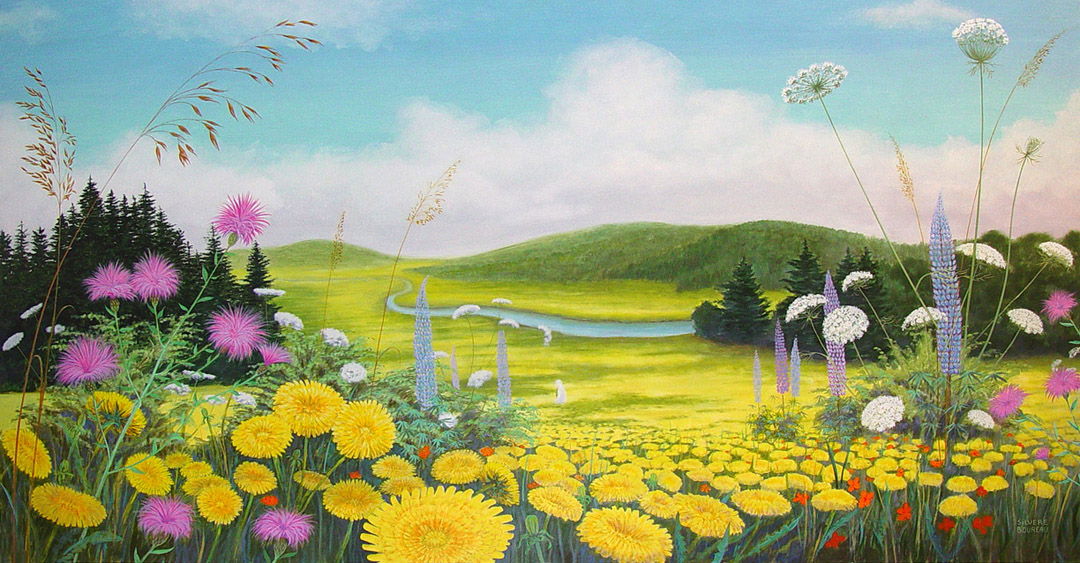
poem/james/dandelions

When our new park enticed me to a walk
I saw a dandelion on the trail.
Its yellow bloom hung on its broken stalk
And it appeared to call me with a wail.

Was it a she, or rather she a he?
I was bemused: can flowers have a sex?
Should I retrieve the thing or let it be?
I must admit, these questions did perplex.

Do plants feel really pain when they are hurt?
Do they possess emotions, like a man?
Or are they really rather quite inert?
And had so been forever in God’s plan?

A scientist may think he knows it all,
But I—these questions make me feel so small.
X

poems 'Sonnet à Double' by Leo Zoutewelle


Now, having wondered all these abstruse things,
There’s yet one other baffling mystery.
And here the question takes on arcane wings,
As it approaches runic history:

Can plants and trees with man communicate,
Or even with each other, think or plan?
Would they use waves with which to emanate
The words and feelings we as humans can?

They grant us splendor, oxygen we need;
They gladly give us happiness, content.
They ever help us out in thought and deed
And bless us with their fresh and outdoor scent.

Would it not be beyond appropriate
For us to thank them and reciprocate?


Leo Zoutewelle was born in 1935 in The Netherlands and was raised there until at age twenty he emigrated to the United States. He received his Bachelor of Science degree in Mathematics from Davidson College, in North Carolina, and a Masters in Business Administration from the Darden School in the University of Virginia. In 1977, he went into business for himself in the field of land surveying, which he maintained until 2012, when he retired. Since then, he has written an autobiography and two novels (unpublished).


ShareTweetPin
The Society of Classical Poets does not endorse any views expressed in individual poems or commentary.
Read Our Comments Policy Here

RandomPoems

‘Your Memory Starts to Slip’ by Jeff Eardley
Humor

‘The Great Rub-off’: A Poem by Martin Elster and Joan Axelrod-Contrada

January 26, 2025

. The Great Rub-off Norm and Zip, in mismatched chairs, __were sipping tea and talking, when Desi, their loyal hound,...

‘Pika’ by André Le Mont Wilson
Beauty

‘Pika’ by André Le Mont Wilson

May 17, 2018

The pika climbs the snowless slopes in hope of finding cooler climes. A tailless kin to hares, he shelters under...

Next Post
The Remote Islands of Scotland: Six Poems by Peter Hartley

The Remote Islands of Scotland: Six Poems by Peter Hartley

‘Investment Strategies’ and Other Poetry by C.B. Anderson

'Investment Strategies' and Other Poetry by C.B. Anderson

Two Waste Poems by Chantel Lavoie

Two Waste Poems by Chantel Lavoie

Comments 6

  1. Sathyanarayana says:
    7 years ago

    These poems remind me of great Telugu poems with the title PUSHPA VILAPAM(the wails of flowers) by famous poet and lyricist Karunasri (1912-1992). When the poet tries to pluck a flower, the flower wails and goes into a long harangue on flower-human relation. These poems had such immense influence on Telugu people, many women in those days stopped plucking flowers and wearing them in braids.

    Reply
  2. Leo Zoutewelle says:
    7 years ago

    Thanks for commenting. I must admit and regret total ignorance of poet Karunasri. Sorry!

    Reply
    • James A. Tweedie says:
      7 years ago

      Leo, I am enjoying your poetry, including this pair of sonnets which tell a good story drawn from your walk in the park along with sharing some of the philosophical musings it generated.

      There are, however, a number of small things that, if addressed, would make the poems even more successful.

      First, as a general rule, the further poetry strays from common speech the less effective it will be. Sometimes, in trying to maintain the rhythm and rhyme of the poem, we bend the normal rules of syntax/word order. Take, for example, “these questions did perplex,” “do plants feel really pain?” “and had been so framed in God’s plans,” and, “they ever help us out,” The phrasing seems awkward simply because we don’t talk like that in ordinary conversation. Writing in this way is often justified by referring to it as “poetic license,” but there is really no excuse for it since it can be avoided by taking a bit more time to work and rework each line until it flows more smoothly.

      Verb tense should also be consistent. After three lines of present tense the phrase “and had so been forever…” introduces me into an alternate verb tense that is so convoluted I can’t even parse it.

      Similarly, the phrase, “They gladly give us happiness, content.” How do we know they are doing this “gladly?” Would “freely” be a better word? And (grammatically speaking) how do you give “content?”

      Word juxtapositions are also tricky. Take “arcane wings” and “runic history.” These should either make plain sense (which neither does) or pair two unexpected images to create a third. Even though the image of a question “taking . . . wings” is hard to swallow, the insertion of the word “arcane” reflects the sense of mystery you are trying to convey. For me, at least, this works. The phrase, “runic history,” however, is less successful, since I have no idea what either Viking script or history in general has to do with “questions taking arcane wings.” To use your own word, I find this “baffling.”

      As I said, on one level the poems are a success. But there are ways to make them even better. I would offer an example, but I have to dash off for a meeting. All the best. And thank you for the poems.

      Reply
  3. Leo Zoutewelle says:
    7 years ago

    Hi James, thank you so much for your comments. Obviously there was much to learn in them and, indeed, I did! Thanks again.
    Leo

    Reply
  4. Sally Cook says:
    7 years ago

    Dear Leo Zoutewelle —

    This subject is well worth consideration. There are two aspects to your poem – one deals with the world of poetic language and the very fine and inquiring idea of communication between man and plants.
    I would ask if you have read “The Secret Life Of Plants?” If not, I am sure you will find a lot in it to interest you.

    Mr. Tweedie made several valid points; I won’t duplicate those here, but just add my take on a few instances in which, if you were to make revisions, would greatly improve this thoughtful poem.

    First,,line 9 –“Do plants feel really pain when they are hurt?” is awkward and grammatically incorrect, and you must find a better way to ask that question, keeping in mind that you again use the word “really” in line 11. This entire section needs to be re-worked.

    Please always keep in mind that you must respect your own work more than anyone else respects it. Mistakes are always lurki8ng, waiting to be made; be on the lookout for them.
    I would like to suggest, if you have not already done so, that you read some of another Leo’s work – the work of Leo Yankevich. We can all learn from him.

    Hope to see more of your poems in future.
    Sincerely,

    Reply
    • Leo Zoutewelle says:
      7 years ago

      Dear Sally,
      I was glad when I saw that you had left a comment. I find yours very helpful.
      I had, indeed, already found and studied some of Leo Yankevich’s work. I will keep trying! Thank you so much!
      Leo

      Reply

Leave a Reply Cancel reply

Your email address will not be published. Required fields are marked *


  1. Rohini Sunderam on ‘The River & The Sea’: A Poem by Rohini SunderamOctober 18, 2026

    Thank you! I had fun writing it

  2. Briana Reavis on ‘The Valley’: A Poem by Briana ReavisOctober 18, 2026

    Thank you. I felt as though the slant rhymes mimicked the uneven and difficult climb we often face.

  3. Yael on ‘The River & The Sea’: A Poem by Rohini SunderamOctober 18, 2026

    I love this river and sea love story poem! It's so innocent yet nearly erotic at the same time. I…

  4. Briana Reavis on ‘The Valley’: A Poem by Briana ReavisOctober 18, 2026

    Thank you, sir. I appreciate you taking the time to read and comment.

  5. Briana Reavis on ‘The Valley’: A Poem by Briana ReavisOctober 18, 2026

    Thank you, sir. It was so nice to read your critique, after which I found myself thinking, “Yes! He got…

Subscribe to Daily Poems

Enter your email address to subscribe to this blog and receive notifications of new posts by email.

Join 1,660 other subscribers
No Result
View All Result

Resources

       1. A Guide to Writing Poetry

      2. The Best Poems of 2020      

      3. Poetry and Writing Contests

      4. Journals Accepting Formal Verse

Recent Poems

  • ‘The Valley’: A Poem by Briana Reavis
  • The Blobfish—‘Mr Blobby’: A Poem by Paul A. Freeman
  • ‘Nature’s Family’: A Poem by Margaret Coats
  • ‘The River & The Sea’: A Poem by Rohini Sunderam
  • Poems by Derzhavin, Akhmatova, and Tyutchev, Translated by Kevin Rainbow
  • ‘After-Action Report’: A Poem by Joseph S. Salemi
  • ‘The Walking Wounded’: A Poem by Jeffrey Essmann
  • ‘Their Words, My Fault’ and Other Poems by Russel Winick
  • ‘Lazarus I’: A Poem by Jason Hunt
  • Poetry Challenge: Dictionary Delights
  • ‘In Defense of Rhyme’: An Essay by Euphrates Moss
  • ‘Gun Control’: A Poem by Kevin Ahern
  • ‘Power of a Pen’: A Poem by Janice Stanley
  • The Best Haiku of 2026
  • ‘One Night in Bangkok’ and Other Poetry by Brian Yapko
  • ‘Invocation’: A Poem by D.R. Rainbolt
  • ‘Enjoy the Peace, Prepare for War’: A Poem by Roy E. Peterson
  • Faust Part Two, Act One: ‘A Pleasant Landscape’ by Goethe, Translated by Josh Olson
  • A Song Inspired by Robert Frost’s ‘The Road Not Taken’, by Gunny Markefka
  • ‘Reappraisals of Mortality’: A Poem by C.B. Anderson
  • ‘What Is the Measure of My Days?’: A Poem by Peter Venable
  • ‘Polar Coordinates’: A Poem by Adam Sedia
  • ‘It Never Lies!’: A Poem by Paul A. Freeman
  • ‘The Mahjong Flowers’: A Set of Sonnets by Margaret Coats
  • ‘The Martyrdom of Saint Cassian’: A Poem by Joseph S. Salemi
  • ‘Mind Versus Beauty’: A Poem by Johann Wolfgang von Goethe, Translated by Eric v.d. Luft
  • ‘Summer Sails’: A Poem by Paulette Calasibetta
  • ‘Aquarius’: A Poem by Patricia Rogers Crozier
  • ‘No Body Here on Earth’: A Poem by Gerard Maritato
  • A Visualized Reading of The Odyssey: Book 1, Produced by Andrew Benson Brown

Categories

  • Acrostic
  • Alexandroid
  • Alliterative
  • Art
  • Best Poems
  • Blank Verse
  • Chant Royal
  • Classical Poets Live
  • Clerihew
  • Covid-19
  • Deconstructing Communism
  • Educational
  • Epic
  • Epigrams and Proverbs
  • Essays
    • Interviews with Poets
    • Poetry Reviews
  • Featured
  • From the Society
  • Great Poets
    • Dante Alighieri
    • Edgar Allan Poe
    • Emily Dickinson
    • Geoffrey Chaucer
    • Henry Wadsworth Longfellow
    • Homer
    • John Keats
    • John Milton
    • Robert Frost
    • William Blake
    • William Shakespeare
    • William Wordsworth
  • Human Rights in China
  • Limerick
  • Love Poems
  • Music
  • Pantoum
  • Performing Arts
  • Poetry
    • Beauty
    • Children's Poems
    • Culture
    • Ekphrastic
    • Found Poems
    • High School Poets
    • Humor
    • Riddles
  • Poetry Challenge
  • Poetry Contests
  • Poetry Forms
    • Curtal Sonnet
    • Haiku
  • Poetry Readings
  • Rhupunt
  • Rondeau
  • Rondeau Redoublé
  • Rondel
  • Rubaiyat
  • Sapphic Verse
  • Satire
  • Science
  • Sestina
  • Shape Poems
  • Short Stories
  • Song Lyrics
  • Sonnet
  • Symposium
  • Terrorism
  • Terza Rima
  • The Environment
  • Translation
  • Triolet
  • Video
  • Villanelle

Quick Links

  • About Us
  • Submit Poetry
  • Become a Member
  • Members List
  • Support the Society
  • Advertisement Placement
  • Comments Policy
  • Terms of Use

Welcome Back!

Login to your account below

Forgotten Password?

Retrieve your password

Please enter your username or email address to reset your password.

Log In
No Result
View All Result
  • Poems
    • Beauty
    • Culture
    • Satire
    • Humor
    • Children’s
    • Art
    • Ekphrastic
    • Epic
    • Epigrams and Proverbs
    • Human Rights in China
    • Music
    • Performing Arts
    • Riddles
    • Science
    • Song Lyrics
    • The Environment
    • The Raven
    • Found Poems
    • High School Poets
    • Terrorism
    • Covid-19
  • Poetry Forms
    • Sonnet
    • Haiku
    • Limerick
    • Villanelle
    • Rondeau
    • Pantoum
    • Sestina
    • Triolet
    • Acrostic
    • Alexandroid
    • Alliterative
    • Blank Verse
    • Chant Royal
    • Clerihew
    • Rhupunt
    • Rondeau Redoublé
    • Rondel
    • Rubaiyat
    • Sapphic Verse
    • Shape Poems
    • Terza Rima
  • Great Poets
    • Geoffrey Chaucer
    • Emily Dickinson
    • Homer
    • Henry Wadsworth Longfellow
    • Dante Alighieri
    • John Keats
    • John Milton
    • Edgar Allan Poe
    • William Shakespeare
    • William Wordsworth
    • William Blake
    • Robert Frost
  • Love Poems
  • Contests
  • SCP Academy
    • Educational
    • Teaching Classical Poetry—A Guide for Educators
    • Poetry Forms
    • The SCP Journal
    • Books

© 2025 SCP. WebDesign by CODEC Prime.