


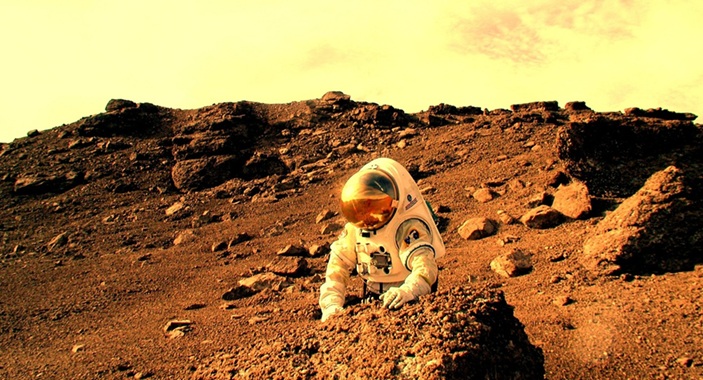
The Cover-up
Everything went smoothly on the morning that we launched
__And headed off to make our flight through space.
And we’d now been receding from the earth for three long years,
__While traveling at a hard to fathom pace.
Now at last our destination loomed before our eyes
__As we approached the planet, straight ahead.
This was what our scientists were hoping to explore,
__And where the lengthy flight we’d charted led.
Within the close proximity that astronauts abide
__We’d all become acquainted very well,
But if the thought of three more years to get us all back home
__Was rife with great appeal—you couldn’t tell.
“Familiarity breeds contempt,” is what I’ve often heard,
__And I am here to say it’s very true!
To live confined the way we were for thirty-six long months
__Was not the coolest thing I’d ever do.
Nonetheless, we’d now arrived, and it was time to act.
__We cut the engines back to slow us down,
Then twirled the pods and hit the giant fans to break descent,
__Till we were gently nestled on the ground.
Protocol would govern what the crew would need to do,
__So I would be the first to disembark.
And as I peered, expectantly, across the rolling plains
__(The least intimidating place to park),
I was overwhelmed by expectations. This was it.
__The many months of travel out in space
Now would yield its great rewards for sacrifices made.
__The pride and joy were glowing on my face.
This would make it worth it, and the years would seem like months
__(And even help to ease the long return).
The great anticipation that consumed us, one and all,
__For what, today, we were about to learn
Filled the air with cheers, and made the preparation work
__A little less routine… and that was nice.
And after I had readied for the leap I was to take
__(A chance I knew I’d never manage twice),
We’d double checked, and triple checked, and now the time had come
__To crack the hatch and step into a world
Where I would pose to show the people watching, on TV,
__An astronaut beside a flag unfurled
Claiming for his country what had merely been a dot
__In telescopes for many, many years,
While those inside the spaceship… by a satellite connection,
__Would see back down on earth, the joyous cheers.
I scanned the ground until I found a place to plant the flag
__That looked like it would make the perfect shot,
Then, close to weightless, quickly bound my way across the sand
__Until I’d reached that perfect little spot.
But as I’d twist my insulated boots into the sand
__To try to get a slightly better stance—
A tiny little flicker in the corner of my eye,
__That no one else could see, would draw a glance.
As I did a double-take, to see what’d made me look,
__The glance would quickly turn into a stare.
Of course I felt an urge to check it out ‘cause, after all,
__Research was the reason we were there.
Many men had speculated landscapes such as this,
__With atmospheres and climates eons old,
Very likely harbored open fields of precious stones,
__Like diamonds, rubies, emeralds, even gold!
It was almost killing me to wonder what it was
__So I would simply lay the flag aside
And shuffle off to check the thing that fascinated so,
__To learn precisely what it was I’d spied.
Just the edge was showing when I gave the thing a kick.
__It wiggled just a little; that was good.
I would crouch to slowly dig away surrounding sand,
__While being very careful, like I should.
When, at last, the object lay before me… I was stunned!
__I stared in true amazement at the sight.
I would quickly glance around to make sure no one saw
__The unexpected thing I’d brought to light.
I decided, on the spot, to keep it to myself
__And did not even take it in my hand.
Because I felt it best that no one else would ever know,
__I buried it completely, with the sand.
You, the reader of these words, are now the first to know
__That “giant step” we thought we’d took for “Man”
Wasn’t quite the major feat we’ve told the world it was.
__I’d actually found—an empty Pepsi can!
 Mark Stellinga is a poet and antiques dealer residing in Iowa. He has often won the annual adult-division poetry contests sponsored by the University of Iowa Writer’s Workshop, has had many pieces posted in several magazines and sites over the past 60 years, including Poem-Hunter.com, PoetrySoup.com, and Able Muse.com—where he won the 1st place prize for both “best poem” of the year and “best book of verse.”















Not funny! This is fodder for conspiracy theories about not going to the moon that are patently and blatantly false. The poem itself is very well written and rhymed.
I support no argument asserting Americans have never ‘walked on the moon’, Roy, just having a little fun with the prospect that, at that time, we may not have been the only ones to have pulled it off, though, at that time, I believe we were, so, IMO, it IS funny. Regardless, thank you for liking the rhyme.
Shades of an old Twilight Zone episode where the “astronaut” descends to the surface and climbs a hill only to see telephone poles along a highway!
That’s hilarious, Clyde – I wish I’d seen it – back when I was watching that weird program religiously.
Mark, you excel at telling interesting stories in poetry. As for conspiracy theories… this situation is easily explained. Obviously, aliens like Pepsi and, apparently, aliens are just as messy as people! Covering it up was the right thing to do… don’t want to impugn the aliens!
Thanks for the nice compliment, Mike. Pepsi should use this piece as an ad to reel in more GenZers… My best 2 U both…
This fantasy must get a hoot of hilarity when you read it, Mark. The length of mission itself is a clue that something’s not real. But on the real side, the story is nice comic relief for today, now that Artemis II is back safely. I was listening yesterday to Jeff Williams who’s logged 500+ days in space over the course of several missions. Can’t imagine the human wear and tear on your characters a thousand days out and facing another thousand days back. Or on a Space Force career. The moments of glory are so brief. You did beautifully to picture one in the mind of your speaker mid-mission, and contrast it with the fractious background of uneasily getting along with team members while they all work according to protocol. And that final scene of burying the can is just as human as trashing one anywhere in space would be.
Yes, this piece has gone over well at my summer recitals here in eastern Iowa. Always gets a great laugh. I’ve written these what-I-call-‘smilers’ many times. Your analysis of the piece is spot-on and very flattering, thank you for commenting. 🙂
Mark, I just love this smoothly flowing, entertaining poem that made me laugh… and think… deeply. The poem is funny, but beneath the hilarity lurks a serious point that makes me question how many symbolic Pepsi cans are buried in History’s wake? These days I’m looking to the increasingly-proven-right conspiracy theorists for something nearer the truth than we’re ever going to get from our politicians and the mainstream media. Thank you for a poem that appeals on more than the surface level.
Susan, our shared suspicions of our politicians and media are what inspired this older piece (which you may by now have confronted in my digital tome of verse),
and is what repeatedly interferes with my trusting them every bit as much today. Who paid Boothe to assassinate Lincoln – who paid Oswald to kill Kennedy – who paid the shooters who’ve tried to kill DJT? I’m always hoping I’ll still be around when such ‘truths’ are unveiled. With these 3 we at least already know it was a Democrat! I’m tickled pink it made you ‘laugh’, and pleased as punch it made you ‘think deeply’… those were my goals. 🙂 Be well, Mark
Oh, great, Mark, so the Soviets beat us to Mars by fifty-plus years. (Pepsi opened a bottling plant in Novorossiysk in 1974.)
Thanks for the amusing read. You packed a lot into this narrative: group dynamics, pride, theatrics, and showmanship, contained in iambic heptameter-hexameter that is just right for this piece.
Glad you enjoyed it, Mary, it was a ‘fun write’. It takes a lot of blind faith to believe most anything we see on TV or the net these days, particularly with what AI is capable of. Coke is an even older drink, but my wife’s a Pepsi freak so I went with the gal who ‘cooks my food’!
My question is, Regular, Light, Diet, or Zero.
I was reminded of the original Planet of the Apes film, not the iconic Statue of Liberty part, but when the ape archaeologists discovered a doll which speaks, proving that humans once spoke and built the ancient city being excavated.
A great build up and execution, Mark.
Thanks, Paul, I’ve penned far more narratives, mostly to amuse my now-and-then audiences, than most poets I’ve confronted over the past 64 years. The stories they tell vary greatly of course, and I’m just beginning a new mini-saga today. Thank you for your kind words…
The seven-five-seven-five stress pattern of the quatrains works perfectly here, in an extended narrative. The details of the voyage are so neatly described, handled, and linked together that one is compelled to read on and on, until the final surprise. A real smack in the face! And Pepsi — the poor second cousin to Coca-Cola! That certainly adds to the comic deflation. The poem is interesting and intriguing, which is a lot to be said for any versecraft.
Thanks for your praise, Joe, I’ve whipped up around 200 narratives in my 64 years of poppin’ out poems, some are reeeeaaaallllyyyy long. One of ’em takes 23 minutes to recite! Glad you enjoyed it… Mark
I’m a big science fiction fan, Mark, so I found this narrative poem to be particularly fun as well as intriguing. Yes, I enjoyed that Twilight-Zone twist. How the heck did that “artifact” happen to get there? This type of mystery (the sudden appearance of something that shouldn’t be there) is something of a science fiction staple — from the monolith in “2001 A Space Odyssey” to the Statue of Liberty in “Planet of the Apes.” Sometimes time travel is the explanation. Sometimes it’s a secret hidden in a chronologically linear plot. I’d love to hear the explanation for your artifact. You should write the back story!
I’ll look into that, Brian. I’m often desperate for an inspiration and often have Connie email me sudden ‘root-text’ impulses. I’ve got 3 to plant & nurture at at the moment. Ones I come up with at 3 or 4 in the morning used to go onto a tiny recorder but the battery died and we can’t find a new new one for it, and I’m usually too sleepy to jot it down on a pad I keep in a ‘room just down the hall. Hope your major move is going smoothly…
Simple Terms
As often is the case… the ‘word’ that beckoned came at dawn,
and… as the slave this made of me… I rose to heed its call.
The early morn intruder that aroused me from my sleep
was begging for appeasement from the room just down the hall.
Self rebuked and chastised for the many times I’d lain
and disregarded – recklessly – the little voice I’d heard,
I stumbled down the hallway, and I slid into my chair,
then cracked my knuckles wide awake, and pounded out… the word!
The uninvited word that found its way into my head.
The alphabetic-prowler who’d intruded on my dream.
The tiny bunch of letters that would disrespect my sleep
and join, without permission, my creative writing team!
Ordinary? Yes! But tiny universes dwell
in certain words and phrases we all use from day to day.
And… as a poet, I’m inclined to meld these little bits
to cast the clear and simple ‘desperate truths’ I mean to say.
Every language has them. They are common… and routine.
They’re easy to pronounce and understood by one and all,
And I will always ply my trade in verse with — ‘simple terms’ —
to forge my gems of wisdom — in the room just down the hall.
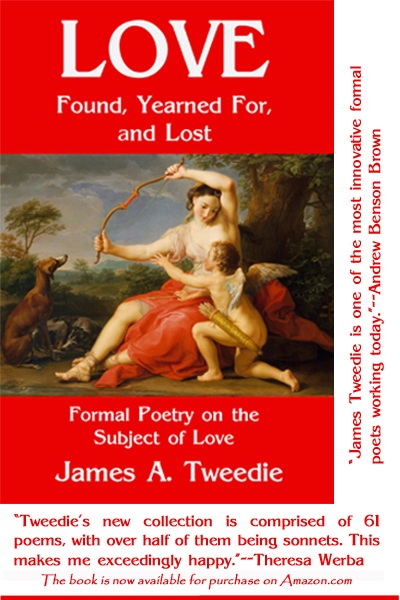
It’s in the book… take care. 🙂
Richard Feynman’s Admonition
by Ira “Dweeb” Scule
“But he grew old—This knight so bold—And o’er his heart a shadow—
Fell as he found No spot of ground That looked like Eldorado.”
—Earl Aldon Page
Imagine you have reached Mars haze, a bitter butterscotch;
the air so thin a firmament, it is an utter quatsch.
By Hohmann Transfer’s elegant mechanics one can fall
sideways around the Sun and drift into Mars orbital.
But here’s the catch, that same trick doesn’t work well in reverse,
and thus, escaping Mars is difficult, a total curse.
Although one only needs, approximately, to finesse
escape velocity of five kilometers of s,
one has no depots, launching tow’rs, nor ín-dus-trí-al base;
and thus amassing that much fuel is hard in any case.
You face the equation-rocket-tyranny. What can you do?
Take th’ atmosphere, make methane maybe, and break from that view.
How likely is that—millions of miles away—no repair crew,
no spare supply chain, and no room for failure? You are doomed.
Now timing is your enemy, since Mars and Earth both move;
you must wait each two years to even get out of that groove.
And there you are without air you can breathe; and though you’re bold,
down to minus one-hundred degrees Celsius, it’s cold.
And then there’s radiation damaging your DNA;
dust storms that can engulf th’ entire planet whirl away.
Space isn’t only hostile, it is patient. Where’s your shield?
Can you survive without a powerful magnetic field?
Mars’ gravity is only thirty-eight percent of Earth’s,
but that dearth ‘s dangerous for bones and muscles, like the heart.
Galactic cosmic rays and solar particles attack,
like bullets passing through your body—rat-a-tat-tat-tat,
your cells in ways you do not fully understand, as yet:
When your time-window comes, could you get even, ready set?
Uncertainty ‘s not comforting. Can you reach Mars? Why, yes.
But a far better question is, do you possess egress?
Ira “Dweeb” Scule is a poet of space. Richard Feynman (1918-1988) was a PostModernist theoretical physicist, who shared the Nobel Prize in Physics in 1965.