


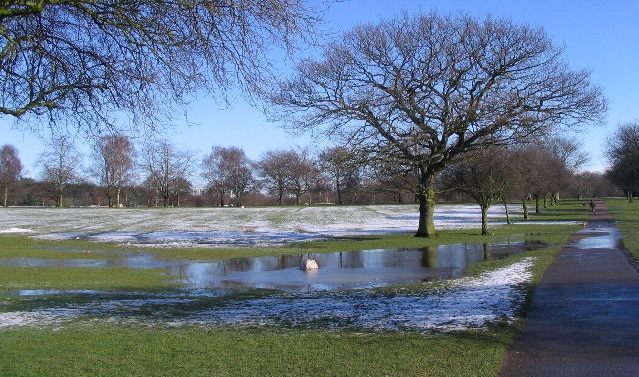
The Last of Winter
I stand here at the window glass,
The scene before me clear and wide,
To watch the last of winter pass
_Over the countryside.
Gone times, gone days lie out of mind,
Forgotten in the melting snow.
The future I have yet to find;
_This hour is what I know.
The open sky has showered light
On ice and woods and snow and frost;
It has not caused me shock or fright,
_And no peace have I lost.
From dawn to deepening afternoon,
All blur of cloud has vanished clean.
Though yet more change is coming soon,
_An endless sky is seen.
A breeze disturbs the spruce and pine.
Elsewhere a hawk sits on a bough
While deer drift by and snowfields shine
_As rivulets flow now.
I cannot leave the moment’s grace
To say it must mean such-and-such.
Sun’s warmth through glass has reached my face.
_I’ll just feel this—this touch.
I simply gaze across the land
To learn what is and what is not.
The outer day ends vast and grand
_As I brood on this spot.
No wit to think, no trick to try,
No need for grasping unrelieved.
Formations change, so let them fly
_From me, unsought, ungrieved.
Out of the east falls soon the night,
But through the window here I know
The stretching shadows and the light
_That lie on melting snow.
I smile before the window glass
And merely let the minutes glide
To watch the last of winter pass
_Over the countryside.
Bhikkhu Nyanasobhano is a native of Kentucky who for many years has been a bhikkhu, a Buddhist monk of the Theravāda tradition.

















A very visual poem. The repetition of the third and fourth lines in the first and last stanzas introduces and wraps up the poem, nicely. Also, the repetitive mentions of the window glass intensifies the feeling of being shielded from the cold, in warmth and snugness, much as many of us recall from our childhood pasts.
Thanks for the read, Bhikkhu.
A well-timed poem for an unusually warm day here in the Northeast, where I’ve just returned from a walk, observing the spring run-off along the way.
What a perfect poem for a day in March for much of the country! The harshness of winter snow and cold dissolving in the spring is a fun time of putting the past behind and looking forward to the renewal of life.
A lovely, timely, and carefully constructed report, Bhikku Nyanasobhano. I call it a report rather than a meditation, because you make a point in the poem of not thinking. Instead, you merely observe the landscape, and experience sensory impressions. “I cannot leave the moment’s grace/To say it must mean such-and-such.” Later, you record those sensory and observational details of the passing moments. Your awareness of impermanence has allowed you to experience these to the fullest. This may proceed from the Buddhist way of life to which you dedicate yourself.
But presenting the experience well in words comes from a poet’s skill. You’ve chosen a simple form, one that itself suggests passage, when the three tetrameter lines of each quatrain give way to a single trimeter line. Paul Freeman above has already described your effective use of modified repetition (of stanza and image) to enclose the mood and the music here. Very satisfying for the reader!
Due to the cyclical nature of the seasons, at the very instant we tell ourselves that winter is behind us, winter is ahead of us. That is why we don’t throw away our snow shovels in the spring.
Your poem offers very pleasurable reading with a spectacular photo to set it off.
This poem typifies your style, very much “in the moment.” You give us a keen sense of presence, of observation, of (that trendy term) mindfulness. Reading the poem is like stepping back and taking a relaxing breath.
Your delightful poem through an observational lens, enhances the ‘eyes’ of the reader; sharing a breath of serenity.
Ajahn it’s so nice to see that you are still writing! I was thinking of you and did a search and this lovely poem popped up. I hope that you are well and happy!