• Submit Poetry
  • Support SCP
  • About Us
  • Members
  • Join
Saturday, September 5, 2026
Society of Classical Poets
  • Poems
    • Beauty
    • Culture
    • Satire
    • Humor
    • Children’s
    • Art
    • Ekphrastic
    • Epic
    • Epigrams and Proverbs
    • Human Rights in China
    • Music
    • Performing Arts
    • Riddles
    • Science
    • Song Lyrics
    • The Environment
    • The Raven
    • Found Poems
    • High School Poets
    • Terrorism
    • Covid-19
  • Poetry Forms
    • Sonnet
    • Haiku
    • Limerick
    • Villanelle
    • Rondeau
    • Pantoum
    • Sestina
    • Triolet
    • Acrostic
    • Alexandroid
    • Alliterative
    • Blank Verse
    • Chant Royal
    • Clerihew
    • Rhupunt
    • Rondeau Redoublé
    • Rondel
    • Rubaiyat
    • Sapphic Verse
    • Shape Poems
    • Terza Rima
  • Great Poets
    • Geoffrey Chaucer
    • Emily Dickinson
    • Homer
    • Henry Wadsworth Longfellow
    • Dante Alighieri
    • John Keats
    • John Milton
    • Edgar Allan Poe
    • William Shakespeare
    • William Wordsworth
    • William Blake
    • Robert Frost
  • Love Poems
  • Contests
  • SCP Academy
    • Educational
    • Teaching Classical Poetry—A Guide for Educators
    • Poetry Forms
    • The SCP Journal
    • Books
No Result
View All Result
Society of Classical Poets
  • Poems
    • Beauty
    • Culture
    • Satire
    • Humor
    • Children’s
    • Art
    • Ekphrastic
    • Epic
    • Epigrams and Proverbs
    • Human Rights in China
    • Music
    • Performing Arts
    • Riddles
    • Science
    • Song Lyrics
    • The Environment
    • The Raven
    • Found Poems
    • High School Poets
    • Terrorism
    • Covid-19
  • Poetry Forms
    • Sonnet
    • Haiku
    • Limerick
    • Villanelle
    • Rondeau
    • Pantoum
    • Sestina
    • Triolet
    • Acrostic
    • Alexandroid
    • Alliterative
    • Blank Verse
    • Chant Royal
    • Clerihew
    • Rhupunt
    • Rondeau Redoublé
    • Rondel
    • Rubaiyat
    • Sapphic Verse
    • Shape Poems
    • Terza Rima
  • Great Poets
    • Geoffrey Chaucer
    • Emily Dickinson
    • Homer
    • Henry Wadsworth Longfellow
    • Dante Alighieri
    • John Keats
    • John Milton
    • Edgar Allan Poe
    • William Shakespeare
    • William Wordsworth
    • William Blake
    • Robert Frost
  • Love Poems
  • Contests
  • SCP Academy
    • Educational
    • Teaching Classical Poetry—A Guide for Educators
    • Poetry Forms
    • The SCP Journal
    • Books
No Result
View All Result
Society of Classical Poets
No Result
View All Result
Home Poetry Beauty

‘The Lighthouse’: A Poem by Martin Rizley

August 5, 2024
in Beauty, Poetry
A A
19
poems 'The Lighthouse': A Poem by Martin Rizley

.

The Lighthouse

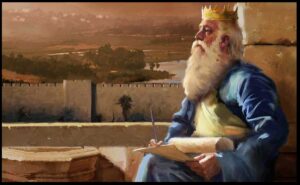
In honor of the Thridrangar Lighthouse
and the intrepid men who built it.

Alone it stands, perched high atop a rock
That rises from a tossing, troubled sea.
It crowns that lofty tower which, round the clock,
Is thrashed by crashing waves relentlessly.

Resisting wind and rain and storm’s assault,
Defiant in the face of time’s long siege,
It sits upon a throne of black basalt,
A king who bows to no one as his liege.

Flanked by two rocks, as by a royal guard,
The king sits proudly, while his subjects pay
Obeisance to that throne, so high and hard,
From which their monarch rules from day to day.

In vast array, they ever pass him by
Their white capped heads bowed down as they draw near,
No wave escapes his piercing, watchful eye
Which shines as he surveys his watery sphere.

His flashing gaze goes forth with saving power
To rescue fog-bound ships from certain doom
On days when blinding haze makes brave men cower
And tempests cloak the sea in darkest gloom.

When clouds disperse and squalls abate at length,
And sunlight shines once more through parting rain,
The one-eyed king appears once more in strength,
Unmoved, still watching over his domain.

His chamberlain, who dwells within his walls,
Who eats in solitude both day and night,
Who hears the echo of his own footfalls
When climbing steps to tend the beacon light

Knows well the worth of this majestic prince
Who welcomes him to dwell above the tide;
For there, at heights that make the fearful wince,
He finds a refuge, safe and warm, inside.

On frigid nights, when bitter windstorms scream
And blast with freezing rain the lighthouse door,
On mornings when the frosted windows gleam,
Each pane graced with an icy lace of hoar,

He feels secure, protected, though the world
Around him lies in winter’s deadly grasp,
For here, before his eyes, he sees unfurled
A table rich, outspread with gifts to clasp.

So, too, the saint who builds his mortal life
Upon the Rock of all security
May feel at peace when driving winds of strife
Would sweep his soul into a storm-tossed sea.

For from the elevation where he dwells
No force on earth can cause his foot to slide,
Nor can the demons of a thousand hells
Drag him to where they’ve fallen, due to pride.

He knows his weaknesses; therefore, he clings
To that foundation sure that will not fail
And worries not what stormy weather brings,
Cheered by that voice that calms the strongest gale.

.

.

Martin Rizley grew up in Oklahoma and in Texas, and has served in pastoral ministry both in the United States and in Europe. He is currently serving as the pastor of a small evangelical church in the city of Málaga on the southern coast of Spain, where he lives with his wife and daughter. Martin has enjoyed writing and reading poetry as a hobby since his early youth.

ShareTweetPin
The Society of Classical Poets does not endorse any views expressed in individual poems or commentary.
Read Our Comments Policy Here

RandomPoems

‘Building for Eternity’ by Richard D. Lackman
Children's Poems

Two Poems on Old Age, Adapted by Terry L. Norton

February 9, 2021

. Half a Blanket adapted from “Das Vierte Gebot,” or “The Fourth Commandment,” a folktale from medieval Germany There was...

‘The Most Important Forgiveness’ and Other Poems by Russel Winick
Poetry

‘The Most Important Forgiveness’ and Other Poems by Russel Winick

February 23, 2026

  The Most Important Forgiveness Humiliating errors we’ve all made, And plagued ourselves by tending to relive, Would stand a...

Next Post
‘Apes or Angels’ and Other Poetry by Ron L. Hodges

'Like Him': A Poem by James Sale

poem/harrison/culture

'The Faltering': A Poem by Ed Ahern

‘The Loons of Colby Lake’: A Poem by Michael Pietrack

'The Loons of Colby Lake': A Poem by Michael Pietrack

Comments 19

  1. Roy Eugene Peterson says:
    2 years ago

    Extremely well written poem about the “one-eyed king.” There is another “The Lighthouse” as a gospel song that was number one for the year once upon a time. There are “undercurrents” in your poem that relate to salvation such as the firm foundation, faithfulness, “Nor can the demons of a thousand hells/Drag him to where they’ve fallen, due to pride.” Martin, this is a powerful poem that resonates with me.

    Reply
    • Martin Rizley says:
      2 years ago

      Thanks, Roy, for your feedback. I remember the gospel song you mention. I have always been fascinated by lighthouses– the isolation and bleakness of the settings where they are often found, along with the life-saving mission they perform– so when I saw a picture of a lighthouse sitting on the top of a chimney like rock, it fired my imagination. I later found out the name of a real lighthouse built in a similar setting– the Thridranger lighthouse in Iceland, pictured above; although that light house, unlike the one in my imagination, is automated and unmanned, a fact I didn´t know until after writing the poem.

      Reply
  2. Peg says:
    2 years ago

    How beautiful, Brother… thank you! So encouraging are your words, each pregnant with meaning.

    Reply
    • Martin Rizley says:
      2 years ago

      Thank you, Peg, for your words of appreciation!

      Reply
  3. Paul Freeman says:
    2 years ago

    Atmospheric and vivid.

    Thanks for the read, Martin.

    Reply
    • Martin Rizley says:
      2 years ago

      Thanks, Paul. I have always loved seascapes, and lighthouses have always seemed to me one of the most “atmospheric” of all settings.

      Reply
  4. Shamik Banerjee says:
    2 years ago

    I’m amazed at the sheer brilliance of this work, Mr. Rizley. I’ve noticed that in every poem, you link its subject to man, God, and his salvation in the concluding stanzas. This is not only in sync with your role in society—pastoral ministry—but also gives us, your readers, fresh and different perspectives on life through subjects such as a lighthouse. Now coming to this piece, it’s like a fresh draft. I like the step-by-step, event-by-event construction of your work. I’m not sure if I can talk about just one favourite imagery as there are plenty, but the frosted windows glazing in the morning and greeted by hoar was what struck me more. The turn comes in stanza 11 where you talk about saints building their lighthouse on The All-Supporting Rock, God, followed by the state of being free from worries. Thank you for this gift, and God bless you!

    Reply
    • Martin Rizley says:
      2 years ago

      Shamik, Thanks for such an encouraging critique! It is true that many of my poems reflect an awareness of God´s presence in the world, manifested in the amazing features and breathtaking beauties of the creation, which so often strike me as pointing metaphorically to spiritual realities. But since I love atmosphere in poetry, I find myself moved at time to write poems in
      a more mysterious, melancholy, and sombre mood, reminiscent of Edgar Allan Poe.

      By the way, I enjoyed reading your recent poem about leaving your writing desk untouched when you have composed your final lines. I found it reflecive, wistful in mood, and very well constructed. Wishing you God´s rich blessings, as well.

      Reply
  5. Michael Pietrack says:
    2 years ago

    All good, but this was especially:

    For from the elevation where he dwells
    No force on earth can cause his foot to slide,
    Nor can the demons of a thousand hells
    Drag him to where they’ve fallen, due to pride.

    Please write more, I enjoy your style!

    Reply
    • Martin Rizley says:
      2 years ago

      Thank you, Michael, for your response to the poem. Thanks also, for your encouragement to me to keep writing. I am so thankful that this website exists as a forum for poets who write in a classical style with rhyme and meter. I know that the sort of poems I like to write would not be published on websites that turn up their nose at formal poetry in general or publish only poems that promote a “woke” viewpoint. So I am very glad the SCP exists.

      Reply
  6. Rohini says:
    2 years ago

    I loved every bracing line! Superb, strong, and so inspiring.

    Reply
    • Martin Rizley says:
      2 years ago

      Thank you, Rohini, for sharing your response to the poem. “Bracing” is a word that I often associate with poems about the sea. It is so appropriate to describe the wild, rugged, untamed nature of a rocky coastline and the sea itself. I think of Masefield´s poem “Sea Fever”, for example, which has been set so beautifully to music by the English composer John Ireland. If you are unfamiliar with it, here is a link to the setting by Ireland: https://www.youtube.com/watch?v=qe1PTSXBUWA
      I am pleased you chose that word to describe my poem!

      Reply
  7. Cynthia Erlandson says:
    2 years ago

    I love the extended metaphor of the royal guard, the King, the chamberlain.

    Reply
    • Martin Rizley says:
      2 years ago

      Thank you, Cynthia, for your comment. There seems to be something regal about the sea, doesn´t there?

      Reply
  8. Cheryl Corey says:
    2 years ago

    How on earth did they manage to build the lighthouse up there? It boggles my mind!

    Reply
    • Martin Rizley says:
      2 years ago

      According to Wickipedia, the lighthouse was constructed between 1938 and 1939. It was built by hand without machinery, and was accessible only by climbing a rock face that was 36.5 metres (120 feet) above the sea. Experienced mountaineers were hired to scale the sea stack. The director of the building project kept the following record: “The first thing we had to do was create a road up to the cliff. We got together experienced mountaineers, all from the Westman Islands. Then we brought drills, hammers, chains and clamps to secure the chains. Once they got near the top there was no way to get any grip on the rock so one of them got down on his knees, the second stood on his back, and then the third climbed on top of the other two and was able to reach the nib of the cliff above. I cannot even tell you how I was feeling whilst witnessing this incredibly dangerous procedure. The crew stayed on the rock in tents for a month, during the construction. Electricity was installed three years later. The lighthouse was commissioned on 5 July 1942, during WWII. A helipad for helicopter access was added in the 1950s.”

      Reply
  9. Susan Jarvis Bryant says:
    2 years ago

    Excellent use of personification, Martin! I love how you depict the lighthouse as a king, and I especially like the way you humble that regal prowess in the closing stanza. The last line sings to me… even this highest and the boldest “king” knows the wonder of one bolder and higher. Thank you!

    Reply
    • Martin Rizley says:
      2 years ago

      Thank you, Susan, for your feedback. I´m sure you have had the same experience as myself of using a metaphor in a poem, then finding that one idea leads to another and then another as you elaborate on that metaphor. In the end, the poem seems virtually to write itself by a natural development from a starting idea– like a plant growing from a seed. For me, that is one of the joys of writing poetry– the exploration of a theme by linking one thought to another by a sort of logical progession. In this case, it was the idea of the lighthouse as a king on his throne that got the ball rolling.

      Reply
  10. Margaret Coats says:
    2 years ago

    Splendid poem, Martin. Building the narrative structure here keeps the stanzas moving. After an introduction picturing several kinds of motion, the lighthouse is said to be like a king, then in stanza 5, we hear of his saving power. This suggests God’s constant vigilance and readiness to save. In stanza 7, the chamberlain or lighthouse keeper is introduced, and readers see the benefits of life in the king’s service. Stanza 11 moves away from the lighthouse with a comparison to any saint who builds his life on the Rock. And you save a special surprise for the last line, where the saint is “Cheered by the voice that calms the strongest gale.” Up until this, the king has provided light, safety, and comfort, but here he speaks unexpectedly. A calm, heartening, and powerful conclusion.

    Reply

Leave a Reply Cancel reply

Your email address will not be published. Required fields are marked *


  1. Ernesto P. Santiago on The Society of Classical Poets 2026 Haiku CompetitionSeptember 5, 2026

    a white-clad autumn whispering through the calm storm: my lover, not mine

  2. jd on ‘Morning Glory’: A Poem by T.M. MooreSeptember 5, 2026

    I loved this poem when I first read it and I still do. One of the things I like best…

  3. Paul Freeman on ‘Chaucer Announces His Desire to Retire’: A Poem by Paul A. FreemanSeptember 5, 2026

    Thanks, MJ. Appreciated. Able was I ere I saw Elba. Another use for 'ere', in the sentence above that reads…

  4. James A. Tweedie on ‘A Potpourri of Aphoristic Verses’ by C.B. AndersonSeptember 5, 2026

    As a P.S. I prefer to rhyme "potpourri" with "hot glory".

  5. James A. Tweedie on ‘A Potpourri of Aphoristic Verses’ by C.B. AndersonSeptember 5, 2026

    Nobody is as clear and terse As C.B.s aphoristic verse. Like Shakespeare’s poor Polonius Such pithiness inspires us. So borrow…

Subscribe to Daily Poems

Enter your email address to subscribe to this blog and receive notifications of new posts by email.

Join 1,635 other subscribers

Recent Poems

  • ‘Victory’: A Poem by Jonathan Graver
  • ‘The Cristero Centennial’: A Poem by Margaret Coats
  • ‘A Potpourri of Aphoristic Verses’ by C.B. Anderson
  • ‘The Estuary’: A Poem by Jeff Eardley
  • ‘A World Without the Wednesday Child’: A Poem by Kimberly Fore
  • The 2026 Society of Classical Poets International Poetry Competition
  • The 2026 SCP International High School Poetry Competition
  • ‘Realistic Reflections’ and Other Poetry by Anna J. Arredondo
  • ‘China Made’: A Poem by Theresa Werba
  • ‘The Savage Moon’ and Other Poetry by Brian Yapko
  • Poetry Book Review: Love Found, Yearned For, and Lost by James A. Tweedie
  • ‘When Opportunity Knocks’: A Poem by Roy E. Peterson
  • ‘Legend of the Griffin’: A Poem by Iryna Hall
  • ‘Government Issue’ and Other Poems by Joseph S. Salemi
  • ‘Chaucer Announces His Desire to Retire’: A Poem by Paul A. Freeman
  • ‘Advantages of Restaurants’ and Other Poems by Russel Winick
  • ‘Bone China’: A Poem by Mary Gardner
  • ‘On the Death of One Too Young to Die’: A Poem by Jeffrey Essmann
  • ‘This Too Shall Pass’ and Other Poetry by Justin Dasher
  • ‘Humdrum and Harum-Scarum’: A Lecture on Free Verse, by Robert Bridges (1922)
  • ‘Unrest On the Floodplain’: A Poem by Bhikkhu Nyanasobhano
  • ‘Latitude and Loss’: A Poem by Martin Briggs
  • ‘Act III’ and Other Poetry by C.B. Anderson
  • ‘God’s Funeral’: A Poem by James Sale
  • ‘Star Festival’: A Poem by Margaret Coats
  • ‘Song of the Frog Princess’: A Poem by Scharlie Meeuws
  • ‘The Odyssey: Nolan and Solot Compared’: An Essay by Michael Curtis
  • ‘Solitude’ and Other Poems by Mary Jane Myers
  • ‘The River Not Taken’ and Other Poetry by Brian Yapko
  • ‘Totentanz’: A Poem by James A. Tweedie

Categories

  • Acrostic
  • Alexandroid
  • Alliterative
  • Art
  • Best Poems
  • Blank Verse
  • Chant Royal
  • Classical Poets Live
  • Clerihew
  • Covid-19
  • Deconstructing Communism
  • Educational
  • Epic
  • Epigrams and Proverbs
  • Essays
    • Interviews with Poets
    • Poetry Reviews
  • Featured
  • From the Society
  • Great Poets
    • Dante Alighieri
    • Edgar Allan Poe
    • Emily Dickinson
    • Geoffrey Chaucer
    • Henry Wadsworth Longfellow
    • Homer
    • John Keats
    • John Milton
    • Robert Frost
    • William Blake
    • William Shakespeare
    • William Wordsworth
  • Human Rights in China
  • Limerick
  • Love Poems
  • Music
  • Pantoum
  • Performing Arts
  • Poetry
    • Beauty
    • Children's Poems
    • Culture
    • Ekphrastic
    • Found Poems
    • High School Poets
    • Humor
    • Riddles
  • Poetry Challenge
  • Poetry Contests
  • Poetry Forms
    • Curtal Sonnet
    • Haiku
  • Poetry Readings
  • Rhupunt
  • Rondeau
  • Rondeau Redoublé
  • Rondel
  • Rubaiyat
  • Sapphic Verse
  • Satire
  • Science
  • Sestina
  • Shape Poems
  • Short Stories
  • Song Lyrics
  • Sonnet
  • Symposium
  • Terrorism
  • Terza Rima
  • The Environment
  • Translation
  • Triolet
  • Video
  • Villanelle

Quick Links

  • About Us
  • Submit Poetry
  • Become a Member
  • Members List
  • Support the Society
  • Advertisement Placement
  • Comments Policy
  • Terms of Use

Welcome Back!

Login to your account below

Forgotten Password?

Retrieve your password

Please enter your username or email address to reset your password.

Log In
No Result
View All Result
  • Poems
    • Beauty
    • Culture
    • Satire
    • Humor
    • Children’s
    • Art
    • Ekphrastic
    • Epic
    • Epigrams and Proverbs
    • Human Rights in China
    • Music
    • Performing Arts
    • Riddles
    • Science
    • Song Lyrics
    • The Environment
    • The Raven
    • Found Poems
    • High School Poets
    • Terrorism
    • Covid-19
  • Poetry Forms
    • Sonnet
    • Haiku
    • Limerick
    • Villanelle
    • Rondeau
    • Pantoum
    • Sestina
    • Triolet
    • Acrostic
    • Alexandroid
    • Alliterative
    • Blank Verse
    • Chant Royal
    • Clerihew
    • Rhupunt
    • Rondeau Redoublé
    • Rondel
    • Rubaiyat
    • Sapphic Verse
    • Shape Poems
    • Terza Rima
  • Great Poets
    • Geoffrey Chaucer
    • Emily Dickinson
    • Homer
    • Henry Wadsworth Longfellow
    • Dante Alighieri
    • John Keats
    • John Milton
    • Edgar Allan Poe
    • William Shakespeare
    • William Wordsworth
    • William Blake
    • Robert Frost
  • Love Poems
  • Contests
  • SCP Academy
    • Educational
    • Teaching Classical Poetry—A Guide for Educators
    • Poetry Forms
    • The SCP Journal
    • Books

© 2025 SCP. WebDesign by CODEC Prime.