


After the Turning Point
—a double refrain ballade
At slender hindrances we fall,
Uneven ground, path shadowy;
To tainted food or alcohol,
Blood clots or bullets, frail are we,
But choosing a healthier strategy,
An enterprising, purposeful view,
Our disciplined efforts turn energy
To forward the rational good we do.
Refusing time and wherewithal
To pacify an enemy
Intent on spitting vitriol,
We’re bullied, and find how frail are we,
But ignoring loudmouth tyranny
Builds trust in conversation true,
Strengthening natural empathy
To forward political good we do.
Undeceived by hostility’s gall,
We conquer its clownish malignancy,
And words of forgiving spirit forestall
Meaningless makeshifts, though frail are we.
Alert to vague valueless fallacy
When measured thought is overdue,
Come labor in commonsense company,
To forward the civilized good we do.
Margaret Coats lives in California. She holds a Ph.D. in English and American Literature and Language from Harvard University. She has retired from a career of teaching literature, languages, and writing that included considerable work in homeschooling for her own family and others.

















Margaret, for me, there is a great depth to the inherent meaning of each phrase and verse. Your superbly wrought poem with the entrancing encapsulated thoughts is embedded not only in your meticulous rhyme and ballad-like presentation but in your semi-repetitive endings to each verse varied by “rational, political, and civilized.” Somehow without explicit entendre your verses can take us in more than one direction. That is a truly clever gift honed by your intrinsic intelligence and aptitude for verbal expression.
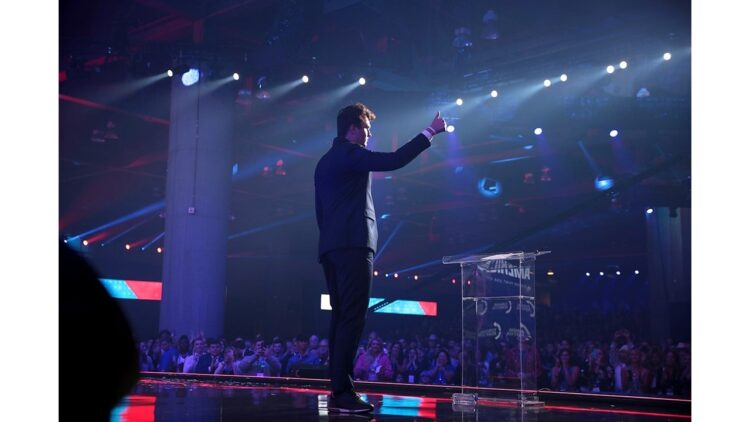
Thanks, Roy. The poem takes shape in conversation shared, the means by which Charlie Kirk worked for political good. He made it clear that his aim was political, with the effect of energy gradually gathered through the thoughtful attention of many to words exchanged. I understand how this spreads into long enduring goods of civilization, and thank you all the more for listening and responding.
These are wise words, Margaret, and gracefully put together. I admire the moderate, even tone. No shrillness here. So true, that we are frail, but true also that “the good we do” is a potent force not to be neglected. Amid wickedness and hostility, an “enterprising, purposeful view” will accomplish more than stoked-up malice. The ballad form you have adopted calmly repeats timeless principles. This is not a call to arms but a call to common sense in “measured thought”–that is to say, in fine poetry.
Thank you, Bhikku Nyanasobhano. A moderate tone is needed for any conversation that can produce good. As you undoubtedly know from experience, stoked-up malice can only lead itself and others astray. And yes, “measured thought” is a way to say “fine poetry.” I’m grateful for your listening and replying.
Forebearance and showing the other cheek are in short supply these days, due to the frailty of being human, both mentally and physically. Celebrating others’ misfortunes and interfering in others’ affairs seems to have become the order of the day in almost all walks of life, as we strand ourselves in our own echo chambers.
Margaret, you’ve captured this phenomenon well, your repeated refrain that we are frail giving us pause. I’ve read this piece of modern wisdom three times already, and am sure I’ll come back to it for strength when I’m feeling a bit on the frail side.
Thanks for reminding us that behind the bluster, the threats and the hatred we may incur, we’re all human.
Paul, I have to smile with pity at your picture of someone stranded in his own echo chamber–while he nonetheless interferes in others’ affairs and celebrates others’ misfortunes. But you are exactly right that we often see such sights and hear such talk. The capability of communication by social media has much to do with it. How often do we give real attention to another? That takes time and courtesy and a certain level of maturity. In this poem, I’m speaking within a “we” of persons self-disciplined enough to want to build trust in one another through real conversation, and to join efforts to accomplish social and political and civilizational good. Realizing our human frailty helps in exercising forbearance.
I’m glad you find this a piece of strengthening wisdom, and maybe I’ll treat it the same way!
This is no more than a tangential point, but the line “[We fall … / ] To tainted food or alcohol” highlights one of the limitations, as well as one of the advantages of the English language. The limitation is that, because qualifying words don’t have to agree in gender or number with the word that is qualified, it is sometimes unclear to which word or words the qualifyier applies. In this case, it seems clear enough from the context that the only the food (and not the alcohol) is tainted. English’s advantage is that we can exploit this ambiguity to allow for the possibility that the qualifier modifies X as well as Y. Here, the notion of tainted alcohol, which is not necessarily ruled out, would add a darker tone to the line. In short, the ambiguity of qualifying words can be exploited to add more layers and more possibilities to the text.
You have been very productive thus far this year, Margaret. Have you ever brought out a book? Or do you publish your verse as you write it?
I’m grateful for your evaluation of an extremely challenging year! It’s been a choice between using time and energy to edit masses of material, or to write. Therefore, while I can, I’m writing, publishing some of it, and staying healthy.
Thanks for reading and commenting, Daniel. Let me answer your tangential point (which is a valid observation about potential in English poetry) with my change in word choice that (probably) allowed you to make it. I originally wrote “tainted morsels or alcohol.” Would the plural “morsels” versus singular “alcohol” pull the adjective “tainted” more strongly toward those food morsels only? I thought it might, and therefore allowed “tainted” potentially to modify both “food” and “alcohol,” though alcohol untainted is certainly enough to cause many men to fall. Alcohol alone was the second pitfall I expected readers to see in the line. Also thought of “tainted food, drugs, alcohol,” which might have reserved the taint most easily for the food alone. Your suggestion of a possible darker tone with laced drink is one of those levels of meaning that come from the reader more than from authorial intent. I am always happy to notice more than I intended!
Margaret and Daniel, just a brief comment here… it is possible for alcoholic beverages to be tainted, as was sometimes the case during the Prohibition years. Homemade stuff like ‘bathtub gin” would sometimes have wood alcohol in it (a truly dangerous contaminant) and both beer and whiskey produced without care by criminals could often be very hazardous. This is why wealthy customers tried to buy only smuggled stuff from reputable sources outside of the United States (whiskey from Canada or Scotland, wine from France or Italy, or beer from Mexico). But poor drinkers had no choice except the chancy stuff made by bootleggers or the mob, and the poor made up the greatest number of victims of our stupid puritanical anti-liquor crusade.
True, Joseph, and thank you for the comment. I suppose craft beer drinkers today should beware of buying from their neighbor’s garage. Accidents can even happen with homemade wine! I use “laced” in my above comment because lacing drinks with drugs at parties is considered the most likely current danger. And recognizing ever-present danger in “tainting,” I do prefer my line under discussion as it stands published!
“Come labor in commonsense company / To forward the civilized good we do” – these lines are clearly civilized good, Margaret – may your tribe increase.
Thank you, Alec! I’m encouraged by greater activity in commonsense conversation, and in reading and writing, especially among younger members of our civilization, despite distractions they encounter.
I love the encouraging, optimistic message this poem conveys. It recognizes human weakness in the face of intentional adversity (“clownish malignancy” is a wonderful turn of phrase), yet pushes us forward, telling us never to let our eyes stray from our true goal.
You also have an interesting choice of form. I can’t recall the last double-refrain ballad I have read. Was there a particular poem that led you to select this form?
Thanks, Adam. Optimism is the appropriate tone (as well as message) when the means being employed is authentically human conversation, even with intentional adversaries. Glad you like “clownish malignancy”; that’s really what cherished malicious opposition looks like in its irrational persistence. I’m thinking here of Charlie Kirk’s benevolent willingness (and ability!) to conduct discussion with anyone, and of the optimism he was able to generate with this method, especially in young people who began to believe they could make a difference in their lives and their country.
I chose the double refrain ballade form because, in the hours of shock after Kirk’s assassination, I could only think of the good he had done, and of the personal frailty that ended his life so early. Any contrast or pair of things like this is well suited to the form–but in the research I’ve done on it, that kind of subject, if treated generically (night and day, youth and age), is also a challenge that can easily produce a trite poem. Of all the fair forms, this may be the one of which we have the fewest and the worst examples. Since you can’t remember one, I’ll type the best I know in another box below.
A ballade has three stanzas with optional half-stanza envoi, the same refrain ending each stanza and the same rhyme sounds throughout. The double refrain ballade is more intricate because the flow of thought must accommodate TWO refrains at equal intervals, which leaves the poet fewer lines to develop ideas, and less space between refrains.
OF MIDSUMMER DAYS AND NIGHTS
by William Ernest Henley
With a ripple of leaves and a tinkle of streams
The full world rolls in a rhythm of praise,
And the winds are one with the clouds and beams–
Midsummer days! Midsummer days!
The dusk grows vast in a purple haze,
While the West from a rapture of sunset rights.
Faint stars their exquisite lamps upraise–
Midsummer nights! O midsummer nights!
The wood’s green heart is a nest of dreams,
The lush grass thickens and springs and sways,
The rathe wheat rustles, the landscape gleams–
Midsummer days! Midsummer days!
In the stilly fields, in the stilly ways,
All secret shadows and mystic lights,
Late lovers murmur and linger and gaze–
Midsummer nights! O midsummer nights!
There’s a music of bells from the trampling teams,
Wild skylarks hover, the gorses blaze,
The rich, ripe rose as with incense steams–
Midsummer days! Midsummer days!
A soul from the honeysuckle strays,
And the nightingale as from prophet heights
Sings to the earth of her million Mays–
Midsummer nights! O midsummer nights!
And it’s O, for my dear and the charm that stays–
Midsummer days! Midsummer days!
It’s O, for my Love and the dark that plights–
Midsummer nights! O midsummer nights!