


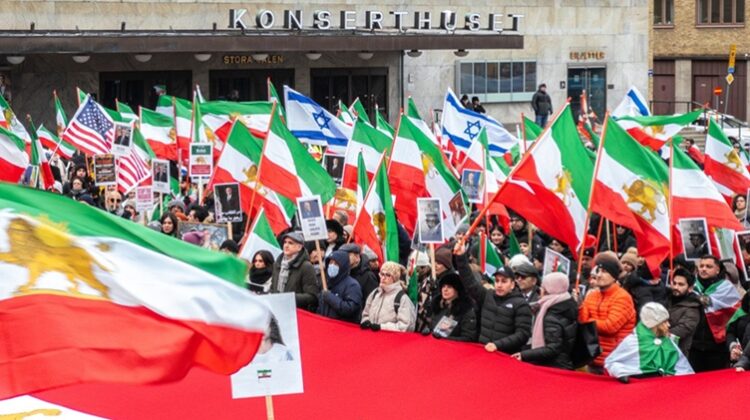
Beneath an Iron Hand
Though they spent years beneath an iron hand,
the quiet people still knew how to sing
and hope moved soft but steady through the land.
Their murmurs grew, hushed voices echoing
like hidden water stirring under stones,
true hearts began to share what they could bring.
Fanatics built their altars into thrones;
they carved away the freedom of the crowd
and stripped dissenting flesh from martyrs’ bones.
Then came the distant thunder, fierce and loud—
a storm that loosed a flood of bottled tears
and fanned the flames in those who once were cowed.
Across the gardens where the night winds veer,
the old songs traveled farther than before;
the tyrants heard them rising—and knew fear.
The people gathered dreams from off the floor;
no chain can halt the sand, now grown windborne,
nor still the lion-hearted growing roar.
Now laughter gilds the glowing Persian morn;
a girl steps forth, her loose hijab in hand,
and spins, hair freed, in sunlight never worn.
Let roses rise again from dust and sand—
Though they spent years beneath an iron hand.
Dusty Grein is a retired Managing Editor of a small press publishing company—as well as a graphics designer, author, and poet. Originally from Federal Way, Washington, he is a lifetime resident of the Pacific Northwest. His critically acclaimed best-selling novel, The Sleeping Giant, and his first poetry collection, A Mist Shrouded Path, are available in print and as Kindle Select titles. His shorter works and award-winning poetry have been published in several collections, including Chicken Soup for the Soul, OWS Inked, and The Quarterday Review. His blog, From Grandpa’s Heart… is followed by fans around the world.

















Dusty, you have captured the formerly cowed and hidden feelings of the Iranian population who once upon a time had achieved a modicum of westernization under the Shah. FYI: I was a realtor with Coldwell Banker from 1995 to 1997 in Federal Way.
Thank you Roy. From a Decatur Gator to a FW alum … well met, fine sir, lol.
There is so much that’s good about this poem. From beginning to end, one thing that ties it together is the singing, and other sounds — “hushed voices echoing like hidden water stirring water under stones”; “distant thunder, fierce and loud”; the “growing roar”, and “laughter”.
The imagery, especially in the last two verses, is lively and reflects great hope.
The echo, in the last line, of the first line’s “iron hand” is beautiful. And your use of terza rima is also so well-done, so natural, that I didn’t notice it at first. Lovely work.
Thank you Cynthia … The plight of the people and the hope of their liberation touched my heart.
Dusty, thank you for a beautifully wrought fairytale of a poem of horrors overcome with a happy-ever-after ending I hope for with all of my heart.
You and me both, Susan. Thank you.
As lovely as an old Persian song traveling farther than before! I can assure you, Dusty, lion-hearted joy is now being roared among communities of exiles in California, and sung as well in Japan, where vast numbers of Iranian guest workers have settled as permanently as possible under the law, because returning home has been robbed of its natural desirability. They have suffered the losses you sketch so briefly, and mourn ancient civilization that may someday have a chance to return to breezy gardens.
Thank you, Susan. I think people around the world who were impacted by the horrid regime are echoing those roars.
Thank you very much for this beautiful and inspiring poem of hope, Dusty. Praying that “roses rise again from dust and sand.” And that right soon.
Thank you Brian – I think that hope is one most of us share … at least those of us who appreciate the freedoms we take for granted here.
Liberation is a funny thing. The more we wish it for others, the less we find it in our own selves. In a sense, we are slaves to our ideals, and I’m not sure I would have it any other way.
C.B. … I think that when we finally break free from the chains we impose on ourselves, the more we can appreciate the struggles we see others going through – from limitations defined for them both externally, and internally. Those who are fortunate enough to yoke themselves to ideals that promote the welfare of others as well as themselves, are probably the most liberated slaves of all.