• Submit Poetry
  • Support SCP
  • About Us
  • Members
  • Join
Friday, October 2, 2026
Society of Classical Poets
  • Poems
    • Beauty
    • Culture
    • Satire
    • Humor
    • Children’s
    • Art
    • Ekphrastic
    • Epic
    • Epigrams and Proverbs
    • Human Rights in China
    • Music
    • Performing Arts
    • Riddles
    • Science
    • Song Lyrics
    • The Environment
    • The Raven
    • Found Poems
    • High School Poets
    • Terrorism
    • Covid-19
  • Poetry Forms
    • Sonnet
    • Haiku
    • Limerick
    • Villanelle
    • Rondeau
    • Pantoum
    • Sestina
    • Triolet
    • Acrostic
    • Alexandroid
    • Alliterative
    • Blank Verse
    • Chant Royal
    • Clerihew
    • Rhupunt
    • Rondeau Redoublé
    • Rondel
    • Rubaiyat
    • Sapphic Verse
    • Shape Poems
    • Terza Rima
  • Great Poets
    • Geoffrey Chaucer
    • Emily Dickinson
    • Homer
    • Henry Wadsworth Longfellow
    • Dante Alighieri
    • John Keats
    • John Milton
    • Edgar Allan Poe
    • William Shakespeare
    • William Wordsworth
    • William Blake
    • Robert Frost
  • Love Poems
  • Contests
  • SCP Academy
    • Educational
    • Teaching Classical Poetry—A Guide for Educators
    • Poetry Forms
    • The SCP Journal
    • Books
No Result
View All Result
Society of Classical Poets
  • Poems
    • Beauty
    • Culture
    • Satire
    • Humor
    • Children’s
    • Art
    • Ekphrastic
    • Epic
    • Epigrams and Proverbs
    • Human Rights in China
    • Music
    • Performing Arts
    • Riddles
    • Science
    • Song Lyrics
    • The Environment
    • The Raven
    • Found Poems
    • High School Poets
    • Terrorism
    • Covid-19
  • Poetry Forms
    • Sonnet
    • Haiku
    • Limerick
    • Villanelle
    • Rondeau
    • Pantoum
    • Sestina
    • Triolet
    • Acrostic
    • Alexandroid
    • Alliterative
    • Blank Verse
    • Chant Royal
    • Clerihew
    • Rhupunt
    • Rondeau Redoublé
    • Rondel
    • Rubaiyat
    • Sapphic Verse
    • Shape Poems
    • Terza Rima
  • Great Poets
    • Geoffrey Chaucer
    • Emily Dickinson
    • Homer
    • Henry Wadsworth Longfellow
    • Dante Alighieri
    • John Keats
    • John Milton
    • Edgar Allan Poe
    • William Shakespeare
    • William Wordsworth
    • William Blake
    • Robert Frost
  • Love Poems
  • Contests
  • SCP Academy
    • Educational
    • Teaching Classical Poetry—A Guide for Educators
    • Poetry Forms
    • The SCP Journal
    • Books
No Result
View All Result
Society of Classical Poets
No Result
View All Result
Home Poetry

‘People Forget’: A Poem by James Sale

August 5, 2026
in Poetry, Culture
A A
22
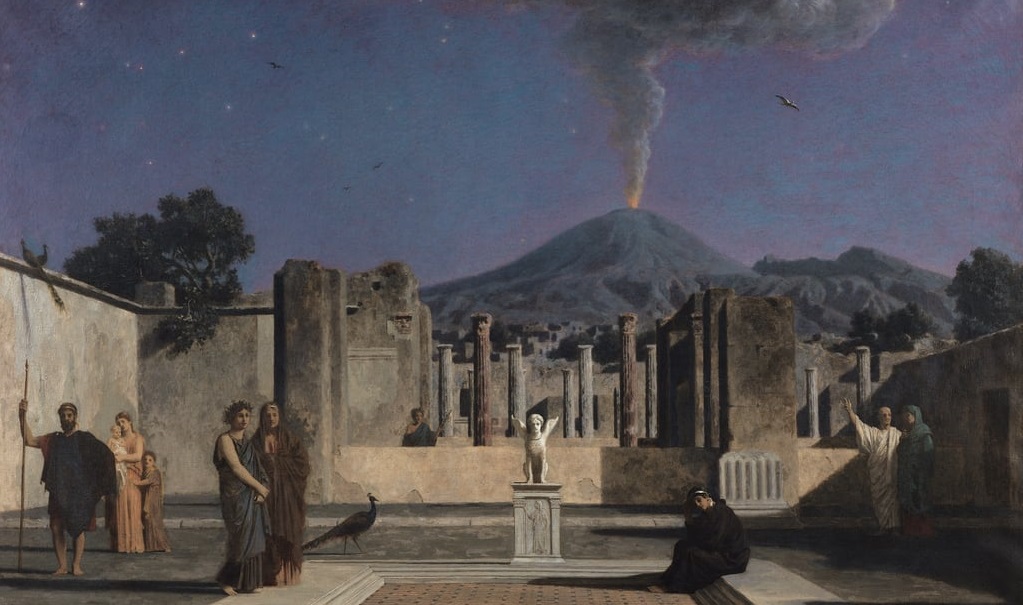
"Dream in the Ruins of Pompeii" by Paul Alfred de Curzon

"Dream in the Ruins of Pompeii" by Paul Alfred de Curzon


People Forget

“Being unable to cure death, misery and ignorance,
men have decided, in order to be happy, not to think
about such things.”  —Blaise Pascal,
Pensées

People forget: that empires end,
That after singing, silence starts;
That after every party’s joy
We part, and blight destroys our heart.

People forget: their loved ones go,
That dirt retains its own, that tears
Affect not one tint of sky-blue;
That clouds more real than us appear.

People forget: that just below
Surfaces hyenas, buzzards, beasts
Prevail; and round us, all about
Becoming, we’re their final feast.

People forget: the clock ticks on,
As every gift incurs a cost;
As every path, however long,
Leads through a country where we’re lost.

People forget: and most of all
Forget forgetting. Thus, we stand
Before an ever-rising tide,
Like children building walls of sand.


James Sale has had over 50 books published, most recently, “Mapping Motivation for Top Performing Teams” (Routledge, 2021). He has been nominated by The Hong Kong Review for the 2022 Pushcart Prize for poetry, has won first prize in The Society of Classical Poets 2017 annual competition, and performed in New York in 2019. He is a regular contributor to The Epoch Times. His most recent poetry collection is DoorWay. For more information about the author, and about his Dante project, visit https://englishcantos.home.blog. To subscribe to his brief, free and monthly poetry newsletter, contact him at [email protected].

Tags: James Sale
ShareTweetPin
The Society of Classical Poets does not endorse any views expressed in individual poems or commentary.
Read Our Comments Policy Here

RandomPoems

A Holiday Poem Reflecting on Slave Labor in Communist China
Culture

A Holiday Poem Reflecting on Slave Labor in Communist China

December 31, 2021

. https://www.youtube.com/watch?v=I4HH4MeT9Mo . Read the complete poem here: https://classicalpoets.org/2013/12/12/two-psalms/#/ CREDITS Poetry: Evan Mantyk (b. 1982) Audio/Visual Work: Society of Classical...

‘The Monkeys and the Dragonflies’ by Terry L. Norton
Children's Poems

‘The Monkeys and the Dragonflies’ by Terry L. Norton

December 28, 2020

  adapted from a Filipino folktale __Once, when the sun was at its height, A dragonfly thought she’d alight Upon...

Next Post
‘Javert Derailed’: A Poem by Zanna Barton

'Javert Derailed': A Poem by Zanna Barton

‘The Story of a Plague’ and Other Poetry by Michael Robinson

'The Story of a Plague' and Other Poetry by Michael Robinson

‘Rain’ and Other Poems by Russel Winick

'Rain' and Other Poems by Russel Winick

Comments 22

  1. Roy Eugene Peterson says:
    2 months ago

    James, this is one of those “unforgettable” poems on forgetfulness. I recently wrote a love sonnet on the subject, “I forgot to remember to forget.” Forgetting is also matched with ignorance of history. In America, we have “forgotten” to teach history, government, and what we used to call civics. This is needed at all levels of education. Then there are the intellects who choose to discard history and hence subject us to the lessons of history time and time again. There is also a corresponding juxtaposition of ignorance and ignoring. The two are closely related. Your poem points out all the forms of forgetting that incorporates these elements and redounds to our inability to make cultural adjustments based on clear historical lessons thus ensuring future difficulties.

    Reply
    • James Sale says:
      2 months ago

      Thanks Roy, appreciate your comments. Let’s not forget – we who strive as poets – that the mother of poetry is Mnemosyne, the Titan/goddess of memory with whom Zeus/Apollo coupled. Without her help, we cannot do it!

      Reply
  2. Joseph S. Salemi says:
    2 months ago

    There’s an excellent Renaissance emblem (a symbolical device) that also attempted to wake people up from forgetfulness of their end. It was a woodcut of a grinning skull, with the motto “Quod sum, tu quoque eris” (What I am, you also will be.)

    Reply
  3. Adam Sedia says:
    2 months ago

    This is one of my favorite poetic styles: meditative, plaintive, tragic yet stoic. You master the tone, mourning the inherent decay, yet accepting it as truth, reminding us that we must accept it too. In that respect it is perfectly representative of our age.

    Reply
    • James Sale says:
      2 months ago

      Cheers Adam – glad you like this so much; and yes, we have forgotten so much. Ancient wisdom for one thing. Check out my new article in The Epoch Times for more on this: https://www.theepochtimes.com/bright/classical-wisdom-when-truth-becomes-a-saying-6070676

      Reply
  4. Nelson Garner says:
    2 months ago

    The poem on forgetting does not apply to Christians. We are constantly reminded of the plight of mankind but we eagerly wait for our final, eternal destination, joining our Redeemer Jesus Christ.

    Reply
  5. Cynthia L Erlandson says:
    2 months ago

    As you get the reader thinking about forgetting, we remember these things and see how profound they are. It expands so well on Pascal’s epigraph. “After singing, silence starts.”; “we’re their final feast”; “clocks tick on.” are all great observations that we seldom think about. The “walls of sand” image in the final verse is a perfect ending.

    Reply
    • James Sale says:
      2 months ago

      Thanks for this Cynthia – I know you are a real Christian, as I am myself, so I appreciate somebody appreciating the poem and not giving me a lecture on the merits of Jesus Christ. Such people should read my DoorWay for my definitive view on the eternal destination which should preoccupy all right thinking people!

      Reply
  6. Michael Pietrack says:
    2 months ago

    Sad. I read this line a few times:

    People forget: their loved ones go,
    That dirt retains its own, that tears
    Affect not one tint of sky-blue;

    Like nature is utterly indifferent. And life goes on.

    We forget until we are forced to remember.

    Reply
    • James Sale says:
      2 months ago

      Ah! My dear friend, the great Pietrack: so sad to make you sad! Still, I know you know that these reminders of the brevity of human life are a wake-up call to dig deeper into the meaning of ‘things’!

      Reply
  7. Desmond Fernandes says:
    2 months ago

    Forgetfulness is God’s gift to us
    For without which we would be forlon
    To Remembe is not to be sort
    Otherwise in peace we would not be gone

    Reply
  8. Theresa Werba says:
    2 months ago

    James, this is so poignant and touching, I agree with Adam that it is “tragic yet stoic.” Well done!

    Reply
    • James Sale says:
      2 months ago

      Thanks Theresa – what more can we want than to be poignant and touching? Poetry is to get to – not the mind of it – but the heart of it. Really glad you liked it.

      Reply
  9. Eugenio Cappuccio says:
    2 months ago

    This resonates deeply with me. Reminds me of all the suffering &we must endure & try to forget in order to survive ; and reminds me of this poem I wrote on survival :

    SURVIVING ON GROUNDWATER WELLS
    by Eugenio Cappuccio.

    Holly the Homeless Hedgehog our kids called her
    that hot day she trundled out with her brood
    from the arid thirsty wood
    to wade into the earthenware plate of water
    we’d leave on our grass since eternal summer

    for birds, lizards, bees, wasps under the shadow
    of a fresh, copious overhanging olive tree.
    It was heaven to see
    her and her hoglets soak in the wet glow,
    slaking, dousing away their desert woe.

    Lola, our Labrador, was glad to cover
    their risky march, she being a mother too ;
    by keen instinct she knew
    Holly’d risked snakes, cats, weasels to come over
    and the heartless gardener’s unswerving mower.

    She’d thought best go quick than as a slow goner
    on the hottest summer ever in history
    now that mad human industry
    was baking the planet’s flora and fauna
    and Holly’s cool burrow into a sauna.

    And it would have eased a little our strain
    in a whole year to feel a drop of rain.

    Reply
  10. Eugenio Cappuccio says:
    2 months ago

    That autocorrect messed up my text, which should read :

    This resonates deeply with me. Reminds me of all the suffering THAT we must endure & try to forget in order to survive ; & reminds me of this poem I wrote on survival :

    Reply
  11. Paul Freeman says:
    2 months ago

    A poignant piece, James. In areas prone to tsunamis we rebuild around ruined coastlines, forget the previous tsunami and don’t take precautions for the next one.

    Meanwhile having said we won’t forget the consequences of ethnic cleansing, we watch it unfold time after time and just wring our hands.

    Your poem gives us pause on many levels.

    Reply
    • James Sale says:
      2 months ago

      Yes, thanks Paul – we do forget so many things of massive consequence, and perhaps in the UK (not sure about the USA) the most uselessly overused expression – mostly from public service personnel – is “Lessons will be Learnt”: a certain indicator that nothing has been learnt at all; for if something had been learnt what would be said is: ‘As a result of this cock-up/tragedy/accident/disaster x, y and z will happen and be implemented almost immediately’ (where x, y, and z are specific actions, not platitudes).

      Reply
  12. Margaret Coats says:
    2 months ago

    The “memento” lyric is usually a sad one, even when it doesn’t go so far as “memento mori.” Here, James, you transmute it into a general lament on NOT remembering. Perhaps more memorable? Anyway, it reminds me of specific small actions to perform rather than saying “lessons will be learnt”!

    Reply
    • James Sale says:
      2 months ago

      Let’s hope it is more memorable Margaret and that people on this site ‘remember’ to take one small and specific action: to read it! Thanks.

      Reply
  13. James A. Tweedie says:
    2 months ago

    Well put, James. As one our national Tomb of the Unknown Soldier puts it, “Lest we forget.” But your verse does beg the question: If we DID remember, would the walls we build be more lasting and substantial than those of sand which our forgetting builds on the beach with the rising tide? Or, sooner or later, are we doomed to the whelming flood regardless?

    Reply
    • James Sale says:
      2 months ago

      Ah! The Flood, James, the Flood! Did you know that Ashurbanipal, ruled approximately 668–631 BC, the last great king of the Neo-Assyrian Empire, claimed that he could read difficult Sumerian and Akkadian texts and had examined stone inscriptions believed to date from before the Flood – and could read them!!! What we have forgotten, what lost, if only we could remember, James, if only …

      Reply
  14. Brian Yapko says:
    34 minutes ago

    James, this is a poem I had earmarked for comment during my brief absence from SCP. I love this poem. I find it to be absolutely haunting and memorable of phrase. You can’t ask for more from a poem. The elegiac tone is sobering and truly thought-provoking, but I though the final quatrain was a knock-out punch:

    People forget: and most of all
    Forget forgetting. Thus, we stand
    Before an ever-rising tide,
    Like children building walls of sand

    This is extremely sensitive, insightful work. “Forgetting” aside, this poem is one I will long remember.

    Reply

Leave a Reply Cancel reply

Your email address will not be published. Required fields are marked *


  1. Brian Yapko on ‘People Forget’: A Poem by James SaleOctober 2, 2026

    James, this is a poem I had earmarked for comment during my brief absence from SCP. I love this poem.…

  2. Brian Yapko on ‘China Made’: A Poem by Theresa WerbaOctober 2, 2026

    Theresa, during my sabbatical I earmarked this poem as one which I admired and wanted to comment upon. Your portrait…

  3. Brian Yapko on ‘The One Lone Juror’: A Poem by Joseph S. SalemiOctober 2, 2026

    Joe, I’m very glad you wrote your “One Lone Juror” poem. It is powerfully written, astutely observant, and deeply painful…

  4. Joseph S. Salemi on ‘The Martyrdom of Saint Cassian’: A Poem by Joseph S. SalemiOctober 1, 2026

    To both Rachel and Paul -- Thank you for your comments. Paul, I assume that many places in the word…

  5. Joseph S. Salemi on ‘The Martyrdom of Saint Cassian’: A Poem by Joseph S. SalemiOctober 1, 2026

    Brian, thank you for this very perceptive analysis. You are right to notice that that I was very focused on…

Subscribe to Daily Poems

Enter your email address to subscribe to this blog and receive notifications of new posts by email.

Join 1,661 other subscribers
No Result
View All Result

Resources

       1. A Guide to Writing Poetry

      2. The Best Poems of 2020      

      3. Poetry and Writing Contests

      4. Journals Accepting Formal Verse

Recent Poems

  • ‘The Mahjong Flowers’: A Set of Sonnets by Margaret Coats
  • ‘The Martyrdom of Saint Cassian’: A Poem by Joseph S. Salemi
  • ‘Mind Versus Beauty’: A Poem by Johann Wolfgang von Goethe, Translated by Eric v.d. Luft
  • ‘Summer Sails’: A Poem by Paulette Calasibetta
  • ‘Aquarius’: A Poem by Patricia Rogers Crozier
  • ‘No Body Here on Earth’: A Poem by Gerard Maritato
  • A Visualized Reading of The Odyssey: Book 1, Produced by Andrew Benson Brown
  • ‘Now?’ and Other Poetry by Stephen DiLauro
  • ‘From California to Louisiana’: A Sonnet by Mark F. DeWitt
  • ‘A Pot of Tea’ and Other Poetry by Samuel Gregg
  • Eight Riddles for the 2026 Mid-Autumn Festival, by Evan Mantyk
  • ‘Swallowtails’ and Other Poetry by Mary Jane Myers
  • ‘All Flesh Is Grass’: A Poem by Cynthia Erlandson
  • ‘May a Smile Be Your Umbrella’: A Poem by Roy E. Peterson
  • ‘Flexibility’ and Other Poems by Russel Winick
  • ‘Sabin Howard’ and Other Poetry by Bruce Dale Wise
  • ‘Ode to a Dragonfly’ and Other Poetry by Adam Sedia
  • ‘Hobby Horse’: A Poem by A.R. Pereira
  • ‘Big Cat Dance’: A Poem by Paul Erlandson
  • ‘Freedom’s Wring’: A Poem by C.B. Anderson
  • ‘Island of Poets’: A Poem in Sapphic Verse by Margaret Coats
  • ‘Military Quatrains, or the Modern Archilochus’: A Poem by Joseph S. Salemi
  • ‘The Secret Rose’ and Other Poetry by Luke Perera
  • ‘The Family Archive’: A Poem by Robert Thomas
  • ‘Pedagogy’: A Poem by Jonathan Kinsman
  • ‘Who Are the Villains?’ and Other Poetry by Adam Wasem
  • ‘Isle of Romance’: A Poem by Margaret Brinton
  • ‘Professional Mourner’: A Poem by Brian Yapko
  • A Distillation of Shakespeare’s ‘A Midsummer Night’s Dream’ by Martin Briggs
  • ‘How the Mighty Fell!’: A Poem by Jeff Kemper

Categories

  • Acrostic
  • Alexandroid
  • Alliterative
  • Art
  • Best Poems
  • Blank Verse
  • Chant Royal
  • Classical Poets Live
  • Clerihew
  • Covid-19
  • Deconstructing Communism
  • Educational
  • Epic
  • Epigrams and Proverbs
  • Essays
    • Interviews with Poets
    • Poetry Reviews
  • Featured
  • From the Society
  • Great Poets
    • Dante Alighieri
    • Edgar Allan Poe
    • Emily Dickinson
    • Geoffrey Chaucer
    • Henry Wadsworth Longfellow
    • Homer
    • John Keats
    • John Milton
    • Robert Frost
    • William Blake
    • William Shakespeare
    • William Wordsworth
  • Human Rights in China
  • Limerick
  • Love Poems
  • Music
  • Pantoum
  • Performing Arts
  • Poetry
    • Beauty
    • Children's Poems
    • Culture
    • Ekphrastic
    • Found Poems
    • High School Poets
    • Humor
    • Riddles
  • Poetry Challenge
  • Poetry Contests
  • Poetry Forms
    • Curtal Sonnet
    • Haiku
  • Poetry Readings
  • Rhupunt
  • Rondeau
  • Rondeau Redoublé
  • Rondel
  • Rubaiyat
  • Sapphic Verse
  • Satire
  • Science
  • Sestina
  • Shape Poems
  • Short Stories
  • Song Lyrics
  • Sonnet
  • Symposium
  • Terrorism
  • Terza Rima
  • The Environment
  • Translation
  • Triolet
  • Video
  • Villanelle

Quick Links

  • About Us
  • Submit Poetry
  • Become a Member
  • Members List
  • Support the Society
  • Advertisement Placement
  • Comments Policy
  • Terms of Use

Welcome Back!

Login to your account below

Forgotten Password?

Retrieve your password

Please enter your username or email address to reset your password.

Log In
No Result
View All Result
  • Poems
    • Beauty
    • Culture
    • Satire
    • Humor
    • Children’s
    • Art
    • Ekphrastic
    • Epic
    • Epigrams and Proverbs
    • Human Rights in China
    • Music
    • Performing Arts
    • Riddles
    • Science
    • Song Lyrics
    • The Environment
    • The Raven
    • Found Poems
    • High School Poets
    • Terrorism
    • Covid-19
  • Poetry Forms
    • Sonnet
    • Haiku
    • Limerick
    • Villanelle
    • Rondeau
    • Pantoum
    • Sestina
    • Triolet
    • Acrostic
    • Alexandroid
    • Alliterative
    • Blank Verse
    • Chant Royal
    • Clerihew
    • Rhupunt
    • Rondeau Redoublé
    • Rondel
    • Rubaiyat
    • Sapphic Verse
    • Shape Poems
    • Terza Rima
  • Great Poets
    • Geoffrey Chaucer
    • Emily Dickinson
    • Homer
    • Henry Wadsworth Longfellow
    • Dante Alighieri
    • John Keats
    • John Milton
    • Edgar Allan Poe
    • William Shakespeare
    • William Wordsworth
    • William Blake
    • Robert Frost
  • Love Poems
  • Contests
  • SCP Academy
    • Educational
    • Teaching Classical Poetry—A Guide for Educators
    • Poetry Forms
    • The SCP Journal
    • Books

© 2025 SCP. WebDesign by CODEC Prime.