


Interdisciplinary Indiscipline
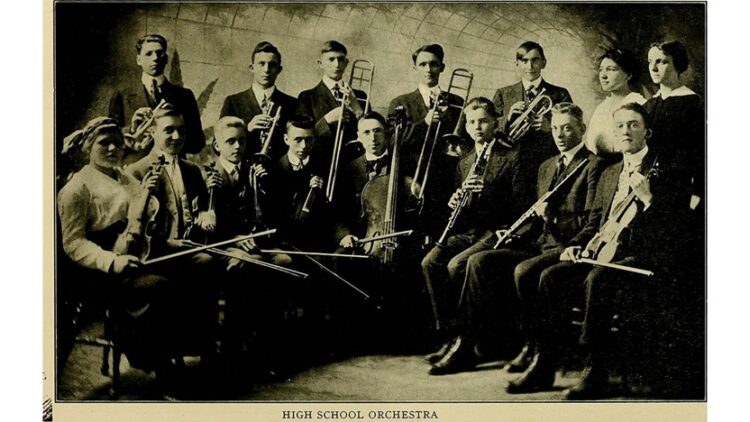
A lifetime ago, back in seventh-grade band,
“The Bullwhip” had all us kids pledge to expand
Our goals for our music. He went on to ask us
To double our time spent in personal practice.
The girls—mostly woodwinds—were eager to please;
Ol’ Bullwhip could always control them with ease.
We boys on the trumpets and trombones, however,
Were harder to handle—we thought we were clever.
We readily signed when the sheet came around—
Exploited a loophole that one of us found.
Now no one could say that we just outright lied.
A math rule we’d learned was defense on our side:
Go multiply zero as much as you will—
The answer you come to remains zero still.
William Walters has been a professor of English and linguistics at Rock Valley College, in Rockford, Illinois, for the past thirty-seven years. He played trombone in many music groups in high school and college, and he’s a bass trombonist in a college/community band even now.

















William, I’ve heard enough interdisciplinary jargon to think it could never be funny, but your combo of math and music makes a marvelous joke. And the masterful meter of the poem shows real skill in another discipline!
Your poem is enjoyable to read and the clever ending is fun, well done!
In Texas, we still had spankings. They used a board made in the Shop class for all the teachers. I called them the “Board of Education.”
An intriguing metre indeed. Very rare to see an eleven-syllable metre in English.
I think, Daniel that the meter is called hendecasyllabic, and for some writers it was not all that rare. Notice how flexible the lines can be in the fulfillment of this metrical plan.
In my high school band, I played (abused) the trumpet. We boys (mostly) were quite brassy and obsessed with our spit valves. There were times when the band director nearly went berserk over our ineptness, and justifiably so, but the poor man was unarmed and helpless, and completely unable to pull off the musical excellence he might have envisioned in his fondest dreams.
On a humid day off, when I have a million jobs to do, fortunately one of those jobs was reading your poem, William.