


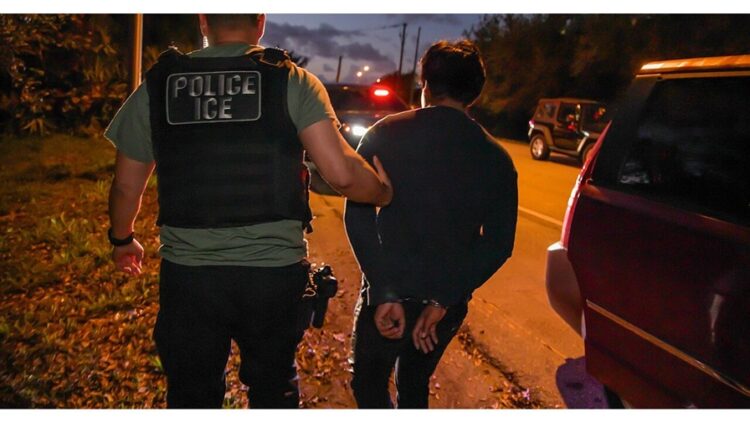
The Otherhood of Man
“He who is compassionate to the cruel will ultimately
become cruel to the compassionate.“ —Jewish folk saying
You think your words bless others. Wrong. They curse.
But you’re so pledged to liberal ideals
You’re blind to their casuistry and cracks.
Such questions that you ask! “Is it diverse?”
“Does law enforcement hurt more than it heals?”
“Must immigrants be liable for their acts?”
Enough! Your heart’s so tender that it bleeds.
You shun good judgment and sow poison seeds.
But worse than treacle words can be your silence.
Your lack of spine means you think all love bends
And hence you won’t condemn what is unjust.
How is it you can’t see you suborn violence
With your false claim that “brotherhood” transcends
All crime? Your moral steel has turned to rust.
Old friend, I’ll speak as plainly as I can:
There’s never been a “Brotherhood of Man.”
How can you be so cold?! That’s what you’d say.
How dare you contradict all I believe
About the unity of all who live?
Get real, old friend. We just share DNA
And maybe the cursed legacy of Eve.
Your “precious oneness” claim leaks like a sieve.
It’s nonsense to claim nationhood should end,
Or that some murderer must be my friend.
But we are brothers! Viva brotherhood!
We all must vaunt the Brotherhood of Man!
What rot. Mankind will never get along.
Our enemies—devoid of conscience—would
Destroy this world within a heartbeat’s span.
Forgiveness? When they revel in their wrong?
My core beliefs once made me think this so.
But hardened, hateful mobs have taught me: no.
You wring your hands. But what about the Bible?
I hoped you’d mention that. It helps my case.
Take Abraham, who fathered many nations—
That plural matters! After him, there’s libel,
Enslavement, vengeance, wars and death. But grace
Can teach us virtue through such tribulations.
Should Evil not deserve our harshest sentence?
And should not Peace be based on real repentance?
You hem and haw. But Christ said we must love!
He did indeed quote Deuteronomy
When Jesus said that we should love our neighbor
As if ourselves. But think! When push meets shove
There’s no one I expect more of than me.
Self-love means standards. Morals. Honest labor.
So why would I seek less when I meet others?
Real love should not mean “doormat to my brothers.”
The Bible never says abandon sense.
The Scriptures show a world of many nations
And not just one. Its focus is to straighten
Out spines and souls so God may yet dispense
True Justice. Christ Himself preached condemnations
Of sinners, rogues and fools who followed Satan.
We see God place each nation in its region.
We cheer when Jesus drowns the demon Legion.
You think that Evil’s dead? That we’re all great
And no one should be judged for his free will,
No matter how depraved, vile or destructive?
Does “brotherhood” mean we must never hate
The villains who cause harm? Who rape? Who kill?
You think love without reason is constructive.
It’s not. The kindness that you deem so tender
Does not mean “love thy neighbor—so surrender!”
Reality demands a sober view—
A knowledge based on truth from facts unfurled,
And not from half-read books upon your shelf.
Yes, Love exists. No power is more true.
But blind indulgence will not save the world—
It, rather, makes you disrespect yourself.
It’s time we wake up from our dereliction.
“The Brotherhood of Man?” A naive fiction.
Brian Yapko is a retired lawyer whose poetry has appeared in over fifty journals. He is the winner of the 2023 SCP International Poetry Competition. Brian is also the author of several short stories, the science fiction novel El Nuevo Mundo and the gothic archaeological novel Bleeding Stone. He lives in Wimauma, Florida.
















Brian – it is a very long time indeed since I have read a poem synched so perfectly to my understanding of life, love and literature. Thank you – skilled, erudite and entertaining. (Are you free for dinner?)
LOL, thank you so much, Jan! I’m glad this poem resonated with you. It was not an easy one to write but it sure helped me get some things off my chest.
Brian – Thanks for the literary heavy dose of common sense.
Thank you very much indeed, Russel! As you observe in your own excellent work, common sense is no longer all that common!
Brian, this great soliloquy on the “unbrotherhood” of man delves into the depths not only of reality, but of true Christian belief. I wrote a book titled “Demolishing the Demons” and a poem “On Hate” that was published on this site several years ago. God told the Israelites to completely destroy Jericho and kill everyone there. God was with them against such enemies as the Philistines. Jesus, himself, whipped the money changers in the Temple. We are the instruments not only of the love of God, but of His destruction of our enemies. We have only to read the Old Testament and then jump to Revelation to realize God hates evil and we are his righthand sword of justice. I am overwhelmed with the majesty and power of your poetry, not only for the beauty of the words, but for the intrinsic messages they impart. God destroyed Sodom and Gomorrah. We can do no less.
Thank you so much for this generous comment, Roy. Thank you also for the excellent poetic work you have created on much the same theme — that dereliction of duty that Christians (Jews, too) engage in because they don’t want to be perceived as judgmental. It’s one thing to judge others. It’s another thing to be discerning. And discernment is essential not only to a spiritual path which is not spineless but to the very survival of Western civilization. My personal observation is that it is not only fear of being perceived as racist or bigoted or otherwise judgmental that makes a great many people derelict in their spiritual obligation to speak out. It is that they are conflict avoidant. Fearful, timid, conflict-avoidant people who get to indulge that weakness by wringing their hands and saying “Oh, but Jesus…” Spare me. Jesus was tough and had a muscular faith. He encouraged others to have a muscular faith. He was nobody’s doormat. Even — especially — in His Passion. When we simply say, “oh, everything is fine” and we use that as an excuse to indulge injustices and delusions we are doing the worst thing possible spiritually.
The brotherhood of man is an abstract idea. Nations and races are concrete realities. A great deal of the trouble in the contemporary world is that too many people have been ideologized to think in abstractions.
This is an excellent poem, Brian — and you have proven that it is still possible to write poems that present rational arguments and intellectual coherence.
Thank you very much indeed, Joe! You’ve said in three concise sentences what I was trying to say in nine verses. I have a softspot for the idea of the brotherhood of man. But that’s all it is: an idea. It has never existed with any kind of meaningful reality in the entirety of Man’s history. I have no reason to think that will change any time soon.
Now the question in my mind is: is it a useful aspiration? My knee-jerk response to that would always be to not even question it as an ideal. But I’ve seen too much and am no longer willing to be spoonfed idealistic platitudes and bromides. I’m reminded of the nonsense that was John Lennon’s song “Imagine” in which he thought it would be a noble and beautiful thing if there were “no nations and no religions too.” Really??? My God, the loss to humanity of eliminating the idea of nationhood and (by extension) peoplehood. Blame John Lennon and the Hippie movement for normalizing the radical idea of world government.
And, what, we’re all supposed to hold hands and sing kumbaya to fulfill John Lennon’s “no religions” dream? Eliminate the beauty of Catholicism, Judaism, Buddhism? Shinto? Or do we just all go atheist and be done with it?
And overarching all of these things is a brotherhood of man paradigm which does not seem to apply to the real world. Our story starts with Cain and Abel and ends with Armageddon. From a biblical standpoint, where, exactly, does the universal brotherhood of man idea actually fit in — until the very end? A place in Time and Space where we have not yet arrived. If one believes in the Bible at all, one knows that its last Book does not imply this kumbaya fantasy any more than does the cold dogmas of Science.
I’m with you 100%, Brian… ‘coexition’ is fantasy at best, and the delusion of it becomes only more evident year after year. The ABCABCDD scheme is one of the toughest, and you, once again, pulled it off perfectly – and NINE times to boot!! Pieces of this stature normally take a lot of time and always a ton of skill — “Congrads”, master-poet.
Thank you so much, Mark! I guess, in the end, my point is about objective reality versus subjective fantasy. As I’ve said in the past, ideals and idealism are a wonderful thing. How would the world change for the better with this? But at a certain point — in far too many people — idealism because calcified in to ideology. When that happens, people not only lose touch with reality — they studiously reject it. They even lie and falsify in order to not have to modify that ideology. These are people who are so invested in their narrative that they reject anything and everything that interferes with it. And, as you point out, to those of us who do not share that narrative, “the delusion of it becomes only more evident year after year.”
Many great points, great lines, great rhymes to take from this, Brian, but just one line to focus on for now, since it exposes the constant sentimentalisation of the word ‘love’: “The Bible never says abandon sense.” Exactly. Indeed, to use Jesus’ paraphrase of your words: ‘Be wise as serpents and innocent as doves’. There are too many doves who have lost their wits and this captures that sense perfectly.
Thank you so much, James! I do think that uncareful translations of the Bible have turned the idea and ideals of love into something that never actually appears in the text and that have been sorely misinterpreted to make people act literally like sheep. As I recall, the literal interpretation should be “blessed are the humble” NOT “the meek.” I seem to remember Jesus telling the adulterous “go and sin no more.’ Not, “carry on, girlfriend.” I seem to remember a great deal of conflict prophesized in Revelation which suggests that not everyone will “get it.” And I seem to remember that eight of the Ten Commandments say “do NOT” rather than “do.” Our faith is not meant to affirm all our comfortable ideas. We are challenged to do better. And to challenge others to do better.
I’m so thankful for all of the real men who don’t fear to speak and fight to defend the weak and defenseless from the great evil and danger in the world. You sound like one of them, Brian. Thanks for using your voice to break through the ignorance, propaganda, and lies.
Thank you so much, Jan. I have reached a point in my life where I am too old and too fat to abide the nonsense that we are expected to embrace by a hegemony of propandistic liars who have an investment in their ideology which is so unshakeable it will not bend even when they are presented with incontrovertible proof of how destructve it is. I appreciate what you have to say about defending the weak and defenseless. That is who I represented when I was still practicing as an attorney and I can do no less now as a perplexed and increasingly curmudgeonly poet.
Good stuff, Brian! I do hate the phrase “the brotherhood of man”. “Otherhood” is a great substitute for it.
Thank you very much, Cynthia! I believe that “brotherhood” is an overused, sentimentalized word which ignores the fact that human beings come in great variety and have a huge number of incompatable cultural and moral differences. I think — sadly — that the idealist’s version of unity in the face of some of those differences is as unrealistic as it is undesirable.
We need moral steel. Brian, you point it with rhetoric particularly sharp in the logos aspect, while your opponent forgets the “cursed legacy of Eve.” “Should Evil not deserve our harshest sentence?” You acknowledge it, along with “grace to teach us virtue through such tribulations.”
Thank you very much, Margaret! As hard-nosed as my poem may seem, it is really a rather straightforward condemnation of Evil and a call to people of good faith and conscience to get up off the couch and fight it rather than compromise with it or — worse — accept and normalize it. Too many people no longer believe that Evil exists — how can they when they believe we are nothing but a random collection of molecules in a meaningless universe? I believe in brotherhood — but as a potentiality rather than as something that actually exists right now. People who believe that it already exists strike me as having strikingly low standards. Brotherhood — at least for me — demands a renunciation of wrongdoing and true penitence.
While evils of any kind should not be coddled in the name of “loving your neighbor”, I think it is important to note that the lines between right and wrong/good and evil in today’s world do not coincide with national boundaries. The only righteous division among mankind is between those who believe the serpents narrative of “you will be as gods” vs. those who believe the promise in Genesis 3:15 of the seed of the woman or the coming messiah who would redeem mankind from its fallen state and crush the head of the serpent. Though no crime should be overlooked, I think our anger should rather be directed against the “powers that be” who, through the manipulation of money, have the power to create famine and economic hardships that essentially force people to leave their homelands (Good ref. for this is “The Jungle” by Upton Sinclair and “The Creature from Jekyll Island”) and flee to places like the US. This is done to create a cheap labor force for the maintenance and building up of our “great” Western civilization. In light of this, to say that all immigrants have innately criminal tendencies is preposterous at best. Doing so would be like lifting someone like Ted Bundy up as the prototypical American which is simply not true.
…And has made of one blood all nations of men for to dwell on all the face of the earth. Acts 17:26
Nowhere in his poem did Brian Yapko say that “all immigrants have innately criminal tendencies.” He argued that they should not be held to be immune from our nation’s laws, and that it is absurd sentimentalism to think of them as special and privileged. The poem is in the form of an intermittent dialogue between a sensible man and a naive liberal.
Yes, of course the lines between right and wrong do not coincide with national boundaries. There are good and bad people everywhere. But it is silly and otherworldy for you to say that the only division between nations and peoples and cultures is a sectarian one based on scripture. There are PLENTY of reasons for nations to fight which have nothing at all to do with religion.
Thank you very much indeed, Joe, for explaining the “gist” of my poem. You are quite right. I did not — nor would I ever — say “all immigrants have innately criminal tendencies.” In fact, this is a sort of absurd, subjective reading which strikes me as quintessential left liberal argument. You say something factual and you’re called a “racist” or “transphobic” or something hateful. That shuts down the argument, they walk away and we’re never allowed to actually observe things that are truthful simply because they make leftists uncomfortable. I’ve had it with that crap.
The same concerning national boundaries. I know of no country on Earth that does not police its borders. Except the United States of America during the period January, 2021 through January, 2025. And, yes, there are a host of reasons for countries to war against each other which have nothing to do with religion. In fact, the number of wars I can think of based solely on religious differences is quite small relative to the number of wars based on territorial disputes, economic disputes or political tyranny. Whether it’s Caesar in Gaul or the Viet Cong in Hanoi, the quest for power — irrespective of religion — has dominated.
I appreciate your reading and commenting on my poem, James. I’m not sure we’re talking about the same thing, however. My poem is not about one nation being superior to another nation and my poem is certainly not about whether or not immigrants are good or bad. My point is that a dewy sentimental view of “the brotherhood of man” has caused a certain cross-section of people to not only lose common sense around the subject, romanticizing criminals and wrongdoers because they perceive them as being disqualified from having agency because they are perceived as underprivileged or targeted by systemic prejudice. This romanticizing goes so far as to cause these “compassionate” liberals to turn such people into their sociology “project” — expecting nothing of them, let alone morals and industry. In my view, this clueless liberal view is a form of condescension, arrogance and disrespect whereby they assume the worst of such people’s abilities and skills and style themselves their saviors. Yes, we do see this in the subject of illegal immigration, but we have also seen it in the BLM and DEI movements, and even the present absurd notion that people of a particular background are too challenged in their ability to get identification that they must be allowed to vote without it. Now in California, the law forbids polling places from asking for voter identification. The UK demands voter id. France demands it. Australia and Canada demand it. For heavens sake, even Somalia demands voter identification. But the U.S. does not. What manner of condescension is this? It’s hard not to interpret this as liberals with clawmarks on perpetuating the votes of people who do not have the right to vote. But I digress. Suffice it to say that my points were more pointed and far more focused on BEHAVIOR rather than background. You liberals seem to think that background is far more important. I think that’s a fragile way to maintain an ordered society.
I will pass over your economic analysis of non-brotherhood as unwworthy. You are free to do and criticize as you please, but I do not direct anger against “the powers that be.” I direct my anger at people who murder and steal and commit fraud. There are plenty of those to go around in every economic category. Turning it into a Marxist class struggle strikes me as naive and an attempt to deflect from the real issues. For that reason, I don’t accept your odd suggestion that “The Jungle” has anything whatsoever to do with the subject of my poem. It feels more like you are trying to hijack the subject matter and chit chat about economic disparities. In which case, I will have to wonder why the citizens of practically every economically challenged country in the world is trying to get into the USA and why they fight deportation tooth and nail. Maybe I’m missing something.
Lastly, I stand by my view that nationhood is not meant to be erased. Your own quote from Acts acknowledges the existence of nations, with an emphasis on the plural. So does John in Revelation: after the Tribulation: “after this I looked, and behold, a great multitude that no one could number, from every nation, from all tribes and peoples and languages, standing before the throne and before the Lamb, clothed in white robes, with palm branches in their hands.” When the end of the world is at hand, we can talk about that kumbaya unity of erased differences. For now, nations exist. Different cultures and tribes and races exist. This is a fact on the ground and it is a necessary and proper thing.
Thank you again for sharing your views.
Brian, let me add something to my previous remarks about what Bontrager says. Overly sentimental and moralizing religionists are a dangerous Fifth Column in the conservative movement.
This poem echoes and amplifies Gad Saad’s critique of suicidal empathy, which goes to show that great minds think alike. Well done!
Thank you very much, Kip. I’m so glad you raised the subject of Gad Saad’s phrase “suicidal empathy” which I immediately grasped as 100% valid upon first hearing. I intend to read the book, but even without doing so, I feel confident in expressing deep concern about those who’ve become so compassionate they have lost not only the desire for self-preservation but all touch with reality. “Queers for Palestine” particularly drives me nuts and is the quintessential example of offering handwringing, pearl-clutching support for an entity and mindset that literally wants them dead. Or the leftist Jews of New York who voted for Mamdani. But try explaining any of this to the zombified indoctrinees who onanistically pride themselves on being such “good people.”
Brian, what a powerful poem, and I just love the title! You have used your gift of writing poetry with honesty, clarity, and beauty to maximum effect to present a serious argument about judgment, love, and the limitations of “brotherhood.” The quote sets up the argument perfectly – forcing this reader to think long and hard as to whether indiscriminate passion can become complicitly evil.
For me, the argument feels divisive in a scriptural sense rather than a merely partisan way – it has made me consider the biblical tensions between the call to love one’s neighbor and equally insistent call to separate from unrepentant wickedness and exercise moral discernment, which leads me to my favorite line: “Your ‘precious oneness’ claim leaks like a sieve,” because it crystallizes (in one superb and vivid image ) the poem’s point that a vague and universal “Brotherhood of Man” collapses when confronted with the hard demands of justice and repentance.
Although you present a cool, clear, cohesive argument, I can feel and hear the heat of the narrator’s passion throughout. There is a real and present danger to promoting love without standards – moral discernment should never be cast aside in favor of that “precious oneness” you speak of. The poem does this without bitterness but with a tangible vulnerability I can relate to. The narrator’s position is a destination that has been painfully arrived at – a journey I’ve been on myself, which is why the poem speaks volumes.
Brian, you have managed to offer me the wonder of a beautiful poem while settling an inner dispute with wise words I treasure. For that I thank you wholeheartedly. Keep on doing what you’re so good at doing – your words matter… a lot!
Susan, I’m overjoyed to receive this kind and supportive comment on what may be my most curmudgeonly poem. You read between the lines here and I’m so glad that you recognized the angst and hurt that actually underly this piece. You are perfectly correct about the tension I try to address between the ideal of universal love and yet how do we respond to Evil? As you say, “moral discernment should never be cast aside in favor of that “precious oneness” — primarily because we as mere human beings do not have the power to implement that “precious oneness.” We act as if we do. We act as if being kind to a rapist will heal the world. We act as if explaining the motivation behind a terror attack then justifies the murder. Then we get to feel all smug and superior and not display any moral fiber at all because things are so “complicated.” True morality demands as much spine as it does heart.
I’m so very pleased, Susan, that my poem spoke to you in a personal way — that “inner dispute.” I still believe in love and compassion, believe me. But forgiveness requires repentance. I’m not God, who is in charge of judgment. And that also means He is in charge of grace and mercy. Not me. I’ll keep fighting until He tells me to stand down.