


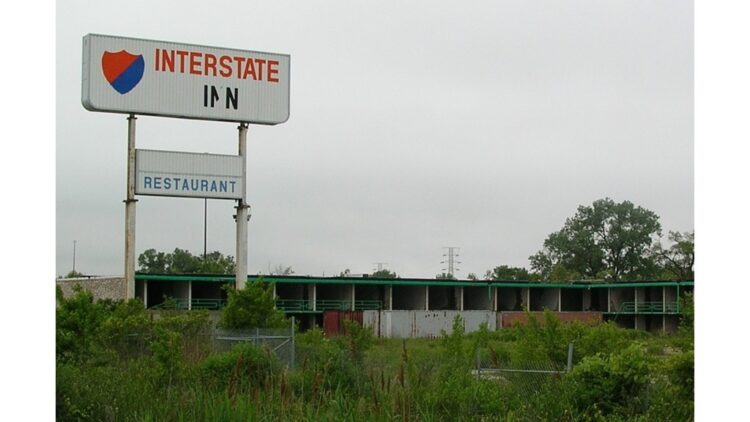
At the No-Win Inn
The room for error is across the hall,
Between the storage bin for grave mistakes
And padlocked doors to closet space where all
The skeletons are kept. The rattlesnakes
Are on the floor below, along with ranks
Of spiders, scorpions, and rabid skunks.
Piranhas wait in heated basement tanks
For you to test your Wal-Mart swimming trunks.
Your own apartment is a total mess,
A monument to practiced indolence,
A testimony to extreme duress,
The very model of defaulted rents.
Your heart, a wound-up clock, is fairly ticking
For joy at all the rags you’ll soon be picking.
Crying Holy
The wind behaves as though it had intent:
It nudges sails and trees, and makes our hair
Act irresponsibly. Caught unaware,
A stroller on the walkway of a bridge
Might wonder where his solid footing went
And utter sudden words of sacrilege.
The wind, however, answers to a host
Of other co-dependent natural forces
That trace their origins to primal sources
In regions close at hand but too occult
For us to scry until the Holy Ghost
Has judged each one of us a true adult.
We’ve acted badly, and our crying shame
Is visited on every mortal child.
We have no patience with the meek and mild
And throw a fit of temper every day,
A fatal lapse that’s certain to inflame
A rash of gossip from our popinjay
Detractors. Now we long for justice in
A world without a god. Another cause
Besides the suasion of the sacred laws
Would be most welcome, anything to make
Autonomy a circumstance where sin
Is reckoned an anonymous mistake.
The True Honey
No point in losing sleep over the money
You might have made, but never did for one
Fool reason or another. No such honey
Has ever been that fits the curl of tongue
As sweetly as the slice of love that nearly
Fell through, then later spiced the moil of hand
To mouth—not all the cash paid for so dearly
With decades spent in toiling could command
The smallest part of that. But nonetheless,
For all the love that’s in this world, for deep
Reserves of it that lie beyond to bless
The soul, I would not trade a good night’s sleep.
C.B. Anderson was the longtime gardener for the PBS television series, The Victory Garden. Hundreds of his poems have appeared in scores of print and electronic journals out of North America, Great Britain, Ireland, Austria, Australia and India. His collection, Mortal Soup and the Blue Yonder was published in 2013 by White Violet Press.


















Wow — I love the way you’ve remodeled old phrases like “no room for error” and “skeletons in the closet” by using them in new ways or arranging them into new forms. And I love the way you’ve extended the metaphor of the “No Win Inn” with various unsavory animal life, and added humor with the Wal-Mart swimming trunks (LOL!)
“Crying Holy” has some original humor in it, too — hair behaving irresponsibly; forces “co-dependent” with the wind; sin “reckoned an anonymous mistake”. Yet with all the humor it has serious irony, portraying a world where we want justice in “a world without a god”.
You must have spaces in your mind where all of this thought-food is kept. (Lots better than skeletons.)
For damn sure, Cynthia, upending conventional expressions is jolly fun. The worst place I ever spent the night was in Greenwich Village, at the Valencia Hotel (or was it the Hotel Valencia?). It’s a memory best left undredged. What I was hinting at with “co-dependent forces” was that all Hierarchies, from angels to archangels and so on, all conspire to keep the created natural world in working order. All irony is serious, if it pertains to serious issues. This “thought-food” you mention is just something cooperating elementals use to fill the holes in my head.
Great satire with sincere meanings embedded. Sometimes I feel I am living at the “No Win Inn.” Although it is my own home, I fall behind in my housekeeping chores choosing not to have a maid and preferring to write, rather than properly maintain the inside. How biting are your words, “Autonomy a circumstance where sin Is reckoned an anonymous mistake.” I can taste the words “autonomy and anonymous” as they roll around in my mind. “The True Honey” really speaks to me of losses of wealth to others, mistakes I have made in the past, or the failure to rely on my abilities to emerge from unforeseen circumstances. I always seem to feel a camaraderie with you and what you write.
There’s no accounting, Roy, for home economics, histrionics or tectonics, though pyrotechnics are highly regulated in most states, I assume. Jordan Peterson says you should make your bed when you get up in the morning, but I always thought that a rather stupid idea. And don’t words just roll around in your mind?! Writing a good poem is like cashing in on a lottery ticket. Unlike you, I have never stood in the face of the enemy, but, like me, you now know that the enemy we are both fighting is time. Time always wins. We’re all in it together.
Two fantastic old words here: the verb “to scry,” and the noun “moil.”
These are all intensely pessimistic poems, but they are so well written and imagistically intense that the reader doesn’t mind at all.
Yeah, Joseph, it’s amazing how old words stick to us and are as influential as our mothers’ milk. One man’s optimism …
These are wonderful, but I’m left wondering if you have insomnia…
Wonderful poems, but I’m left wondering if you have insomnia…
No, Marguerite. I sleep like a dog.
These are just beautiful. Line construction is a thing of beauty: both natural and structured.
All natural beauty is structured, Jenna, and if I think I can make something, then I will try to do it. The reader always has the final say.
These poems are amazingly evocative, Kip. As always, the rhymes are stellar and the psychology complex. I love your use of language which is never conventional nor predictable. The subjects of your poems are intriguing and a bit unsettling. Regret and revisiting old ideas is a perfect combination for poetry — not necessarily feel-good poetry, but poetry which makes a person ponder deeply. “No-Win Inn” is my favorite — a perfect Shakespearian sonnet on a subject which twists cliches and makes of them a somewhat wry inventory — personal and material. I am particularly taken by the piranhas and the Walmart swimming trunks.
Thanks, friend. I only do what I think I’m supposed to do, and if any good comes from it, then I have been doubly blessed. At those rare times when I had booked lodging at upscale road hotels, I was not once ever tempted to go for a morning swim. We live in a shark tank, whether we know it or not. Swim, or sink.
But please, Brian, don’t get taken by the piranhas, with or without the Wal-Mart swimming trunks.
My hair stopped acting irresponsibly a long time ago.
Thanks for the reads.
Still, Paul, beware of bridges.
All three of these are substantial, requiring the reader to pause and think to appreciate them truly. All three also, at least to me, address the peace of mind that comes from a life rightly lived.
The first poem is striking in its description-a far more somber piece than its title suggests. The second is a sweeping analysis of cosmic justice and the human reaction to it. The third leaves us with a bold statement about the worth of peace of mind. I appreciated these very much.
The writer also, Adam, was required to pause and think. And by the way, the No-Win Inn is just down the road from the No-Tell Motel.
All three poems are gems – typical of your metaphorical writing. “At the No-Win Inn” resonated with me the most. Diction and tone – mind-blowing.
I recall reading something at some time, Satyananda, where is was claimed that all language is metaphorical. I think the idea was that words and what words denote generally have nothing to do with each other except for the connection we impose on these incomparable items. Pay the rent, tip the maid and don’t walk around barefoot. Always read the etymologies when you look up words in a dictionary — some of the lineages are crazy, and so is comparative linguistics. I’m glad you didn’t ask me to tone it down or not take that tone with you.
Fresh, exciting, wittily philosophical, intriguing, and thoroughly entertaining! Just one personal complaint: I am suffering with repeated visions of frenzied piranhas in bloody waters with fragments of Lycra stuck between their gnashing teeth – such is the power of your poetry!
OK, Susan. Just remember to keep your head above water and your feet out of it.
“Crying Holy” is seriously underappreciated. Sin can be an anonymous mistake in the confessional. I’m overdue to go.
An experienced reader once said of this poem that I had mischaracterized the role of the Holy Spirit, but, to be fair, that the third member of the Trinity is more mysterious and less bandied about than the other two. It’s as though we are binitarians at heart.
More mysterious, to be sure. One image I’ve heard says the Holy Ghost is wind in the sails of spiritual progress after an unassisted soul has been rowing all day. In this poem, you start with wind, and after referring to “primal sources” and a judgment of “adulthood” by the Holy Ghost, the speakers come to understand their condition. Especially in those last four lines, it’s a condition that seems very prevalent, though rarely acknowledged. Sounds like progress.