


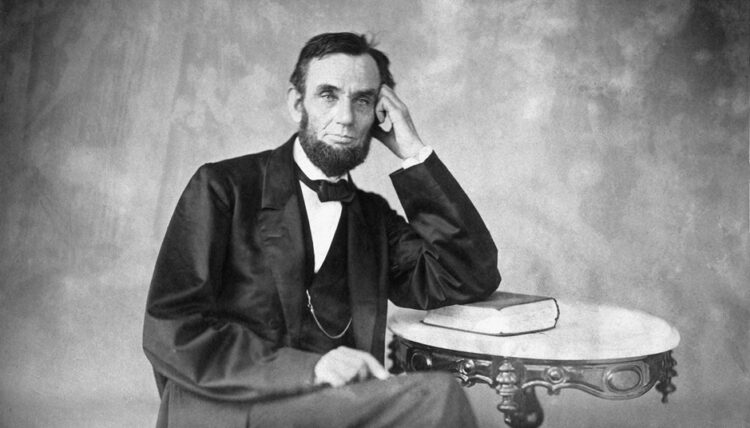
Extracted from a recent article in American Essence by Marlena Figge:
Among the many interesting facts about Abraham Lincoln—that he was the only president to hold a patent (for a device for lifting boats over shoals), that he was an accomplished wrestler and was honored in the Wrestling Hall of Fame, that he held several jobs (such as surveyor, storekeeper, and postmaster) before being elected to the local government in Illinois at the age of 25—there is the little-known fact that Lincoln also wrote poetry. Not only did he write poems himself, but he was very well-read and had a great love for poetry in general.
This is all the more surprising given that his parents could neither read nor write, and he was largely self-educated aside from about a year’s worth of formal schooling. Yet he went on to become a lawyer and politician. His Gettysburg Address is the most well-known speech by an English-speaking politician.
Lincoln said his early life was best encapsulated by the final line of the eighth stanza from Thomas Gray’s “Elegy in a Country Churchyard”:
Let not Ambition mock their useful toil,
Their homely joys, and destiny obscure;
Nor Grandeur hear with a disdainful smile
The short and simple annals of the poor.
The lines speak to a childhood marked by poverty, hard work on the family farm in Indiana, and suffering as Lincoln lost his mother when he was nine and his sister 10 years later. The family moved from Indiana to Illinois in 1830, and Lincoln didn’t return until 1844, when he went back to give campaign speeches on behalf of Henry Clay.
Despite the hardship he’d endured there, Lincoln retained an attachment to the land and wrote a poem on the occasion. As he wrote in a letter to his friend Andrew Johnston in 1846, “That part of the country is, within itself, as unpoetical as any spot of the earth; but still, seeing it and its objects and inhabitants aroused feelings in me which were certainly poetry; though whether my expression of those feelings is poetry is quite another question.”
He enclosed in the letter the first of four cantos of a poem called “My Childhood Home I See Again,” which Johnston later published anonymously under the title “The Return”:
My childhood’s home I see again,
_And sadden with the view;|
And still, as memory crowds my brain,
_There’s pleasure in it too.
O Memory! thou midway world
_‘Twixt earth and paradise,
Where things decayed and loved ones lost
_In dreamy shadows rise,
And, freed from all that’s earthly vile,
_Seem hallowed, pure, and bright,
Like scenes in some enchanted isle
_All bathed in liquid light.
As dusky mountains please the eye
_When twilight chases day;
As bugle-notes that, passing by,
_In distance die away;
As leaving some grand waterfall,
_We, lingering, list its roar—
So memory will hallow all
_We’ve known, but know no more.
Near twenty years have passed away
_Since here I bid farewell
To woods and fields, and scenes of play,
_And playmates loved so well.
Where many were, but few remain
_Of old familiar things;
But seeing them, to mind again
_The lost and absent brings.
The friends I left that parting day,
_How changed, as time has sped!
Young childhood grown, strong manhood gray,
_And half of all are dead.
I hear the loved survivors tell
_How nought from death could save,
Till every sound appears a knell,
_And every spot a grave.
I range the fields with pensive tread,
_And pace the hollow rooms,
And feel (companion of the dead)
_I’m living in the tombs.
Read the full article here.











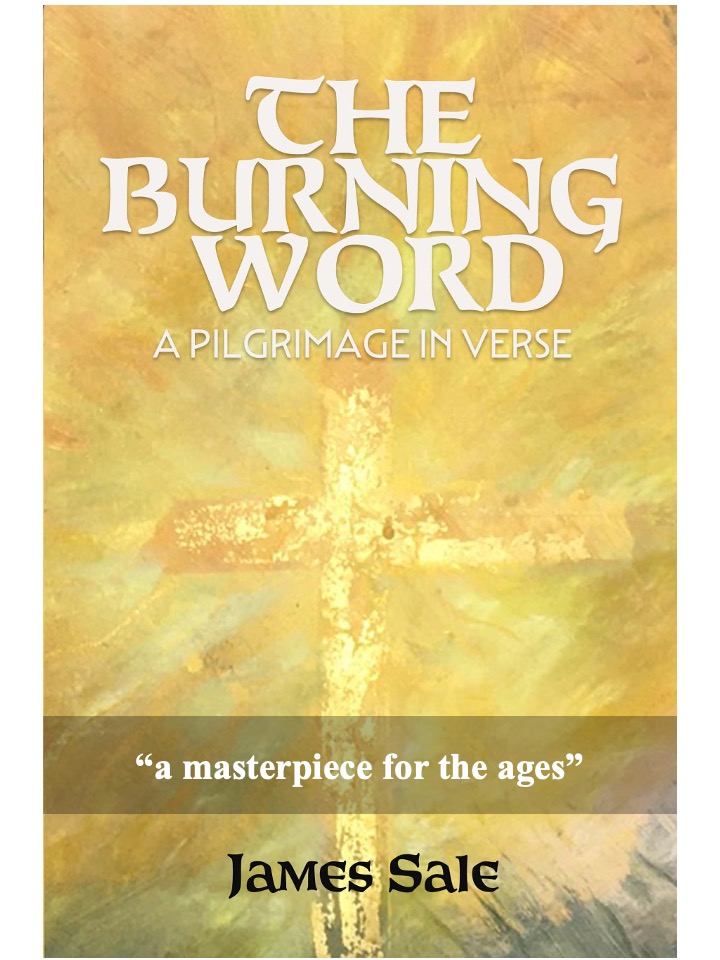




This is the first time I knew Lincoln wrote any poetry. That is such sensitive poetry written from experience with beautiful thoughts that inspire. Thank you for sharing this.
Thank you for sharing this. I had no idea he wrote poetry
either but I’m not surprised.
Rhetoric and elocution were important studies and ornaments in English in the 19th Century. And in that century, one of the finest speakers of English was the American politician Abraham Lincoln, who achieved the Roman dictum of Cato, vir bonus, dicendi peritus, without following the latter’s malevolence. Of all his speeches, his best was that which he delivered in Pennsylvania in November of 1863: “The Gettysburg Address.”
The structure of that speech is straightforward, tightly woven, and filled with natural rhetorical technique, the entire speech, a mere ten sentences and two-hundred-and sixty-some words. When Lincoln first gave his speech, after Edward Everett’s much longer speech, it was first felt by some to be a paltry thing; but closer attention then and further analysis now shows what a remarkable speech it is.
He opens his speech with an alliterative, iambic, Shakespearean cadence: “Four score and seven years ago our fathers brought forth…” and proceeds to situate his words in the context of the world: “on this continent a new nation.” Note here the alliteration of the n’s. The speech’s overriding theme of dedication appears at the conclusion of the first sentence, relating to America’s dedication to that principle, articulated eighty-seven years earlier in “The Declaration of Independence” by Thomas Jefferson, that “all men are created equal.”
Next Lincoln brings us to the present moment in the second sentence: “Now we are engaged in a great civil war,” qualified by two paired phrases reasoned from the first and continuing with the assonance of the long a, “testing whether that nation, or any nation so conceived and so dedicated…” and anchored with the Miltonic-like phrase “can long endure.”
Sentence three, the shortest in the speech, tersely and factually places speaker and audience, “We are met on a great battlefield of that war.” The repetition of the word war emphasizes the ordeal the nation faces. One can see similar simplicity in writers of note, like Chaucer, in The Canterbury Tales, “A knyght ther was,” and Vergil, in The Aeneid, “Urbs antiqua fuit.”
The fourth sentence, reverberating with words central to the speech, continues Lincoln’s bond of identification with those to whom he is speaking, and clearly states their purpose. “We have come to dedicate a portion of that field as a final resting place for those who here gave their lives that that nation might live.” This is a dedication to the dead by the living; the country continues because of their sacrifice.
Then, a normative sentence, the fifth, appropriately closes the opening statement, while maintaining the serious and somber tone. “It is altogether fitting and proper that we should do this.” Sentences nine and ten will begin with that same, simple “It is…”
In his sixth sentence, Lincoln opens the second half of his speech pointing out the limits of both speaker and audience in a triple negative. “But, in a larger sense, we cannot dedicate—we cannot consecrate—we cannot hallow—this ground.” The final “this ground” no less emphatic than that found in Emily Dickinson’s “Because I Could Not Stop For Death,” a poem written perhaps in the same year, where in stanza five she writes, “The Cornice—in the Ground—”
Sentence seven contrasts the dedication of the fighting soldiers to the memorializers. “The brave men, living and dead, who struggled here, have consecrated it far above our poor power to add or detract.” The alliterative “our poor power” is juxtaposed with “the brave men, living and dead, who struggled here.” The inability “to add or detract” shows the lesser status of “those who have come to dedicate a portion of that field.”
Though short, the eighth sentence is poignant. It is constructed with striking, but subtle alliteration, opposite pairings, like remembering and forgetting, saying and doing, and the repetition of here. “The world will little note nor long remember what we say here, but it can never forget what they did here.” The poise of this sentence is awesome.
Though Lincoln is impressed by what the soldiers have done, he realizes there is still more for the living to do. Both the penultimate sentence and the start of the last sentence emphasize this. “It is for us the living, rather, to be dedicated here to the unfinished work which they who fought here have thus far so nobly advanced. It is rather for us to be here dedicated to the great task remaining before us—” The importance Lincoln attaches to this is emphasized by his repetition of similar words and ideas in such a brief speech.
After that connection to the ninth sentence, the tenth and longest sentence proceeds through a series of clauses, each further developing his theme. The first and second clauses elicit strength from the deeds of the dead. “that from these honored dead we take increased devotion to that cause for which they gave the last full measure of devotion—that we here high resolve that these dead shall not have died in vain—” The next breathtaking clause rounds out the opening sentence of the speech with words seen earlier in the speech, nation and new, “that this nation, under God, shall have a new birth of freedom—” and leads to the final memorable clause, placing how much is at stake in the present war, “and that government of the people, by the people, for the people shall not perish from the earth,” which, though less terse than Cato’s famous Carthago delenda est, is profoundly more moral. Abraham Lincoln’s speech, one of the highlights of 19th century prose, shows one of the heights which 19th century oratory reached.
In a literary world that is filled with political correctness gone amok, hate speech directed at Christians, and a virulent antagonism against order in poetry, it is hardly surprising that the political, religious, and poetical works of John Quincy Adams (1767-1848) are seldom discussed in modern criticism. But that only shows the extreme provinciality to which Postmodernist and New Millennial American criticism have fallen. Submerged in global secularism, American verse has almost become an impossibility; yet it is only when it is free of such tyrannical chains that it can be precisely what it is and what it must be: American.
In the realm of poetry, Adams’ widest canvas, a narrative poem on the Irish Conquest Dermot Mac Morrogh, is a work of stately vigor. In his four cantos, Adams utilized the kind of ottava rima that Frere, and afterwords Byron, made famous in English verse, combined with the Celtic historicism and seriousness of Scott. But I have not come to praise that work, I have come to discuss another shorter work of Adams that is filled with the elan of the new republic: To Sally.
To Sally is a short, comic Romantic lyric of six eight-lined, iambic stanzas, which show Adams in full force. The poem’s exposition begins quaintly and quietly enough in abstraction and alliteration (the r’s and l”s)
“The man in righteousness arrayed,
A pure and blameless liver…”
and quickly proceeds to delineate, in colorful diction, a series of exoticisms.
“Needs not the keen Toledo blade,
Nor venom-freighted quiver,
What though he wind his toilsome way
O’er regions wild and weary–
Through Zara’s burning desert stray,
Or Asia’s jungles dreary:
Stanza two picks up again with the l”s alliterating, travels to diverse geographic and geologic places in the world through overt repetition of s’s (c’s), g’s and d’s, and concludes humorously with m’s and t’’s alliterating followed by the popping of the p’s.
What though he plough the billowy deep
By lunar light, or solar,
Meet the resistless Simoon’s sweep,
Of iceberg circumpolar!
In bog or quagmire deep and dank
His foot shall never settle;
He mounts the summit of Mont Blanc,
Or Popocatapetl.”
Part of the fun of the poem comes from masculine rhymes in the odd-numbered tetrameters and feminine rhymes in the even-numbered trimeters, particularly the longer words, like circumpolar and Popocatapetl. From this ongoing exoticism, including a likely allusion to Alexander von Humboldt’s achievement of going higher than anyone in the World before, by climbing the central Ecuador volcano of over 20,000 feet,
“On Chimborazo’s breathless height
He treads o’er burning lava;
Or snuffs the Bohan Upas blight,
The deathful plant of Java.”
Adams returns his poem to its opening abstract nature.
Through every peril he shall pass,
By virtue’s shield protected;
And still by Truth’s unerring glass
His path shall be directed.
He opens the second half of the poem by countering three stanzas of Romantic exoticism and Age of Reason abstraction shifting to the immediacy of the recent present and a closer proximity.
“Else wherefore was it, Thursday last,
While strolling down the valley,
Defenseless, musing as I passed
A canzonet to Sally…”
Note Adams unexpected use of passed, canzonet, and the placement of Sally as the anchor of the rhyme. The fourth stanza continues with terse phrasing and active verbs.
“A wolf, with mouth-protruding snout,
Forth from the thicket bounded—
I clapped my hands and raised a shout—
He heard—and fled—confounded.”
Stanza five continues the contrast of the foreign to the familiar, but now the topic is beasts, with Adams using wry, sardonic wit, more in the manner of Irving or Crockett than in the style of Romantic preciousness or pretention.
“Tangier nor Tunis never bred
An animal more crabbed;
Nor Fez, dry-nurse of lions, fed
A monster half so rapid;
Nor Ararat so fierce a beast
Has seen since days of Noah;
Nor stronger, eager for a feast,
The fell constrictor boa.”
Stanza six, in its absurd logic, then demonstrates, as Vergil once noted, amor vincit omnia, but without that Roman’s lugubriousness.
“Oh! place me where the solar beam
Has scorched all verdure vernal;
Or on the polar verge extreme,
Blocked up with ice eternal—
Still shall my voice’s tender lays
Of love remain unbroken;
And still my charming Sally praise,
Sweet smiling and sweet spoken.”
The whole poem is a clever joke. But it is more than that. Adams has managed to puncture romantic preciousness and pretention in one bold stroke, while at the same time, making Sally, “sweet smiling and sweet spoken,” the equal to all the earth. The hyperbole is as exaggerated as that of youthful Romeo (or Juliet), but is simultaneously undercut, in the adult fashion of (Bassanio or) Portia. John Quincy Adams understands the ideal, but doesn’t underestimate the ordinary; and in this small poem, he has revealed a rare, but significant, example in the canvas of American Romantic poetry.
Lincoln‘s poetry offers an insightful and frankly unsettling window into his psyche. It is far darker than anything Poe ever wrote. Yet I think the inner darkness revealed through the poetry tempered him for the dark times he was to oversee.
At Lincoln’s Tomb
by Usa W. Celebride
Though Mr. Sedia’s poetic interests are wide,
@ SPC he is America’s Transparent Eye,
who kens the force of dark 1809’s strange, eerie glow,
in his Romantic take on Abraham and Edgar Poe.
He’s right, of course, if not too Shelleyan, at Lincoln’s tomb,
or in his understance of Heorot’s enormous room,
Longfellow’s take upon Lönnrot, Thoreau on friendly oaks;
yet don’t forget Poe’s humor too, or Lincoln’s many jokes.
Here is a poem of several years ago.
Abe L.
by Usa W. Celebride
Abe Lincoln was an ugly, homely man
who come out of Kentucky and went to
Illinois. He showed if the comely can,
he could, and what they can’t do, he could do.
His humor was plain, ol’ American,
homespun homilies; and although uncouth,
his honesty was genuine, common;
it could hoodwink people into the truth.
But Lincoln was a complex man. Beyond
the tall, lanky outlines of his body,
he often fell into depths of despond,
feelings of gloom and doom. He was moody,
like Hamlet, dressed in black, having to fix
a World again up to its no-good tricks.
Usa W. Celebride is a poet of American moments. Abraham Lincoln (1809-1965) was a MidNineteenth Century American politician.