



.
.
Henry Knox in His Bookstore
—from Legends of Liberty, Volume 3
The chiming of a doorway’s silver bells
Announced the timing of a late arriving
Patron to browse the stacks, divining smells
Of freshly printed spruce and pine, reviving
Dormant memories of thriving woods
And fathers rhyming low by candlelight.
Climbing a shelf to worm through dusty words,
Square glasses squint, recovering their sight,
Recapturing a youth that time suppressed.
“Hey—SHH!” —Relax, it’s just a bookshop. Don’t get stressed.
“Ha HAA!” A bellow weighing twenty stone
Came rolling through the bookshelves on a ladder,
A flying pile of jolly flesh and bone.
“Hi, fiction please? —Dystopian.” Low laughter.
Sailing to satire, Pope and Swift came pouring.
“Excuse me—any romance?” To chick-lit
He cruised and—”HO ho!” —Pamela came soaring.
Ebullience only goes so far when wit
Is absent. Business dealings prosper, though,
When Falstaff’s body mind-melds with a Prospero.
Big pigeon toes descended little rungs.
Broad shoulders squeezed behind a little desk.
A double chin, just as a turkey runs,
Went jiggling side to side (not Romanesque,
This form) and, bobbing towards the window, spied
The street—then settled, still, as Henry Knox’s
Eyes addressed Sharpe’s Military Guide.
He eased against some overflowing boxes
And turned the page: On Building Fortifications.
Digging through leaves, he raised up knowledge’s foundations.
Ring-a-ling. There, stepping through a mass
Of ladies, where a twirling parasol
Blocked sunlight streaming through the polished glass,
Shading a face that dreamed of Paris all
Day long, a flirting figure summoned peals
Of laughter, then approached the plump supplier,
Belly plopping on the desk with piles
Of books and, tilting down, looked through his wire
Bifocals, saying (as his presence sank in):
“Donating these, from London. All unread.” —“Ben Franklin!”
—“In the flesh.” (His tummy rippled gently.)
—“What brings you up from Philly?” —“Business trek—
For dentistry!” (His glasses gleamed intently.)
Knox laughed. His tummy tossed and swelled. “One sec.”
He disappeared, returning holding eight
Big volumes. “No, no, no—ah this one!” (Hunter’s
Elegant Treatise on the Teeth with Plates.)
Knox wrote the bill. Ben paid. “Some lovely haunters
Of romance,” (referencing that section’s dames).
—“Yes, they attract good business.”—Ben left, taking names.
Knox glanced out toward the street and tapped his nails.
Just where was Lucy? Had she been discovered?
He sifted through Ben’s books and added sales
Tags, lowering the prices, though his cupboard
And shelves alike were thinning—that blockade
Was choking shipments. Hitching up a sleigh,
He dragged the volumes, sorting as they swayed:
Paradise Lost, with pictures (not Doré,
But decent). Wycliffe’s Bible. Hardly trash.
Hey—book on cannonry? He’d add it to his cache.
Ring-a-ling. There, limping through the seams
Of dresses, bumping bustles—“Sorry” (grin),
A low-brimmed hat, shoegazing, lost in dreams,
Stumbled into the desk. “Nathanael Greene!”
—“I know my name.” (Yes, but it helps narration.)
—“What brings you from the forge?” —“Desire, friend—
For classic works!” —“Old biblical translation
Arrived just now.” —“No, thinking I’d extend
My tastes—a picture book about The Fall?”
Knox lugged the illustrated Milton from his haul.
Two plain black sleeves went skimming: “Cannons, built
In Hell? Makes sense! The Serpent’s vile productions
Poison our peace.” The hat of plain black felt
Inclined towards Henry’s guilty pleasure: “Instructions
On Field Artillery, by Baron Friedrich
Wilhelm August Heinrich Ferdinand
von Steuben—say that three times fast! Comedic
Names, those Euros.” Henry, shifting: “And
How’s business?” —“Under pressure. I’m a maker
Of farm tools—nothing more.”—“Ha HA! —the model Quaker!”
Nathanael wheezed away, weaving through skirts,
Nosing a page. Ajiggle, Henry scanned
Outside the window, craning, playing scout.
A handkerchief that covered his left hand
Got caught against a corner, coming loose.
He tightened the brown fabric, seeing tones:
Cascading auburn, hazel orbs—his lass
Of plumpish plumage; ginger mind, high-flown;
That brazen sass, a voice to which he’d hearken;
The bronze and brass of nuptials, cheerful as a lark in—
Ring-a-ling. Two redcoats entered, sniffing
The ladies (leaving), snooping up laddertops,
Opening novels (upside down) and whiffing
Perfume from pages trickled with teardrops,
Then peaking under covers leaking potty
Words and destroying shelves that overstocked
The metric system’s use in textbooks (naughty
Nerds), then ravishing The Rape of the Lock,
And— “Pardon, sirs—each volume costs three shillings.”
Eyes slowly turned towards Henry Knox. “…Um, if you’re willing?”
The soldiers stalked his desk. “Ya would’na be
Carryin’ contraband in ‘ere, eh chum?”
The small one stared up, picking at a flea
While flaring rotten teeth and swollen gums.
“Ha, hardly, gentlemen—but you’re in luck!
Some books on dental care just—” —“Shut ya trap!
Ya reckon that we’re daft?” The tall one plucked
The book, On Field Artillery, and tapped
It: “What is this?” —“Your branch of expertise,
Perhaps?” The tall one tongued his broken piano keys
And banged his flat sonata: “What’s on yur
Left ‘and?” He yanked the kerchief off. Two nubs,
Three fingers. “‘Ow’d this ‘appen?” —“Hunting, sir.
The London Bookshop caters to all clubs.”
Knox cracked his china-whites: “Ha—” —“HEY! Just what’s
So funny?” Said the small one, whipping out
A pistol. Knox threw up his arms. “No buts
About it—‘e’s a rebel, ‘e is.” —“There’s no doubt,”
The tall one nodded with the small one: “Treas’nous!”
“Surely, you wouldn’t jail a bookworm?” —“If it please us.”
Knox stared into their mouths, two jagged chasms.
They dragged him in the street and threw him down.
The small one kicked him. Henry had a spasm:
The tall one lit a torch and said, “I don’
Be taking joy in this—jus’ doin’ me job,”
Then broke a window, tossing it inside.
Knox rose up to his knees and choked a sob
As his life savings burned away, his pride
And passion up in smoke. “That’s blazin’—crikey!”
A crumpled cloud reflected Henry’s paper psyche.
Like when Hypatia, torn from off the wheels
Of her chariot by zealots in a mob,
Was flayed alive, left rotting as the wills
Of killers turned to arson, then, to rob
Majestic Alexandria of lore,
Destroying its library, drawing scrawls
Of darkness when they lightened weighty stores
Of ancient knowledge housed in precious scrolls,
And for a thousand years men wandered, cold
And hungry, ignorant of all they’d lost of old,
So Henry Knox lay vacant, naked, peeled
Of purpose. “Get up!” kicked the small one. “Go—
Yur off to Boston Gaol!” They tugged and wheeled
The slumping form around, struggling to tow
His tonnage forward. Then from a back alley,
Nathanael Greene ran limping, throwing fists
(More like a tennis match than boxing, really).
Arms swung in wide and wild, his backhand fast
And furious—till the tall one knocked his block off.
Nathan fell backwards, seeing stars. “Don’t let ‘im walk off.”
—“Anothuh inmate—won’ be space to stand!”
Nathan was wheezing. —“Think this one’s asthmatic!”
The soldiers, pulling, paused. Their tangled strands
Of hair began to frizzle, charged with static.
The streetlamps, not refilled on oil, lit up—
Though owls, still nesting, weren’t yet trading hoots.
A crackle through the cobblestones spit up
Blue sparks that zapped the soldiers’ rubber boots.
The pressure in their chests was tightening when
Their blinkers, awed, were stricken blind by Lightning Ben.
He pulled his journal, jotting, to brainstorm
Ideas: E – m – c? No. Max AC?
Nah—hasn’t been discovered. Nimbus form?
(Eying the sky.) Blue ether. “Blast it.” Tree
For a rod? No—barren. Fingering the breeze,
Ben saw a pair of youngsters flying kites.
“Excuse me boys, I need to borrow these.”
The redcoats wiped their eyes, still seeing lights.
The small one stabilized the tall one: “Hey, whoa.”
Seizing their bayonets, they charged the portly halo.
Ben yanked the kite strings up and down: “Come on.”
He rubbed them fast, two sticks between his palms.
A spark! …Extinguished. “Bah!” His patience gone,
He closed his peepers, meditating. Calm.
The soldiers neared their target, aiming blades
(The tall one at his chest; the small, his groin).
The scorching earth was graced with spots of shade.
Clouds gathered, high. A peal of thunder joined
A flash—the soldiers blinked. Ben stepped aside
And, winding strings to weapons, ribboned hearts were tied.
White lightning zigzagged from the heavens, plunging,
Striking the kites and riding smooth along
The strings to heat the bayonets (still lunging).
The troopers, deafened by the thunder’s gong—
Two loopy plebs, two valentines for Britain
(Too yearning-yarned)—received the bolt. So blessed
By love of king and country, they were smitten
With searing bouts of cardiac arrest.
The tall one held the small one in his clutches,
Their skeletons—charred black—exchanging tender touches.
A raindrop fell on Henry. He came to.
Nathanael shook his head and rubbed a knuckle:
“I’ve never struck a man.” —“We all need new
Experiences!” Ben lent a hand and chuckled.
—“What happened to those soldiers?” —“A mishap,”
Said Franklin. “Caught a thunderstorm. All clear
Now [thumbing corpses taking a catnap].
Come on, grab Henry. Let’s get out of here.”
Knox, sifting embers, found a piece of home:
On Field Artillery. His last remaining tome.
The setting sun reflected sparkling wells
In Knox’s dewy eyes—a crystal ball
Casting the past in flames with crimson spells—
Then dusked his face in falling ash. The sprawl
Of strollers lined the streets with basketfuls
As neighbors filled the air with bells, bells, bells,
Announcing closing time for bears and bulls
Of commerce. Like a book that never sells,
Knox shelved away his heart, where sorrow dwells,
Repealing tolling—faintly knolling—mourning bells.
.
.
Andrew Benson Brown has had poems and reviews published in a few journals. His epic-in-progress, Legends of Liberty, will chronicle the major events of the American Revolution if he lives to complete it. Though he writes history articles for American Essence magazine, he lists his primary occupation on official forms as ‘poet.’ He is, in other words, a vagabond.














There is so much knowledge and esoterica combined with localized language usage and accents, I found your massive feat demands careful reading and rereading to absorb all the magnificence of your historically oriented mock bio! I simply stand in awe!
One generation’s standard cultural references become the esoterica of today. I think the choicest books are books to be re-read, if it doesn’t sound too vain to include myself there. Hopefully the video helps clarify certain things.
Very fun. The narration and video added to the enjoyment of this very clever piece. The thing I like best about the LOL series is how consistently good it is. It would be an ambitious undertaking to do your whole book like this. I think you should wait for AI to make cartoons out of words. That will probably be here next week…
Thanks MP. Yes, I would like to video-ify the whole series eventually but it’s enormously time consuming. Think I just need to write it first mostly. Plus Open AI is supposed to release their video maker technology next year and that will make things a lot easier.
Also, I think all of our discussions and that video we watched about Wycliffe paid off. Not in the way I hoped, but nonetheless, it was good for something!
who knows, you may rub off on me yet in ways you don’t realize.
Andrew, a couple of weeks ago I decided to reread volume 1 while simultaneously reading volume 2. Then this week gives me a triple dose. Since if possible I would rather listen to poetry (preferably recited by the author) than read it, your recording is right up my alley.
First, each stanza has some little enjoyable hook in it, and second, the whole thing is consistently very entertaining.
I find Franklin’s character to be a big part of the latter. If Pushkin wrote a novel in verse, you may be writing what seems like the first graphic novel in verse.
Thanks Stephen, sounds like you’re taking on quite the project there. Your graphic novel comment gives me some good ideas about formatting. Blake was the first multimedia poet, but then he was also a great artist, unlike me. I won’t use AI to write poetry, but visualizing things is different.
I firmly insist that ABB is a mock-epic poet in the tradition of Lord Byron; others may disagree – but I have to say that in this wonderful extract the point and the stanza which begins, ‘Like when Hypatia, torn from off the wheels’, truly does achieve an epic effect. There are again so many brilliant things to note in this short extract that someday, someone is going to write a book on the whole of LoL. The ingenious rhyming persists: ‘sank in/Franklin’. The marvellous aphoristic quality shows no sign of abating: ‘Ebullience only goes so far when wit / Is absent’. And the narrative thrust and characterisations are simply superb: I did enjoy the electrocution of the two redcoats as disloyal as it may sound to my own country. We have had the highly successful pop group, ABBA, and perhaps now we should consider setting an alternative group: ABBAS, which of course stands for: the Andrew Benson Brown Appreciation Society …
ABBAS—ha! I will leave you to head that one up, James. As president, you’ll get to wear a special hat and can come up with a secret sign by which entering members can identify themselves.
Wonder what the average Brit would think of this, probably wouldn’t like it. Kind of like when the Mel Gibson movie ‘The Patriot’ came out and it got a lot of negative reviews on the other side of the Atlantic for the way it portrayed the Tarleton-inspired villain.
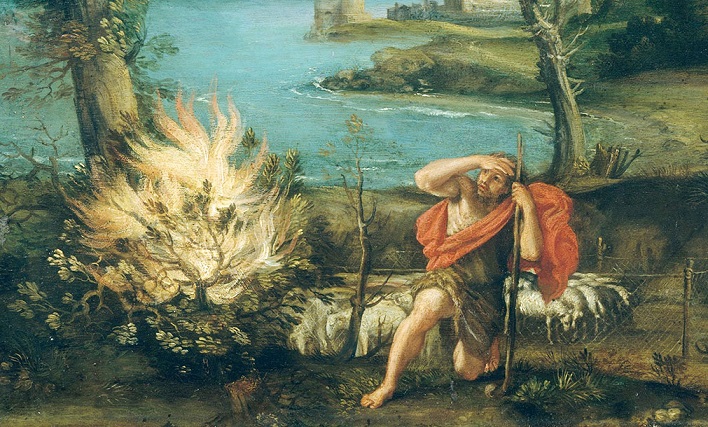
Once I started reading this, I couldn’t stop. The amazing picture of an 18th-century bookshop, the “ring-a-ling” as various customers enter, the different books for sale, the vicious and ignorant Redcoats, the allusions to the murder of Hypatia and the burning of the Alexandrian library, the almost surreal actions of Ben Franklin (the electricity guru), the survival of one book on “Field Artillery” that Knox picks up, with the unspoken suggestion of the major logistics feat he will later on accomplish in transporting artillery pieces to Boston… it all fits together seamlessly, as if in a dream. What an ambitious and imaginative piece of work!
Thanks for the appreciative words, Joe. Going to take years to finish this thing, so hopefully I won’t fall victim to a freak accident.
Andrew, this is a delight from start to finish — as is all of Legends of Liberty. You won my heart when you described Knox as a blend of Falstaff and Prospero. And having read both Pamela and Shamela your reference to Pamela particularly tickled me.
As it happens, I just started volume II and recently finished Lightning Ben, so I feel fortunate to have the background and context of Ben Franklin as an electricity/lightning-bolt-wielding superhero. Your excerpt here is, of course, wildly entertaining as we would expect given your unique mash-up of serious and comic peppered with anachronisms and literary allusions. Because you use anachronisms freely, I’m not in the least troubled by an early date for metric measures or the arrival of pianos in America any more than I am about referencing E=mc2. You’ve created a universe in which such minutiae are best accepted as part of the fun. And poetry must not be overburdened by the accuracy police. I’ve written too much historical stuff of my own which, no doubt, would give a serious historian apoplexy.
But I’m most struck by the sadly ironic horror of two redcoats torching a bookshop in which all of the contents represent British patrimony. It’s as if they were destroying their own heritage in their desire to assert power over the colonial “traitor.” I know Knox was a bookseller, but is there a historical incident on which this is based? Either way, it’s a very thought-provoking and distressing incident emblematic of some of the lunacies of war.
Brian,
Knox did have to abandon his bookstore, and the part about him looking out the window for his wife wondering if she’d been discovered was straight out of a biography I read about him. But the soldiers and the burning I just made up. Regarding the anachronisms, yes, there’s lots. And as far as outright fictions, Steuben never wrote a book on artillery. The book he was actually reading was by a guy named Muller. But since Steuben will be an important minor character later on I’m trying to plant the seed here.
Several people have told me they think Ben Franklin is the best character, and they’re probably right. Got some really zany ideas for him later on.
Bravo!
Your details enable the reader to step into the scene. Andrew. I could hear the voices of the ladies and smell the books.
The (anachronistic) rubber boots didn’t protect the redcoats from lightning, did they?
Ha yes that was the idea, Mary. I do recall it is a myth that rubber—like rubber tires on your vehicle—protects you from lightning. Basically I just made that up to give some kind of semi-plausible excuse for why they didn’t get shocked the first time when electricity rippled through the cobblestones.
I feel like the kind of non-fiction snob who loves reading the latest books about the Revolution would probably hate the inaccuracy of this thing.
I read it! Brought back bookshop memories worldwide. These places are a genre in themselves. I was wondering why such an unflattering portrait of bookseller Knox, but I see how well it corresponds to a lot of body language.
Thanks Margaret. Was the portrait of Knox unflattering? I mean, other than the fact that he weighed 280 lbs and there’s kind of a natural comedy there. In any case, he’ll be performing ultra-heroic feats in the next chapter so it shouldn’t come off that way then.
Very entertaining, ABB. And your reading is perfect.
Thanks for watching, jd.
I confess, I’ve been a latecomer to sitting down and reading these because of the commitment they require to appreciate fully. I think you’ve outdone yourself in this one. What strikes me most is the almost cinematic effect of continuous action, with an imagistic (dare I say almost cubist?) visual portrayal. Very engaging.
Until I read James’s comment, I hadn’t drawn the connection to Byron, but I agree that your mock epic very much follows in the tradition of Byron.
Very fun, and jealous of your YouTube skills!