


Mass Destruction
Give me a reason to trust in words spoken—
Tricksters have twisted the truth till it’s dead.
Decades of pledges are buried or broken.
Faith is now riddled with bullets and dread.
Bombs are exploding and bombast is blasting—
Slick tongues of silver spin slogans all day.
Peacekeepers battle in wars everlasting—
Fighting is failing to blow hate away.
Sell me the logic behind all that’s tragic.
Spell out why bloodshed buys prizes for those
Rallying masses with Hearts-and-Minds magic.
Tell me our heroes are never our foes.
Grant me the gift that will rein in suspicion.
Hand me the plain and the pitiless truth.
Say that you’re not on a slippery mission.
Show me some solid, unsanitized proof.
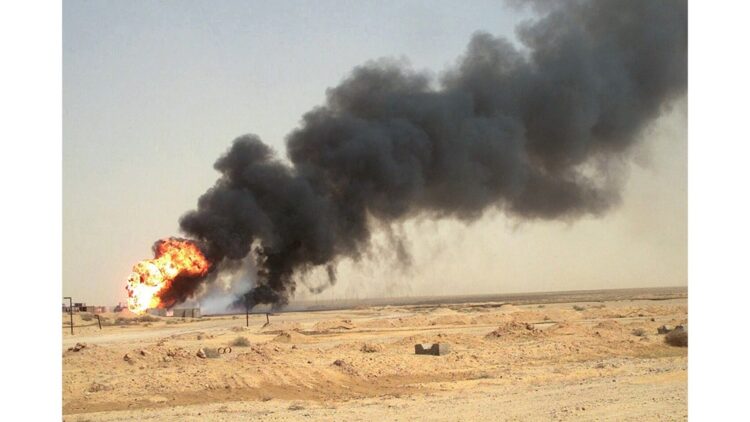
Desert winds whisper with yesterday’s warning.
Harrowing echoes of boots underground
Haunt tortured mothers still mired in mourning.
Trust has been lost. Can it ever be found?
Make me believe every soul sent to die,
Dies for a reason that isn’t a lie.
Susan Jarvis Bryant is a poet originally from the U.K., now living on the Gulf Coast of Texas.









Susan, first, I love this absolutely perfect poem. I also love the fact that you ask questions. This cri de coeur comes from the same place that your poem, “Needled” does. It was published here almost exactly five years ago.
https://www.classicalpoets.org/a-poem-on-the-covid-19-vaccine-needled-by-susan-jarvis-bryant/
Yes, every person has the right, the reason and, mostly, the responsibility to question everything. I once hoped that the internet would facilitate a kind of ground truthing for people, but today even X/Twitter has fallen into the subtle propaganda of “free speech, but limited reach.”
Thank YOU, Susan, for speaking up with your beautiful poetic voice, and a huge thanks also to Evan Mantyk for his absolute conviction that freedom of speech must be upheld.
Thank you, Biggest Fan! I could never write poems like this without your inspiration and support.
Well versed
Thank you very much, Perry.
Susan, I do trust in Trump and American intelligence. Your exceptional poem asks the right questions. The problem is in any war scenario there is a fog not only of battle but on the homefront in epithets and expletives made egregious by the ignorant, ignominious, and ignoble presentations of the poorly informed, enemy propagandists, and the homeland aiders and abettors which then is foisted upon the population. One plausible source I read said Iran was within one week of final nuclear capability and had a near term timetable for eliminating Israel. I remember the source from a week or so ago but failed to write it down. I am enamored by your poem sparkling with alliteration, great rhymes, and the message incorporated so skillfully in the body.
Thank you for your service, Roy, and thank you for sharing your perspective. Please know, I’m not questioning the courage or integrity of those who served; I’m questioning the honesty and motives of the leaders and systems that ask people to go to war. My experience as a civilian is of being told one set of reasons, then watching very different realities unfold, and that gap has made trust extremely fragile. The poem is my way of wrestling with that betrayal of trust, not a judgment of you or others who carried out their duty. It is not enough for me to hear (once again) that we are fighting a “just” war. I’m beginning to believe there is no such thing, and it takes a lot of angst and guts for the granddaughter of a WWII hero to say just that.
Understood and appreciated, especially for the granddaughter of a WWII hero.
Thank you for your kind words, Roy. They mean a lot.
No, Susan. There are just wars. But part of the demonic skill of our current enemy is confusing us and making us doubt this.
Don’t let him or he’s won!
Paul, thank you very much for your insights. You have certainly presented me with an interesting perspective that gets to the heart of this ethical mess. I thoroughly appreciate your conviction, but calling moral doubt “demonic” misses my poem’s heart. It’s not letting evil win – it’s asking for evidence over slogans, that souls die for truth and not lies. History (Iraq WMDs, Libya atrocities, Afghanistan chaos) proves skepticism is wisdom in the “test everything” sense. These failures are facts not “fog”. The poem asks for concrete proof that this war is different, and I’m listening. By backing another war with blind faith as my guide, how do I know we won’t sink into the very mire of deception that eroded my trust in the first place? My poem targets deception. I’m fully aware of the demonic skill of our current enemy – it’s what moved me to write this poem.
Hello Susan. Moral doubt is certainly not demonic and I didn’t say it was, but it’s used as a weapon to undermine the resolve of people who are naturally conservative. The idea is that if you can confuse people, keep them permanently off balance so they don’t know what to believe, they become disorientated, weak and easily controlled. This is part of modern leftist theory.
I’m not sure what more concrete proof you could have that the present war is just than what is available already. The regime in Tehran has been terrorising the world since 1979. Apart from Israelis and Americans, it’s killed tens of thousands of its own people. And that’s just in the past few weeks. Would you want to wait for a nuclear device to be exploded over Tel Aviv or an attack on the US?
Paul, you have hit the nail directly on the head. I’ve been trying for years to get persons on the political right to understand this. The liberal-left paralyzes and stymies us by using the language of “morality” and “decency” and “humanity” to deflect us from any course of action that might threaten left-liberal power. They maintain their hegemony by appealing to religious strictures and pieties, and to philosophical Categorical Imperatives, to create doubt and hesitation in us. This is why religionists in our ranks are a serious problem.
Wars have inevitable collateral casualties. This is the reason our Mainstream Media have been screaming incessantly about an accidental hit on a school in Iran. They won’t let it go, because they know they can paralyze some conservatives (and all religionists) with that kind of propaganda.
Indeed, Joe. I would add two things to what you’ve written.
Firstly, in determining moral status, leftism has replaced intention with numbers. So, when the West responds to an attack and inflicts more casualties than received, it’s made the bad guy. This, too, is designed to paralyse resistance.
Secondly, is the fear of Islam. 9/11 was like nothing the world had ever seen. But even before that we’d had the fatwa that killed dozens of people before, 34 years after The Satanic Verses was published, Rushdie himself was attacked.
Like the song in The Sound of Music, “How Do You Solve a Problem Like Maria?”, nobody knows what to do about Muhammad. Only Israel had been able effectively to deal with the threat – one of the main reasons why it’s so hated – while almost everywhere else has been paralysed with fear as it’s grown exponentially.
9/11 should have been a wake-up call. Instead, it struck “terror into the hearts of the unbelievers”, as it was intended to do, and exactly as Muhammad said he would do before the Battle of Badr in 624, as recorded in the Qur’an (8:12).
Paul and Joe,
Thanks to both of you. My poem targets ALL deception – leftist psyops included. Iran’s Evil does not wipe out recent lies and the resulting devastation. My mention of lies and failure around war isn’t me falling for leftist trickery. The high human cost of recent failures demands questions that bring answers that aren’t based on blind faith or the conjecture of “slick tongues” selling more of the same. Some think this war is just. Some aren’t so sure.
Also, just wars are not necessarily legal wars. Clubfooted law hobbles along a distant second in the preservation of humanity!
Paul, I agree wholeheartedly with this… but my poem is addressing crooked governments with appalling records when it comes to “the preservation of humanity”
Like many people I suppose, I really don’t know what to believe or what to trust any more, if I ever did! I only know that your poetry is strong and thought-provoking and incredibly smart. Thank you Susan.
Norma, you are speaking my language. My trust ebbed the minute Dr. David Kelly challenged the Iraq-WMD argument and was found dead just days afterwards. Sadly, recent wars have done little to build my confidence in authority.
Another masterpiece!
Russel, thank you for this lovely comment – your words are thoroughly appreciated!
These are perfect dactylics, as honest as they are beautiful.
Someone said that the first casualty in war is truth, and I believe that the sentiment holds for any war, whether justified or not. The nature of patriotic anger, love of country, fierce loyalty to one’s soldiers, and the agonizing uncertainty as to whether a loved one will be maimed or slaughtered all work to destroy balanced judgment and unprejudiced perception.
The big difference today, in modern circumstances, is that America has to fight this war on two fronts: on the battlefield, and at home with a consciously hostile and deeply influential segment of the elite population that wants us to be beaten and humiliated by the Iranian enemy. There is absolutely no other way to understand what is being said and done in Mainstream Media to undermine our actions, to spread defeatism among the population, and to generate contempt for our President and the American military.
Nevertheless, I fully understand Susan’s poem, and the deep humanity and civilizational concern that have prompted her to write it.
Joe, thank you very much indeed for your generous and thoughtful response. It means a great deal to me that you treated my poem (first and foremost) as you’ve always taught, as a fictive artifact rather than a personal indictment. It was a tough one to write and my choice of meter was to echo the march of the soldier, which is why I’m deeply grateful for your appreciation of the dactylic beat. I am also so pleased you spotted the “deep humanity and civilizational concern.” I also understand the pressures on judgment you describe in wartime, even though I see it differently. For me, questioning power and exposing deception are forms of necessary loyalty, not a wish for humiliation or defeat, and the poem speaks from that conviction as much as from grief. Although America stands for free speech, these days one runs a huge risk just by questioning authority. Just as I was called an “anti-vaxxer” and “pro-plague spreader” during the Covid chaos for questioning the jabs, the world has become so divisive I run the risk of being called “unpatriotic” and a “saboteur” if I question this current war. I am honored to be an American citizen, and I am so pleased this comments section lets me know my questions are welcome. It means a lot to me.
I’m amazed that you could finish a piece so well crafted in the short time since the war began. I suspect it is because of the deep sincerity that pours from every line. I felt the pangs behind every word. You also capture much of the sentiment I feel, a great ambivalence and acknowledgement that most of what I hear and see is lies.
Adam, thank you so much for your kind and perspicacious words. This was a difficult one to write because of the sensitive nature of the subject…. but I simply had to write it. It was one of those poems that burned within me and begged me to free it. I almost withdrew the submission, but my conscience won. I believe my questions are more important than my fear of upsetting sensibilities, so here it is. I have been heartened by the feedback.
I enjoyed the architectural tension as well as your driving, percussive meter, a relentless military march, creating irony by using the galloping rhythm of the war machine to dismantle the rhetoric of the war-makers. Also appreciate the alliteration. And that ending is very strong! Very well done!
Zumwalt, thank you so much for reading the poem closely and for appreciating my efforts on the aesthetic front. Picking the right meter for the message meant a lot to me, and your words have let me know I made the right choice. The closing couplet is the all important question… I have a feeling the answer is out of reach.
Susan, this piece carries the reader extremely well, and the flow continues throughout the entire work. Questions raised about the war are made clear and very capably served by your literary craft. Skillful.
Alec, thank you so very much for reading my poem and for your encouraging and appreciative words.
You amaze me! You make it all look so easy…
Michael, it’s always lovely to receive a comment from your good self. Thank you!
You have revealed my cunning plan. I want to encourage everyone to engage with their inner poet, to converse with their mighty Muse, to splash ink with abandon, and submit reams of rhythmic wonders to the SCP so we can all indulge in fresh, shiny marvels of odic delight… making it look easy is all part of my plot.
Yes, there are many questions and it seems there are few answers that are not in some way designed to be opaque. Jesus asked Pilate, “what is truth?” and today either nobody seems to know what the answer is or else “truth” has simply become whatever a person wants or chooses it to be. It’s not just “the fog of war” anymore. It has become “the fog of everything.” I feel as if there are multiple “Big Brothers” on all sides competing for social clicks on a national or world-wide scale. And in the midst of it all, rather than choose one obfuscation over the other, most of us just want to be left alone to live life in a community that is as small, as local and as cohesive as possible.
Great poem, Susan, and good questions that leave us hanging as if on the edge of a precipice.
James, you make some excellent points here, especially on today’s fluid and personal “truth.” It would appear we are living in an age with up-to-the-second information at our fingertips, creating instant and utter confusion for many relying on AI and social media platforms to guide them through minefields of moral dilemmas. I am with you all the way on the simple-life front. These days, the smaller and more cohesive my world becomes the happier I am. We should never stop asking questions and we should never believe all we read, see, and hear. I am now painfully aware of the fact that the older I get the less I trust in the “facts” and the “fact” checkers, and the less I know – hence this poem. James, thank you!
This is sensational, Susan. It’s quite a challenge to give clear voice to such confusion – and to do so in dactyls is all the more remarkable. Social media, an open sewer at the best of times, is awash with mindless jingoism and seditious oikophobia, making the humanity of your response a breath of fresh air. The closing couplet is quite devastating.
Regardless of the wisdom or folly which prompted the decision to take on a foe like Iran right now, I fear America is too divided internally to emerge from this war in a stronger position. I pray I’m wrong.
Shaun, it’s great to see you back on the pages of the SCP! Thank you very much for your encouraging and appreciative words on my poem and your spot-on observations – you have nailed it with your social-media-mindless-jingoism-and-seditious-oikophobia remark. I will admit to having to look up oikophobia – a great word that is crooning to my Muse as I type. I am so happy you have spotted the”humanity” in my poetic response to this war. I didn’t want it to read as a left-or-right-wing thing. I wanted the right-or-wrong question to shine through… brightly. I have the same concern as you over the timing and I too pray I am wrong.
Shaun, I hope your Muse is alive and singing. I always look forward to reading your poetry. Thanks again!
Susan, this bold statement – almost a prayer – flows miraculously, exuding pain and doubt as it does so. Thank you for expressing so eloquently what many of us are feeling.
Martin, thank you so much for this lovely comment. You have picked up on my poem’s sentiments and I am so happy it speaks to you and others. I am so grateful for the response.
Susan, you have composed a strong and timeless poem applicable to any war, US-involved or not.
In the fifth stanza, instead of “underground,” do you mean “on the ground”? Or does “underground” refer to those who “died with their boots on”?
Mary, thank you very much indeed. Although the war in Iran is raging at present, this poem really is applicable to any war. Savage and seemingly pointless wars have been going on for far too long and I am at a stage where I’m horrified by the devastation and blind to the benefits, leading me to write this poem. Well-spotted on the “underground” front. As you quite rightly observe, it’s a play on that overused phrase “boots on the ground” – every time I hear it, I cringe in horror. For me, the phrase is a death knell.
Even among those of us who approve of this war, there exists a disturbing sense of anxiety and misdoubt. Though the Trump administration has been more transparent than any administration I can recall, worries persist, and these worries are valid and understandable. My only quibble with the concluding couplet is that souls do not die, but are released from the dead physical body. I weep for our soldiers, sailors and airmen who have given their lives, and I weep for Persia, but I do not weep for Iran. The Iranian people need to find their own version of George Washington, who, rolling in his grave, likely wonders what has become of this “new continent.”
C.B., thank you very much for your always wise and welcome observations. I see exactly what you mean on the “soul” front – I wasn’t using the word “soul” with your thoughts in mind, but your words on the soul being “released from the dead physical body” hold such beauty they makes me want to change my closing couplet. The poem could do with a golden glimmer of wonder after all the grim contemplation.
Your poem is just fine as is. My comment about “souls” was nitpicky, as I understood perfectly what sense of the word you intended. No one should go to Valhalla who isn’t dying to do so.
Thank you, C.B., and I agree wholeheartedly with your Valhalla observation – very clever!
Your excellent poem reminds me of this very short short-story which I read just the other day:
“The forest was shrinking fast, but the trees kept voting for the axe. The axe was clever and convinced the trees that because its handle was made out of wood, it was one of them.”
War is a senseless endeavor since it always ends in mass destruction, as you so eloquently point out. But everyone must figure this out for themselves, on their own terms. God has made ample provisions of time and space for everyone to figure it out, and He is waiting patiently for His wayward children to find their way back into His loving embrace. We serve a risen Savior! Thank you for your poetry Susan.
Yael, it’s always lovely to hear your views. They give me plenty to think about, and this one is no exception. If there was a prize for the most uplifting and meaningful answer to the pleas in my poem, yours would win. I thank you wholeheartedly for your wise words, your beautiful soul, and most of all for speaking the Truth.
This is, of course, a work of excellent craftsmanship and power, Susan. My admiration for your poetic gifts has never been deeper. I am impressed as well with your ability to wear your heart on your sleeve – to express a palpable angst concerning the state of the world – the merits and horrors of war as seen through a lens of personal distrust of facts and leadership. It is this last issue which I must here discuss. This is important, so bear with me if I digress a bit and circle back to this.
First, some personal experiences. I will never forget visiting Cambodia in 2006 and seeing an astounding number of amputees and blind people. Then seeing memorials to dead Cambodians made up of hundreds of skulls displayed in glass cages. These were the results of Dictator Pol Pot’s Killing Fields – the horrors inflicted by the Khmer Rouge in the 1970s – when Pol Pot decided to kill almost two million of his own people. “To create a just society.”
I will never forget visiting the Sachsenhausen Concentration Camp outside of Berlin. One could hear the tortures and see the ghosts. Did you know the Nazis developed a portable gas van that they could take from place to place to more easily gas people to death?
I will never forget visiting the Yad Vashem Memorial in Jerusalem, Israel, where I stood in a chamber where the Israelis had placed the recovered the ashes of many thousands (out of 6 million) Jews. Those ashes created a holy space too intense for tears. Never before or since have I encountered a memorial where people not only broke down but howled in pain. And this was before visiting the Children’s Memorial where we remembered the 1.5 million children who were murdered simply because they were Jewish. Countless photographs of innocent children in sepia. Child pictures drawn in crayon by children who did not understand that they were about to be gassed to death.
My life experiences have taught me that there is Evil in the world. Evil with a capital “E”. In the face of Evil, we have three choices: A) We can succumb to it; B) We can accommodate it; or C) We can fight it. Here’s the tricky part. Which one do we choose? Well, succumbing to it is absolutely unthinkable. To relinquish the fight, to admit defeat is not in my nature. And, Susan, from all I know about you, I don’t believe it’s in your nature either. To do so would be worse than death. It would be like allowing one’s soul to be torn into pieces. Those of us who have consciences are not meant to give in to Evil. As for myself, I would be ashamed to face God if I did not fight my hardest to hold the Enemy at bay.
Then there is Choice B: Accommodation. Well, this seems like it might work. But ask Neville Chamberlain how well that worked out. All it does is kick the can down the road and leave a mess for our children and grandchildren. Or the unhappy people of Europe across the Channel who are left to Hitler’s mercies. Sure, it’s other people’s problem. Until Werner von Braun’s rockets start dropping on London. Or, stated in Churchill’s terms, “an appeaser is one who feeds the crocodile hoping it will eat him last.” But the crocodile will never let us go. We can’t make peace with it because such a peace can never be trusted. Or honored. To think you can make peace with Hitler, or Stalin, or the Ayatollahs of Iran is wishful thinking.
Accommodation. Ask the people of Europe – the ones who aren’t compromised – what it’s like to watch all of the countries of the West get colonized in real time. I watched portions of an “Al Quds” gathering in London the other day. It embraced a viciousness I did not know was possible. Dutifully protected by Scotland Yard. I hear about the UK dissolving the House of Lords so that there will be no further traditionalist stopgags in the imposition of socialism. I hear about the UK dissolving trial by jury so that there will be no further inconsistencies with Sharia law. England is dying. And Europe across the Channel is little better. Not to quote myself, but Europe has indeed arranged its own autopsy. Are we to simply to go gentle into that appalling night?
Then there is Choice C: If you don’t want to succumb or accommodate, you fight.
How fortunate England was to have America as an ally during World War II. God bless an America that did not go to war only against the Japanese for bombing Pearl Harbor, but rose up and fought against Hitler. Thank God for American moral clarity which helped save the United Kingdom – and the rest of Western Europe — from a horrific conquest. We did this despite the many isolationists America had. Not to mention America’s many Hitler supporters: Henry Ford, Charles Lindbergh, Joseph Kennedy… But America moved forward despite internal opposition. We fought a just war. The cemetery at Normandy is a place of honor and not of shame.
There are now two countries of the West which are left – exactly two — that have any chance at all of preserving Western culture, including Western freedoms. These countries are the USA and Israel. Anyone who cares about not having women forced into burkas and gay men not being hanged in public squares owes them a debt of thanks. We recognize that they have powerful enemies and we recognize that the propaganda against both of them is intense. Especially against Israel which dares to exist even though Muslims want it genocidally gone. But a good many of us have the ability to pierce through the lies and to recognize when witnesses – and hostile nations – are compromised in their venal views.
Especially when these are the only two countries to have the fortitude – AND THE MORAL CLARITY – to fight a regime which is unspeakably evil – which has killed millions of its own people since it took power in the late 1970s, which has emerged as the primary source of terrorism throughout the world (not just Israel by a long shot), which declared war on America decades ago (“Death to America” has never left its agenda) and has never relented; which is the single most toxic regime for women’s rights; which does not recognize gay people and FORCES transgender transitions on them so that the country can preserve the illusion that homosexuals don’t exist; and that has studiously worked on, and then lied about, developing nuclear weapons. Moral clarity has failed in countries like Spain, France, Canada, Australia and, yes, the UK. Please, let it not fail here in America.
Perhaps I should be reading your poem as a more general cris de coeur against war in general. It certainly can be read that way. And it is true that your poem does not directly address war with Iran, but the timing and the desert imagery make it unmistakable that this conflict is forefront in your mind. It is THIS war that for some reason has tugged at your heart at this point in time. I respect that, but if you think that this is an unjust war, I would rather hear WHY you consider it unjust. As for all wars being unjust – well, perhaps. But that strikes me as an ideological (not idealistic) statement rather than one which acknowledges conditions on the ground. No one wants war. War is horrific. But sometimes it’s necessary. The evil and venality of humans makes that so. And until human nature is perfected, that is not likely to change. And if we lose the heart and spirit to fight, the Enemy has already won.
You want answers. I, too, want answers. They may never come. But if I’ve learned anything at all from a career in law, it is that there is no such thing as “beyond a reasonable doubt.” It’s an unrealistic standard which allows murderers to walk free and naïve nations to think the best of their invaders . So the march of civilization and the preservation of freedom means we must be willing to tolerate a certain amount of ambiguity in our decision-making. Collateral damage will occur. Civilians will be killed. This certainly makes us want peace all the more and appreciate it when it is earned. But it must not frighten us into a state where we perpetually accommodate Evil.
What I see when it comes to war and leadership is that we do not and cannot have access to all of the information that exists. Much of it is classified, and that is as it should be. We elect our leaders because we hope – AND WE PRAY – that they will do the right thing. Sometimes they make mistakes. We all do. Sometimes they do exactly what history demands of them. And it is history that will judge them. (For myself, I am disappointed that General Patton didn’t get his way to push his tanks all the way to Moscow. The second half of the Twentieth Century would have been more serene.)
In the meantime, WE must do the right thing. We have agency. We have the ability to assess and discern. In World War II, there was information we did not have. And we had good and sundry reasons not to trust Franklin Delano Roosevelt. Or Winston Churchill. Or Charles de Gaul. But even if we didn’t know what they knew or trust in their good faith, WE HAD MORAL CLARITY. We knew without hesitation that Nazi Germany, Mussolini’s Italy and Hirohito’s Japanese Empire were the purveyors of Evil. We knew Germany was a genocidal regime. They had to be stopped. They had to be fought. They could not be accommodated. This was a just war and had it not been fought you would be speaking German and I and all of my father’s family would have been gassed to death. To claim that this was not a just war rather sounds to me like the symptoms of exhaustion rather than your real feeling. At least that is what I like to think regarding someone whose integrity I consider to be unwavering.
In short, there are two things at play: 1) the word of our leaders; and 2) what we know to be right, moral and just. We cannot check the work of our leaders or analyze what they have in front of them. But if we know a cause is moral and just, we must fight for it anyway.
This is the basis of the entire American Civil War. Lincoln was a manipulator and a compromiser. A lot of Native Americans despise him. Do we judge the Civil War’s merits solely on what Lincoln said and did? Do we second-guess his Intelligence? Or do we look back with pride at it as the War that Preserved the Union or The War That Freed the Slaves? Men fought because their consciences DICTATED that they fight. In the South they fought for the creation of a new country. In the North they fought for the preservation of the Union and to free the slaves. They did not fight because “Mr. Lincoln said so and so and such and such.” They did not shrink from war because they hated the idea that munitions profits might go up or because it rankled to enrich the iron foundry barons. They didn’t even weigh Lincoln’s credibility against Jefferson Davis. It was irrelevant. They fought because fighting was the right thing to do. THEY FOUGHT BECAUSE FREEDOM IS NOT FREE. And there were riots when a draft kicked in. A lot of people still didn’t want to fight for America. The number of people who are unwilling to fight for a cause in general is legion. People who want to accommodate Evil are also Legion. (capital L intended.)
The good thing today is our Armed Forces (God bless them always) are 100% volunteers. They literally signed up for this – to defend our America, to fight for Democracy, to preserve freedom. And the good people of Iran deserve to be liberated from the world’s most evil regime. Don’t they? They can’t vote their way into freedom, so how else is it to be accomplished? Or do we just accommodate the theocratic dictatorship and leave them in abject misery?
Is this worth fighting for? Is this worth dying for? Only you can answer that. Trump cannot, Hegseth cannot, Starmer cannot, Netanyahu cannot and the Ayatollahs cannot (although they certainly do to my satisfaction.) But neither can commentators who have prostituted themselves like the utterly insane Candace Owens or the venal and disgraced Tucker Carlson, both of whom have sold their souls for coin. So I’m left to decide on my own what’s worth fighting for. How do I do that? I exercise my best use of foresight (“foreseeability” is an essential test in law) and I look at what’s likely to happen if we don’t fight. A nuclear Iran will destroy half the world. Every president has said it. Only Trump has done anything about it.
Now either God is in charge or he is not. Your conscience and fears are between you and Him. But in my view, so long as Evil exists it must be fought. Not to do so would, in my view, be an accommodation which I could not live with. My soul would be in tatters.
As I wrap this up, I note that I, too, am a child of World War II. My mother, born in 1922, lived in Germany through all of the Hitler years. She thanked God when the Americans came. That would include my G.I. father who served in the American sector of defeated Germany. My mother translated for the Nuremberg trials. My father visited Dachau. I know deep in my marrow the absolute 100% justice of Americans fighting alongside the British in World War II. What has changed? Do we abandon Iran to a regime as horrific as Hitler’s… but with nuclear weapons?
The Iranians have celebrated on the streets that the Ayatollah is dead. I join you in mourning the innocent dead and in your regrets over our being forced to fight. But I also think we should be proud of our role in the liberation of 90,000,000 people. And we should share in their joy, mindful always that in a world where Evil exists, it must be fought. Freedom is never free. And Goodness must always be defended from its enemies.
Susan, I’ve strayed substantially from your poem. I hope you’ll forgive me that. I feel the issues raised both by your text and by the subtext were too important to not address. I appreciate the beauty both in your work and in your soul. God bless you always.
Brian, thank you very much for taking the time and care to reply in such depth. I thoroughly appreciate it. Thank you too for sharing the horrors that shaped your decision. I don’t doubt for a second that Evil with a capital E exists – I too have seen the aftermath of such Evil. I share your horror and reject both succumbing to and accommodating it.
My poem wrestles with a narrower question: can we trust our government, with its painful and all-too-recent betrayals, to lead us into another war without deception? WWII’s moral clarity doesn’t erase recent lies and “liberation” devastations. My poem isn’t an argument for appeasement, and it certainly isn’t a denial of Iran’s wickedness. It is an honest and heartfelt cry against deception as the engine for war. I am not asking for something “beyond reasonable doubt” – I am asking for something more than slogans and a track record of manufactured “moral clarity.”
My questions are far from a sign of exhaustion. My questions keep my conscience awake, which is why I refuse to buy another “hearts-and-minds-magic” reason that chops and changes by the hour. This time I am doing more than praying our leaders will do the right thing. I am studying their actions far more closely, based on recent deceptions and devastation caused abroad and at home because of them. Demanding honesty and clarity is not appeasement.
Having read your comment, I still long for the “solid, unsanitized proof” my poem asks for. My grandfather’s tales were no sanitized epics. They were the grit, guts, and blood of the fight to keep the world free from tyranny, teaching me early that the cost of freedom is lives. My poem begs for proof that we aren’t once again trading the lives of those we are meant to be liberating for a tall tale. History will be the sternest judge, as we have witnessed. But my plea is simple: grant us the pitiless truth. I (like you) oppose Evil where I can, and doing that means not handing a blank cheque to governments that have too often betrayed we the people.
Please know I am on your side when it comes to fighting Evil. The moral clarity lies in our shared refusal to let Evil’s echo go unchallenged.
Thanks again, Brian, and God bless you too.
I commend Susan, Brian, and all of the other commentators regarding this poem. It has been highly worthwhile and thought-provoking to read. Thank you all!
Thanks, Russel, I feel the same way! I also believe the discussion is worthwhile and definitely thought-provoking. I am adding my thanks to yours!
Susan, thank you so much for your generous reply and your deep understanding of my concerns. You, Russel and Mike are right — it is a magnificent thing that the Society of Classical Poets provides a forum for the spirited interchange of information and ideas.
You are most welcome, Brian. You too, Russel and Mike. Thank you for pointing out the significance of these conversations – conversations that are rare these days with all the rigid divisions we face. It’s often easier to remain silent. I thank all on this thread for speaking out.
Susan, I was anxious to let you know that I share your great mistrust in certain factions of our government, particularly the defense department. Nevertheless, operating with only the reports given him (and claimed to be factual) by our cocky, “don’t mess with us” military’, while at the same time being keenly aware of what the theocratic Iranian government is like when it comes to deception, as much as I worry about the mistakes that WILL be made, I’m honestly very glad to finally see their nation have a chance of being freed of the oppressive, fanatical regime that has been committing acts of terrorism around the middle east and a few other locations around world for 5 decades +, and, knowing what dealing with Iran, China and North Korea in particular is like, see no other way to accomplish it regardless of who stepped up to undertaker it.
An excellent piece all ’round.
Mark, I’m glad you appreciate my poem and thank you very much for your honest and considered comment. It adds to this important conversation. I am especially grateful to you for sharing your great mistrust in certain factions of our government. Your word “nevertheless” is the grounds on which my poem plants its feet. Operating on reports “claimed to be factual” by a “cocky “don’t mess with US” military” – even while knowing the Iranian regime’s decades of deception and terror – is the blind faith and slick-tongued conjecture my poem questions. Recent history in the Middle East has shown us too many times that “claimed to be factual” can bury truth and souls along with it… which is why I felt the urge to write this poem – a poem that isn’t against decisive action; it’s against the deception as the engine driving it. The questions were burning to be asked and I am grateful many have addressed them. Thank you!