


Atomized
The Great Stillness fell throughout the loud town.
A quiet dust began to settle down.
Where laughter once had echoed in the square,
Now only silence lingered in the air.
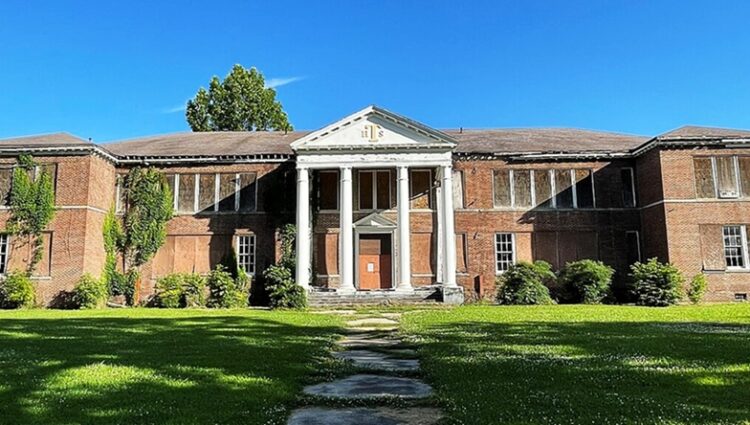
The cathedral doors stood closed and shut fast,
No kneeling form to seek a rite long past.
The altar lamp burned low with fading oil,
A mute record of long and wasted toil.
The parish hall where dances once held sway,
Now kept the shadows of a former day.
The desks where children learned their ABCs
Lay wrapped in webs like long abandoned trees.
The towers of commerce, glass and shining steel,
Held hollow echoes of the turning wheel.
For labor fled the carpeted domain
To fiber lines beneath the windowpane.
The clerk who typed, the runner sent to fetch,
Found metal hands had filled the vacant stretch.
The bot now learned the entry level skill,
And human hands were rendered nearly still.
So home became the fortress and the keep,
Where weary eyes found refuge in their sleep,
Or woke to screens that flickered blue and bright,
A thousand windows in unending night.
Each soul withdrew into a narrow view
Of grievances both old, yet somehow new.
They carved their truths in glowing lines of text,
And feared alone whatever might come next.
The tribes arose, defined by what they lacked,
Along the digital and winding track.
Their anger bloomed in algorithmic soil,
A lonely yield of screen bound years of toil.
A shadow looms, a fear without a name.
To fight the wave appears a losing game.
Like Luddites crying at the loom’s swift speed,
We sow our protests like a barren seed.
The structure shifts, the elder forms decay.
What shape awaits us, none can truly say.
We stand upon the bridge of what has been,
And wait for dawn where worlds begin again.
Peace in the Garden
Old Eric worked with steady hand and eye,
No hired help he had sought for broken hinge.
His knowledge drawn from pages stacked up high,
And recent clips where useful notions fringe.
He mended well the things that fell apart,
A thrifty soul who kept his shillings deep.
He thought his skill the more deserving art,
Than paying others while his own hands sleep.
As years accrued, his savings grew in store,
A sum set by to soften coming strain.
He saw the ladder resting by the door,
And thought of calling help to ease the pain.
Yet something shifted in his aging breast.
The urge to toil began to fade and cease.
He turned instead to earth and put to test
The seeds he planted, finding inward peace.
He knew his days were measured, short in span,
To watch green things rise slowly in the sun.
The cost of comfort was no idle plan,
But buying back the moments justly won.
Not just the leak repaired, the wall made sound,
But quiet joy within the turning soil.
A priceless calm upon the hallowed ground,
A fair exchange for years of faithful toil.
Murray Eiland is a poet and archaeologist. Some of his non-fiction is here: (99+) Murray L Eiland – Independent Researcher. He lives in California.










Imagination and creativity are the hallmarks of these two poems, one reflecting upon a fearful future and the other finding a residue of peace even though it may be painful. The key to the first poem for me was “The bot now learned the entry level skill, And human hands were rendered nearly still” forecasting the rise of artificial intelligence. The key to the second one lies in the penultimate verse: “He knew his days were measured, short in span, To watch green things rise slowly in the sun,” telling me that peace was found not in the treasures the person had built up, but in using the earth to its primary purpose and being rewarded with “real” productivity. I found them both fascinating as in a sci-fi novel.
The poem “Atomized” brought to mind the old Anglo-Saxon poem “The Ruin,” where the narrator describes a deserted and derelict Roman city in England. But after the fourth quatrain this poem goes in a different direction. It speaks of what has caused the collapse of this modern place — bots, fiber optics, and general automation. All these things have made the place unlivable — labor has fled, and persons are stuck in their fortress-like homes, with “digital track,” “algorithmic soil,” and the “screen.” Could there be a better description of modern decay?
The second poem is complementary to the first. Old Eric is one of those last surviving self-sufficient men, doing things by himself and on his own, without calling in hired “expertise.” It is the disappearance of men like Eric that has made the dystopia of the first poem a reality.
Murray, “Peace in the Garden” is very relatable, the urge to experience new life even as we near the end of our own years. Very nicely done.
Atomised conveys well the feeling of monumental change facing us and which faced the industrialised world before when traditional jobs disappeared. Some amazing imagery, too, my favourite being ‘Luddites crying at the loom’s swift speed’, preceded by the ‘wave’, bringing thoughts of tsunamis and King Canute to mind. The gold mine where I once worked is now a wasteland, due largely to nationalisation, making your poem equally poignant to this reader, Murray.
‘Peace in the Garden’ reminded me of my grandfather, whose pencil box that he made for me 50+ years ago, sits on my work desk, and is often commented on by my colleagues and students. That’s all I think I need to say.
Thanks for the reads.
Murray
Thank you for posting two lovely well-crafted poems. You lay down perfect iambic pentameter lines (except I’ve noted three that might need a little “tweak”—see last comment below). Both evoke strong emotion in a reader: the first evokes our generalized fears about technology; the second evokes tenderness and compassion toward a lovable older man, Old Eric.
“Atomized” is 20 rhyming couplets, arranged in 10 quatrains. The poem is arranged artfully to describe the slowly disappearing “old world” and the unsettling entry of a completely new technology that we can’t quite figure out, and that seems un-human. The first 9 couplets describe the disappearance of the old. In the 10th couplet, the bots appear, now taking over formerly human tasks. The next 6 couplets describe the new reality of working from home, eyes glued to flickering screens. In the final 4 couplets, the poet sums up our fears: “A shadow looms, a fear without a name…. What shape awaits us, none can truly say.”
“Peace in the Garden” consists of 5 quatrains, cross-rhymed iambic pentameter. The poet gives us a glimpse into the mind of a skilled craftsman (Old Eric) who is now elderly and can no longer work with his hands. In the fourth quatrain, there is a lovely poignant “turn”: “Yet something shifted in his aging breast” Old Eric now turns to gardening, and the last quatrain ends on a joyous note: “…quiet joy within the turning soil….a fair exchange for years of faithful toil.” Note: I was puzzled by the 4th line in the first stanza: “And recent clips where useful notions fringe.” Is this a reference to those handy you-tube videos? (We who completely lack coordination with our hands refer often to these, even to figure out how to open a package!)
Note: 3 lines in “Atomized” that aren’t quite perfect iambs. I’ve suggested (very tentatively!) possible substitutions:
• Stanza 1 line 1 Perpetual Stillness fell throughout the town. (assuming perpetual is 3 syllables, with stress on “pet”)
• Stanza 2 line 1 Cathedral doors stood closed and bolted fast
• Stanza 3, line 1 Towers of commerce, glass and shining steel, (Note: arguably, towers can be pronounced as one syllable, but this line, when scanned, seems to indicate 2 syllables, so the iamb seems slightly imperfect. If you leave out the beginning article “the” you’ve corrected the possible issue.
Most sincerely,
Mary Jane
In “Atomized”, you’ve hauntingly described the losses sustained by society due to technology. Though the entire poem is very moving, the second verse — in which the closed cathedral doors represent “a mute record of long and wasted toil” — are perhaps the most poignant to me, as I often think about what a tragedy it is that the incredibly skilled architects and artists who built the world’s most beautiful cathedrals, were they here today, would see so many of them fallen into disrepair or, worse, taken over by people who have totally different, opposing purposes for them. It’s a profound poem, and I love the way you’ve summarized it in the last couplet.
Fascinating array of articles and interviews at your non-fiction page, Murray. The interviews suggest interest not just in scholarship but in the scholars as human beings, which might (and this is just a guess) correspond somehow to your “Peace in the Garden” not found but made by Old Eric. He constructs reality through his own work in cooperation with nature. The “Atomized” poem, on the other hand, seems like an oriental carpet of dystopian pattern. “Each soul withdrew into a narrow view of grievances” depicts a telling design of what happens to human beings online, where “lines of text” substitute for truth and for human interaction.